

Key Takeaways
Why Fertilizer Timing Matters
Spreading fertilizer at the wrong time is one of the most common lawn care errors homeowners make. Nutrients applied when grass isn't actively growing either wash away with rain or sit unused in the soil, contributing to runoff that can reach nearby waterways. Applying at the right growth phase means the grass can actually absorb and use what you're giving it.
Timing also affects stress tolerance. Fertilizing just before a summer heat wave on cool-season grass pushes tender new growth into conditions that will scorch it. Conversely, feeding warm-season grass in early spring - before soil temperatures warm sufficiently - yields little benefit and wastes product. Understanding your grass type is the essential first step. See our guide to common lawn care myths to clear up other timing misconceptions that persist in popular advice.
Set a soil thermometer in your lawn before you reach for the spreader. Air temperature alone is an unreliable trigger - a warm March day doesn't mean soil is ready to support nutrient uptake.
Grass roots respond to soil temperature, not air temperature. Feeding before soil warms sufficiently means the product sits exposed to leaching rather than being absorbed.
Split your annual nitrogen application into at least two smaller doses rather than one large feeding. This approach reduces runoff risk and delivers a steadier supply of nutrients.
Single heavy nitrogen applications lead to rapid, weak growth flushes and increase the chance of fertilizer burn, especially on sandy soils with low nutrient-holding capacity.
Understanding the Big Three Nutrients
Fertilizer labels display three numbers - the N-P-K ratio - representing the percentage by weight of nitrogen (N), phosphorus (P), and potassium (K). Each plays a specific role:
- Nitrogen (N) drives leaf and shoot growth, giving grass its deep green color. It's the nutrient lawns consume most rapidly and the one most often deficient.
- Phosphorus (P) supports root development and seedling establishment. Mature, established lawns often need little added phosphorus; excess phosphorus runs off easily and is regulated in some states.
- Potassium (K) strengthens cell walls and improves drought and disease resistance. It's especially important heading into summer stress or winter dormancy.
A product labeled 28-0-6 delivers 28% nitrogen, no phosphorus, and 6% potassium - a common profile for established lawn maintenance. If you're establishing new grass, see our comparison of grass seed vs. sod for guidance on starter-fertilizer needs specific to each method.
Soil pH also controls how available these nutrients are to grass roots. Even a well-fertilized lawn can struggle if pH is too low or too high. Our article on soil pH and plant health explains the relationship in plain terms.
50°F-65°F
Optimal soil temperature for cool-season grass feeding
University extension programs consistently cite this range as the window when cool-season grasses absorb nutrients most efficiently.
6-8 weeks
Interval between warm-season summer feedings
Agronomists generally recommend this maintenance interval to sustain growth without over-stimulating warm-season grasses during peak heat.
Under $20
Typical cost of a basic soil test
Most university cooperative extension services offer affordable mail-in soil testing that identifies pH and key nutrient levels.
Cool-Season Grass Fertilization Schedule
Cool-season grasses - including Kentucky bluegrass, tall fescue, and perennial ryegrass - grow most vigorously in spring and fall when soil temperatures range between 50°F and 65°F. Their fertilization calendar should follow that pattern.
Fall (Primary Feeding)
Fall is the most important fertilization window for cool-season lawns. A feeding in early fall (late August through September) fuels recovery from summer stress and encourages root deepening before winter. A second application in late fall (October to early November, before ground freeze) feeds roots through early winter and promotes early green-up the following spring. This late application - sometimes called a winterizer - should be high in potassium to build cold hardiness.
Spring (Secondary Feeding)
One light spring application after the lawn greens up helps sustain growth without pushing excessive shoot production that weakens roots. Use a lower-nitrogen product in spring to avoid overstimulation going into summer heat. Pairing spring fertilization with proper watering habits is critical - our article on watering habits that harm lawns outlines what to avoid. For a full spring prep routine, the spring yard prep checklist walks through every complementary task.
Summer
Avoid nitrogen-heavy feeding during peak summer heat. If the lawn shows pale color mid-summer, a minimal application of slow-release fertilizer is preferable to a standard quick-release product.
Warm-Season Grass Fertilization Schedule
Warm-season grasses - including bermudagrass, zoysia, St. Augustine, and centipede - thrive when soil temperatures reach 65°F to 70°F or higher. Their active growth window runs from late spring through summer, and that's when fertilizing pays off.
Late Spring (Primary Feeding)
Begin fertilizing after the lawn has fully greened up and nighttime temperatures are consistently above 60°F - typically May in most warm-climate regions. Applying too early, while the grass is still transitioning out of dormancy, wastes product and can encourage weeds.
Summer (Maintenance Feedings)
Warm-season grasses benefit from additional feedings every six to eight weeks through summer, as long as adequate moisture is available. Dry conditions without supplemental irrigation make fertilizing inadvisable - stressed, dry grass cannot uptake nutrients effectively and risks burn.
Fall
Stop fertilizing warm-season grasses approximately six weeks before the first expected frost. Late nitrogen feeding promotes tender growth that is vulnerable to cold damage and can weaken the lawn's winter hardiness.
Don't Fertilize Dormant Warm-Season Grass
Applying nitrogen to warm-season turf in fall after it has begun going dormant is one of the most common - and damaging - mistakes. The grass cannot use the nutrients, which then leach into groundwater or feed weeds. Wait until the following late spring when the lawn has fully greened up and soil temperatures have stabilized above 65°F.
Common Application Mistakes to Avoid
Even the right fertilizer at the right time can cause problems if applied incorrectly. Here are the mistakes that most often derail homeowners:
- Over-applying: More is not better. Excess nitrogen causes fertilizer burn - yellow or brown streaks - and pushes rapid growth that stresses the plant. Always follow label rate recommendations.
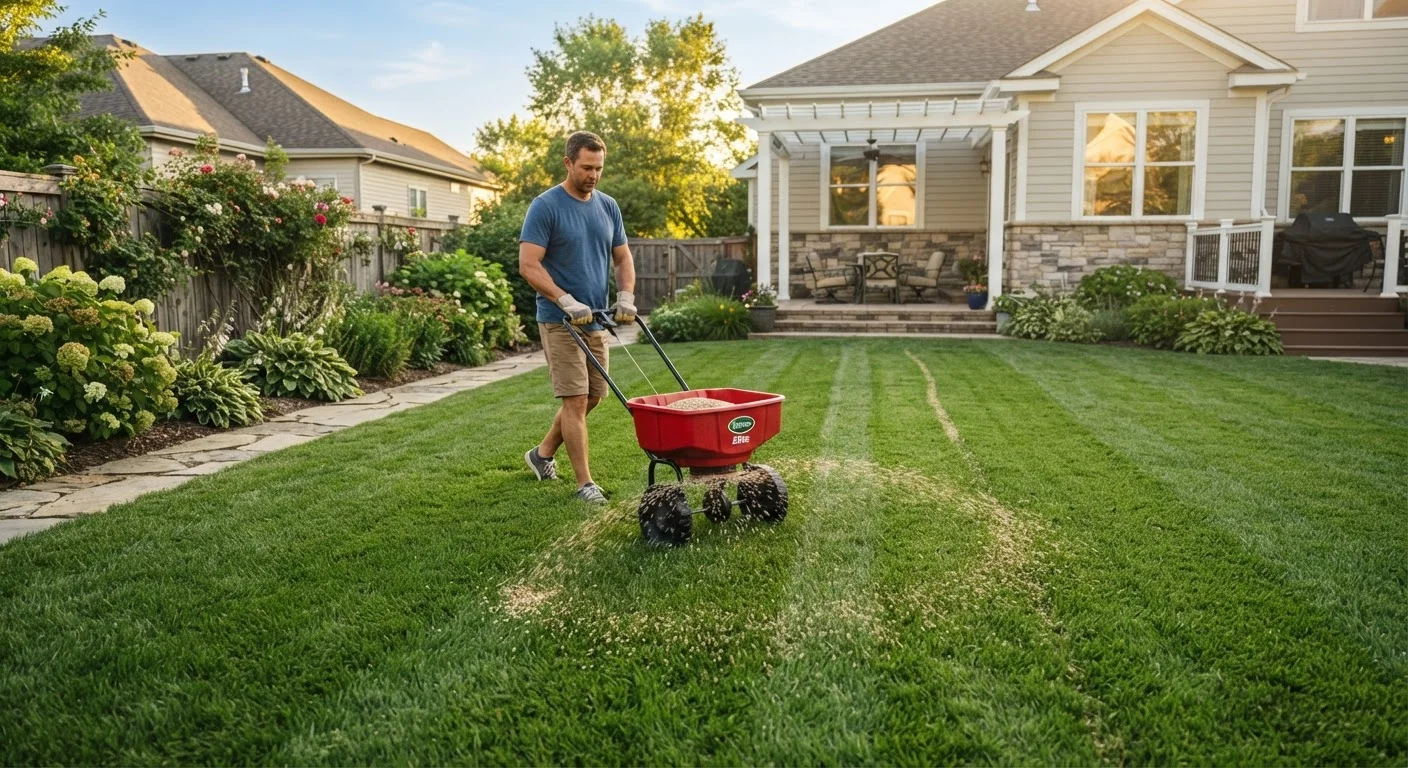
- Uneven spreading: Skipping rows or overlapping heavily creates visible striping. Use a quality broadcast or drop spreader and calibrate it to the product's recommended setting before you start.
- Fertilizing wet grass: Granules clinging to wet blades can cause localized burn. Apply to dry grass, then water lightly afterward to move product into the soil.
- Ignoring buffers near water: Keep fertilizer at least 10 feet from storm drains, streams, ponds, and ditches to reduce runoff and protect local water quality.
- Skipping the label: Every fertilizer product has specific rate and timing guidance. Differences in formulation - slow-release versus quick-release, granular versus liquid - require different approaches.
Soil Testing: The Step Most Homeowners Skip
A basic soil test reveals your lawn's existing nutrient levels and pH, eliminating guesswork and preventing the waste of applying nutrients already present in excess. Most university cooperative extension services and many garden centers offer mail-in soil testing kits. Results typically arrive within two weeks and include specific amendment recommendations.
Testing every two to three years is sufficient for most established lawns. If you've amended soil heavily, experienced persistent thin or yellow patches, or are starting a lawn from scratch, test before you do anything else. Understanding your soil's baseline is closely related to knowing how amendments like compost and topsoil fit in - the article on mulch, compost, and topsoil explains how each one interacts with existing soil chemistry.
Coordinating fertilization with your overall lawn and garden calendar makes the entire effort more effective and less expensive over time. Healthier soil supports healthier grass, and healthier grass crowds out weeds - reducing the need to intervene at all.
This article is for general informational purposes. Fertilizer regulations, including phosphorus restrictions, vary by state and municipality. Check with your local cooperative extension office for region-specific guidance before applying any lawn amendment.