

Key Takeaways
Understanding the Three Main Culprits
When your car refuses to start, the cause almost always traces back to one of three components: the battery, the alternator, or the starter motor. While they work as a system, each one fails in distinct ways - and knowing the difference can save you time, money, and an unnecessary tow.
Here's a quick breakdown of what each component does:
- Battery: Stores electrical energy and delivers the initial burst of power needed to start the engine. It also powers lights and electronics when the engine is off.
- Alternator: Once the engine is running, the alternator recharges the battery and supplies electricity to the vehicle's systems. It does not start the car - it keeps it running.
- Starter motor: A small electric motor that physically cranks the engine when you turn the ignition key or press the start button. Without it, the engine can't turn over even if the battery is fully charged.
These components are interdependent. A dead battery starves the starter of power. A failed alternator drains a healthy battery within miles. Understanding this chain helps you read the symptoms accurately. If you're noticing intermittent issues before a full no-start situation, our article on signs your car needs attention covers the early warning signals drivers most often overlook.
Keep a Record of Your Battery's Age
Most car batteries have a lifespan of three to five years under normal conditions. If your battery is approaching or past that range and you're experiencing starting issues, age alone is a strong factor. Check the date code stamped on the battery label - typically a letter and number indicating month and year of manufacture.
How to Diagnose the Problem
Before you call for a tow or replace anything, walk through these observations and tests. Most require no special tools beyond what many drivers already own.
What you will need
Observe What Happens When You Turn the Key
Before touching anything, pay close attention to exactly what the car does - or doesn't do - when you attempt to start it. This single observation narrows the diagnosis significantly.
- Rapid clicking (multiple clicks): Classic sign of a discharged or failing battery. The starter is trying to engage but isn't getting enough power.
- Single loud click, then nothing: Often points to the starter solenoid or starter motor itself.
- Slow, labored cranking: The engine turns over, but sluggishly - typically a weak battery or, less commonly, a starter drawing too much current.
- No sound at all: Could be a completely dead battery, a blown fuse, or a faulty ignition switch.
- Engine cranks normally but won't fire: Likely not a battery, alternator, or starter issue - look toward fuel delivery or ignition.
Check the Battery Terminals and Visible Connections
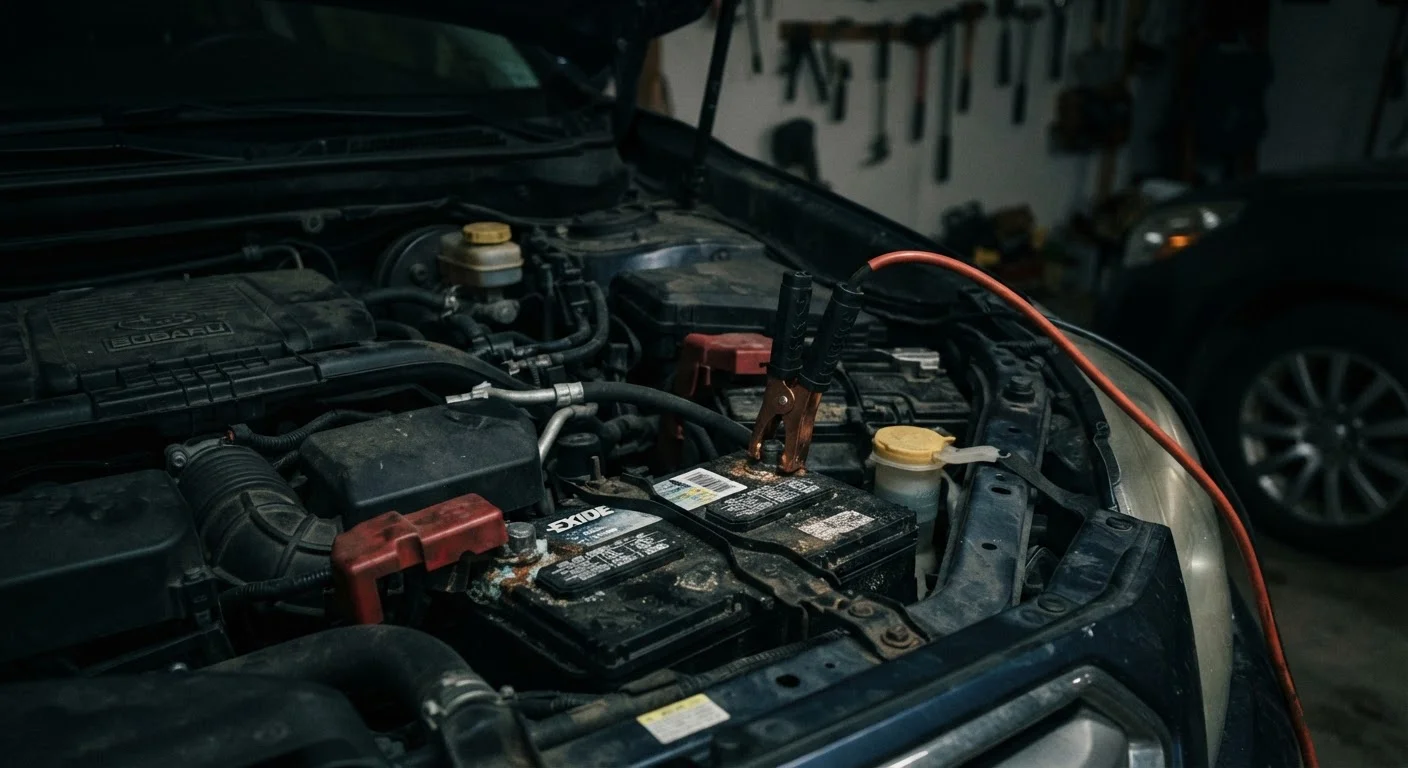
Open the hood and inspect the battery terminals - the metal clamps connected to the battery posts. Look for:
- White or blue-green powdery buildup (corrosion)
- Loose or wobbly connections
- Cracked or frayed battery cables
Corroded or loose terminals can mimic a dead battery even when the battery itself is fine. Wearing gloves, try wiggling each terminal. If either moves noticeably, that connection needs to be tightened or cleaned before drawing further conclusions.
Test the Battery Voltage with a Multimeter
Set a multimeter to DC voltage (20V range). Connect the red probe to the positive battery terminal and the black probe to the negative terminal. Read the result:
| Voltage Reading | Battery Status |
|---|---|
| 12.6V or above | Fully charged |
| 12.4V - 12.5V | Moderately charged |
| 12.0V - 12.3V | Low - may not start reliably |
| Below 12.0V | Discharged or failing |
A healthy resting battery should read approximately 12.6 volts. Anything below 12.0V at rest indicates the battery needs charging at minimum, and possibly replacement if it won't hold a charge.
Test the Alternator Output
If you've jump-started the car and it's running, you can check whether the alternator is doing its job. With the engine running, use the multimeter on the battery terminals again. A functioning alternator should produce between 13.5V and 14.7V.
- Below 13.5V while running: The alternator may not be charging adequately.
- Above 14.8V: The alternator may be overcharging, which can damage the battery.
- Reading at or below resting battery voltage: The alternator is likely failing or has already failed.
Another telltale sign: if your car starts fine after a jump but dies within a short drive, the alternator isn't recharging the battery, and the engine is running entirely off stored battery power until it's exhausted.
Assess the Starter Motor
If the battery tests healthy but the engine won't crank, the starter is the next logical suspect. Signs that point specifically to the starter include:
- A single heavy clunk when you turn the key, with no cranking
- The starter engaging intermittently - works sometimes, fails others
- Grinding noise during startup (worn starter gear)
- No response even after confirming good battery voltage and solid connections
One practical field test: with the battery confirmed good, have someone turn the ignition while you (safely, away from moving parts) listen near the starter motor location - typically on the lower side of the engine. A starter that clicks but doesn't spin, or makes no sound at all, is a strong indicator of starter failure. Starter diagnosis beyond this point typically requires professional equipment or physical removal of the component.
When to Stop and Call a Professional
DIY diagnosis has clear limits. If your multimeter readings are normal but the car still won't start, there may be an issue with the ignition switch, fuel system, or an internal engine problem - none of which are safely addressed roadside. Similarly, if you smell burning near the battery or starter, stop immediately. Electrical fires are a serious safety risk.
A qualified mechanic can perform a full charging system test using professional-grade equipment that measures alternator output under load, battery cold cranking amps (CCA), and starter draw - giving a far more accurate picture than a basic multimeter alone. If any component tests near the bottom of its acceptable range, replacement is generally more cost-effective than waiting for a full failure.
Don't Ignore Repeated No-Start Events
A car that fails to start once and then seems fine may be giving you an early warning of component failure rather than a fluke. Repeated episodes - even if the car eventually starts - warrant a professional charging system inspection. Waiting until the battery or alternator fails completely often means being stranded at an inconvenient time.
This article is for general informational purposes only. Electrical work on vehicles can pose safety risks. When in doubt, consult a qualified automotive technician before attempting repairs.