

Key Takeaways
Summary
18 items · 20-40 minutes
Why a Readiness Checklist Matters Before Workout One
Starting an exercise routine is one of the most beneficial decisions you can make for your long-term health. But jumping in without preparation is one of the most common reasons beginners experience injury, burnout, or early dropout. A structured readiness check helps you start on solid footing - literally and figuratively.
This checklist covers five key areas: health clearance, gear, your environment, mindset, and pre-session habits. Working through these items before your first session takes no more than 20 to 40 minutes and can prevent weeks of setbacks down the road. It's also worth noting that if you're returning after a significant break rather than starting completely fresh, the considerations are somewhat different - see our guide to returning to exercise after a long break for strategies specific to that situation.
Medical Clearance Is Not Optional for Everyone
If you have a known heart condition, diabetes, high blood pressure, joint problems, or are pregnant, consult your healthcare provider before beginning any exercise program - even a low-intensity one. This checklist provides general guidance only and is not a substitute for personalised medical advice. When in doubt, ask a qualified professional first.
What You'll Need Before You Begin
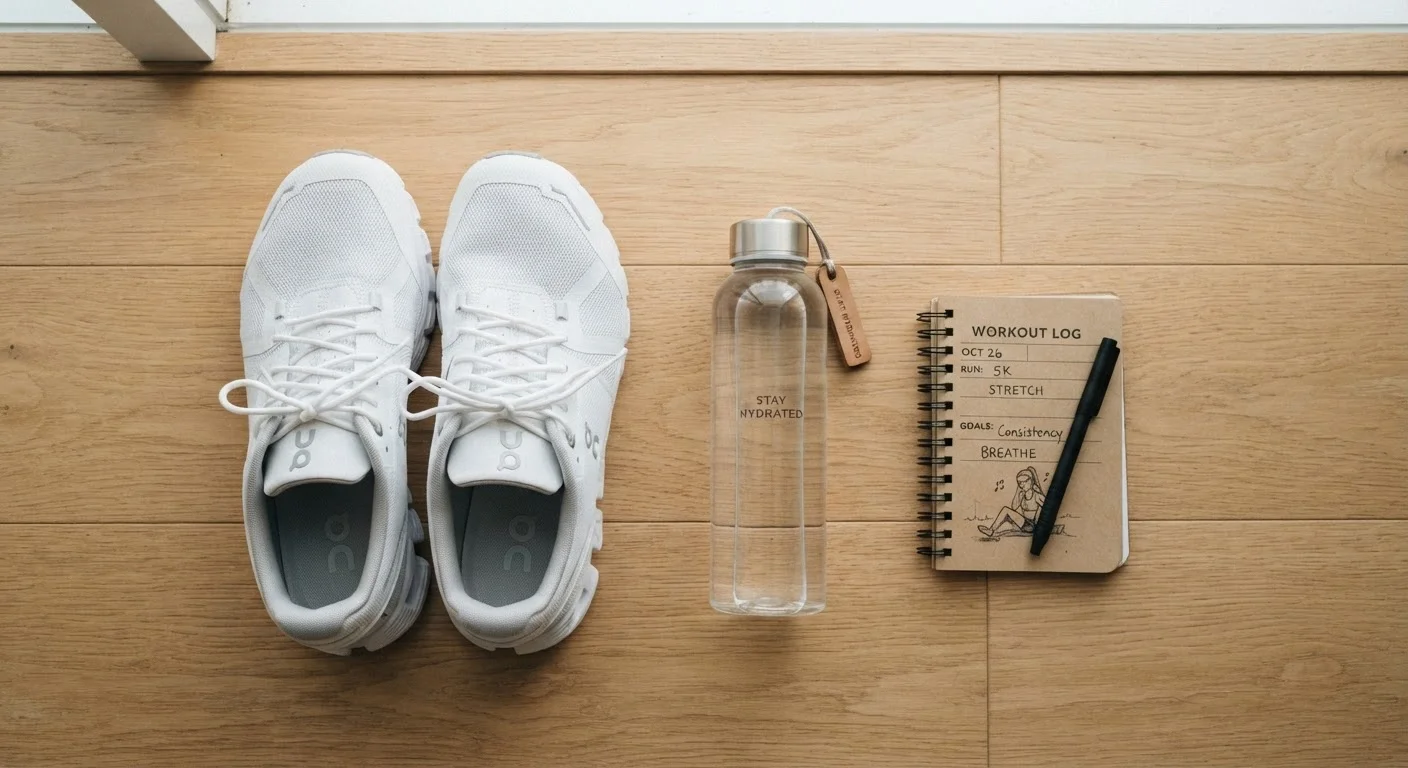
You don't need a fully equipped home gym or an expensive membership to exercise safely and effectively. The essentials are modest: supportive footwear, comfortable clothing, water, and a clear space to move. Optional items like a mat or resistance bands expand what you can do but are not prerequisites.
Athletic footwear
Provides the support and cushioning needed to protect your feet, ankles, and knees during exercise.
Water bottle
Keeps you hydrated throughout your session, which is essential for performance and safety.
Exercise mat
Cushions floor-based exercises such as stretching, yoga, or bodyweight movements.
Fitness journal or app
Tracks workouts, progress, and goals to keep you accountable over time.
Resistance bands
Provides adjustable, low-impact resistance for strength training without heavy equipment.
Whether you plan to train at home or at a gym, both settings can work well for beginners. If you're weighing the trade-offs, our comparison of home and gym workouts walks through the practical differences in detail.
The Readiness Checklist
Work through each group below before your first session. Items marked must are non-negotiable for safety and effectiveness. Should items are strongly recommended for most beginners. Nice-to-have items are useful enhancements you can add as your routine develops.
Health Clearance
Gear & Clothing
Environment & Space
Mindset & Planning
Pre-Session Preparation
Don't Skip the Warm-Up
Beginning vigorous exercise without a proper warm-up significantly increases your risk of muscle strain and joint injury. Even five minutes of light walking or gentle dynamic movement prepares your cardiovascular system and muscles for the demands ahead. This step is especially important for beginners whose bodies aren't yet adapted to exercise stress.
It's also worth challenging any fitness beliefs you may have picked up before you start training. Misconceptions like 'no pain, no gain' can push beginners to overtrain and get hurt. Our article on exercise myths that may be shaping how you train examines what the evidence actually shows.
This article is for general informational and educational purposes only and does not constitute medical advice. Always consult a qualified healthcare professional before beginning a new exercise program, particularly if you have any existing health conditions or concerns.