

Key Takeaways
Why Lawn Myths Stick Around
Much of the lawn care advice passed down through neighborhoods and gardening forums originates from pre-research-era practices, marketing language, or misapplied logic from other gardening contexts. A tip that sounds reasonable - shorter grass, more fertilizer, daily watering - often conflicts with how turf grasses actually grow and respond to stress. The consequences of following bad advice range from a patchy yard to wasted money on products that do more harm than good.
Understanding the reasoning behind common myths makes it easier to spot new misinformation before it takes root. Below, we address five of the most widely repeated lawn care misconceptions and replace them with what the evidence actually supports.
Myth
Cutting your grass as short as possible saves mowing time and keeps the yard looking neat longer.
Fact
Scalping the lawn stresses grass, exposes soil to weeds and sun damage, and weakens root systems.
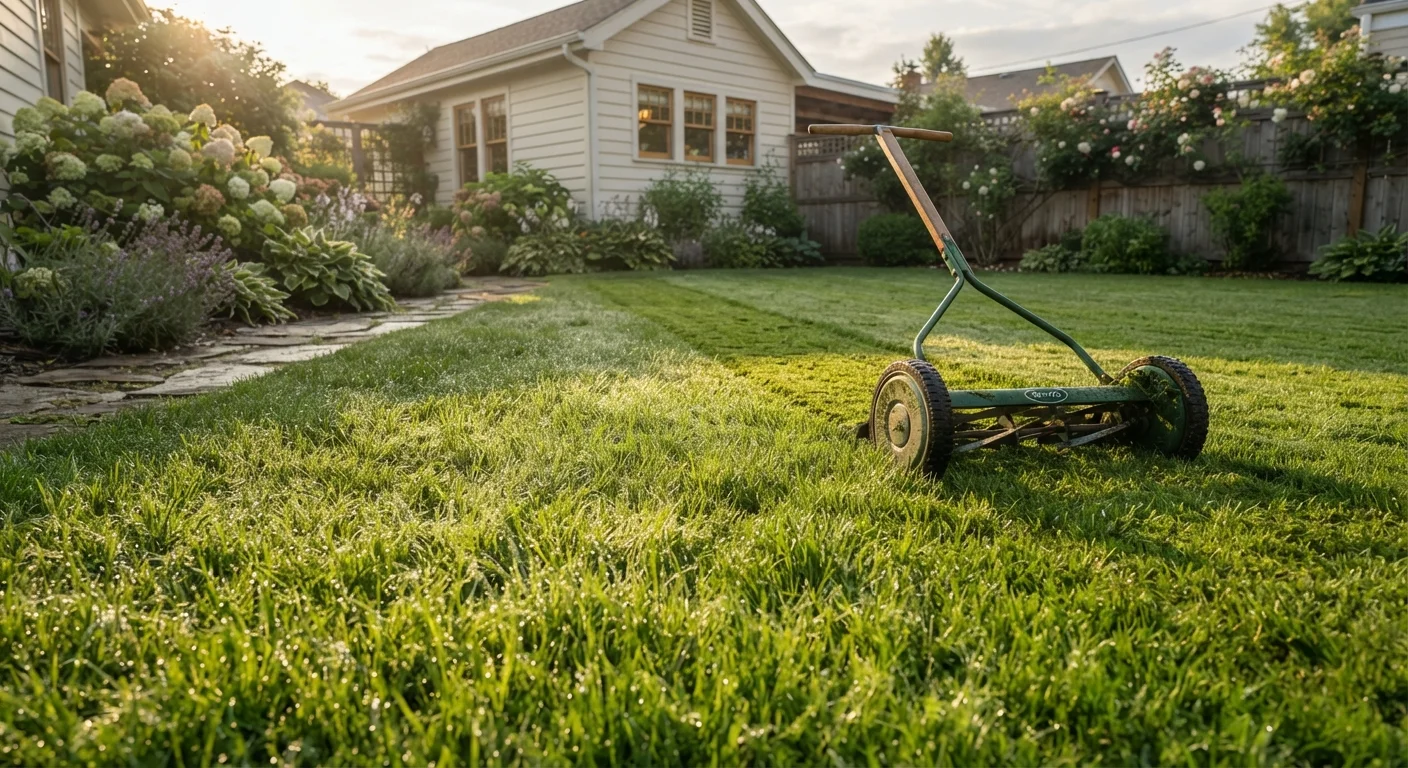
The practice of mowing very low - sometimes called scalping - seems logical: shorter grass should take longer to grow back. In reality, grass blades are the plant's solar panels. Remove too much at once, and the plant diverts energy from root development to emergency leaf regrowth. A good rule of thumb endorsed by turf specialists is the one-third rule: never remove more than one-third of the blade height in a single mowing session.
Most cool-season grasses like Kentucky bluegrass thrive at 3-4 inches, while warm-season varieties such as Bermudagrass can be kept shorter at 1-2 inches. Mow at the right height for your grass type and you'll crowd out weeds naturally.
Myth
Leaving grass clippings on the lawn causes thatch buildup and should always be raked up.
Fact
Grass clippings decompose quickly and do not meaningfully contribute to thatch; they actually return nitrogen to the soil.
Thatch is a layer of dead stems, roots, and undecomposed organic matter that accumulates between the soil surface and living grass blades. The culprit behind thatch is lignin-rich plant material - primarily roots and stems - not the soft, moisture-rich clippings left after mowing.
Grass clippings are roughly 80-85% water and break down within days under normal conditions. Allowing them to settle back into the lawn, a practice sometimes called grasscycling, returns nitrogen, phosphorus, and potassium to the turf - effectively providing a light, free fertilizer application. For deeper guidance on what your lawn actually needs nutritionally, see what N-P-K numbers on fertilizer labels mean.
Myth
Watering your lawn a little every day keeps it consistently green and hydrated.
Fact
Frequent shallow watering trains grass roots to stay near the surface, making turf more vulnerable to heat and drought.
Daily light watering satisfies the top inch or two of soil but never reaches deeper root zones. Over time, grass roots follow the moisture and cluster near the surface - exactly where they're most exposed to temperature extremes and dry spells.
Turf specialists generally recommend watering deeply and infrequently: most established lawns benefit from about one inch of water per week, applied in one or two sessions rather than seven small ones. Early morning is the best time - foliage dries during the day, reducing the risk of fungal disease. Sprinklers running in the evening leave grass wet overnight, creating conditions where lawn diseases can take hold. For a full breakdown of harmful watering patterns, see watering habits that do more harm than good.
Myth
A few drops of dish soap mixed with water makes a safe, effective DIY pesticide for lawn pests.
Fact
Household dish soaps are formulated for grease removal, not plant safety, and can damage grass and kill beneficial insects.
The idea of dish soap as an organic pest solution has circulated in gardening circles for decades. The appeal is understandable - it's cheap, already in the cabinet, and sounds harmless. The problem is that modern dish soaps contain surfactants, fragrances, and degreasers that can break down the waxy cuticle (protective coating) on grass blades, leaving turf vulnerable to dehydration and disease.
Beyond plant damage, soap solutions applied broadly don't discriminate between target pests and beneficial organisms like earthworms, ground beetles, and pollinating insects. If pest pressure is genuine, identifying the specific pest first will point you toward a more precise and proportionate response - whether that's targeted organic treatments, cultural adjustments, or consulting a licensed pest management professional.
Myth
Applying extra fertilizer speeds up lawn recovery and produces a lusher, greener result.
Fact
Over-fertilizing burns grass, depletes soil microbiology, and can wash excess nutrients into local waterways.
Nitrogen drives the rapid green-up that many homeowners associate with a healthy lawn. But too much nitrogen at once creates fertilizer burn - the grass blades dry out and turn straw-colored as salt concentrations in the soil draw moisture out of roots through osmosis. High-nitrogen runoff also contributes to algae blooms in nearby ponds and streams, a recognized water-quality concern.
Fertilizing on the right schedule for your grass type is far more effective than applying more product. Cool-season grasses generally benefit most from fall applications, while warm-season grasses respond better to late spring and summer feeding. Lawn fertilization throughout the year covers the full seasonal timing in detail.
Putting Better Practices Into Action
Correcting lawn care habits doesn't require an overhaul all at once. Adjusting your mowing height this weekend, switching from a daily sprinkle to a twice-weekly deep soak, and letting clippings fall where they land are low-effort changes with measurable results over a growing season.
Soil health underpins most of what happens above ground. A soil test - available through many cooperative extension services for a modest fee - tells you exactly what nutrients are deficient or excessive before you spend money on amendments. If you're also working on improving your garden beds, composting kitchen scraps at home is a cost-effective way to build organic matter over time.
DIY Pesticide Mixtures Can Backfire
Homemade spray solutions - including dish soap, vinegar, or essential oil blends - are often applied without knowing the specific pest or its lifecycle. Broad-spectrum DIY applications can eliminate beneficial predatory insects that naturally keep pest populations in check, making future infestations worse. When in doubt, identify the pest first and consult your local cooperative extension office for guidance specific to your region.
For homeowners weighing whether to establish a new lawn or repair an existing one, understanding your options matters as much as the care routine itself. Grass seed vs. sod walks through how to match the right establishment method to your specific conditions. And if you've noticed persistent issues beyond lawn care - like home systems that need attention - it's worth reviewing home maintenance myths that cost homeowners time and money as well.