

Key Takeaways
Option A
Grass Seed
The patient, budget-friendly path to a lasting lawn.
Best for: Homeowners with a tight budget and a flexible timeline who want a wider choice of grass varieties.
Option B
Sod
The fast-track option for an instantly usable yard.
Best for: Homeowners who need a finished lawn quickly, have erosion concerns, or are preparing a home for sale.
If you're working with a tight budget
Grass Seed
Seeding typically costs a fraction of sodding. The savings are significant enough to cover soil amendments, starter fertilizer, and extra watering with money left over.
If you need a finished lawn within weeks
Sod
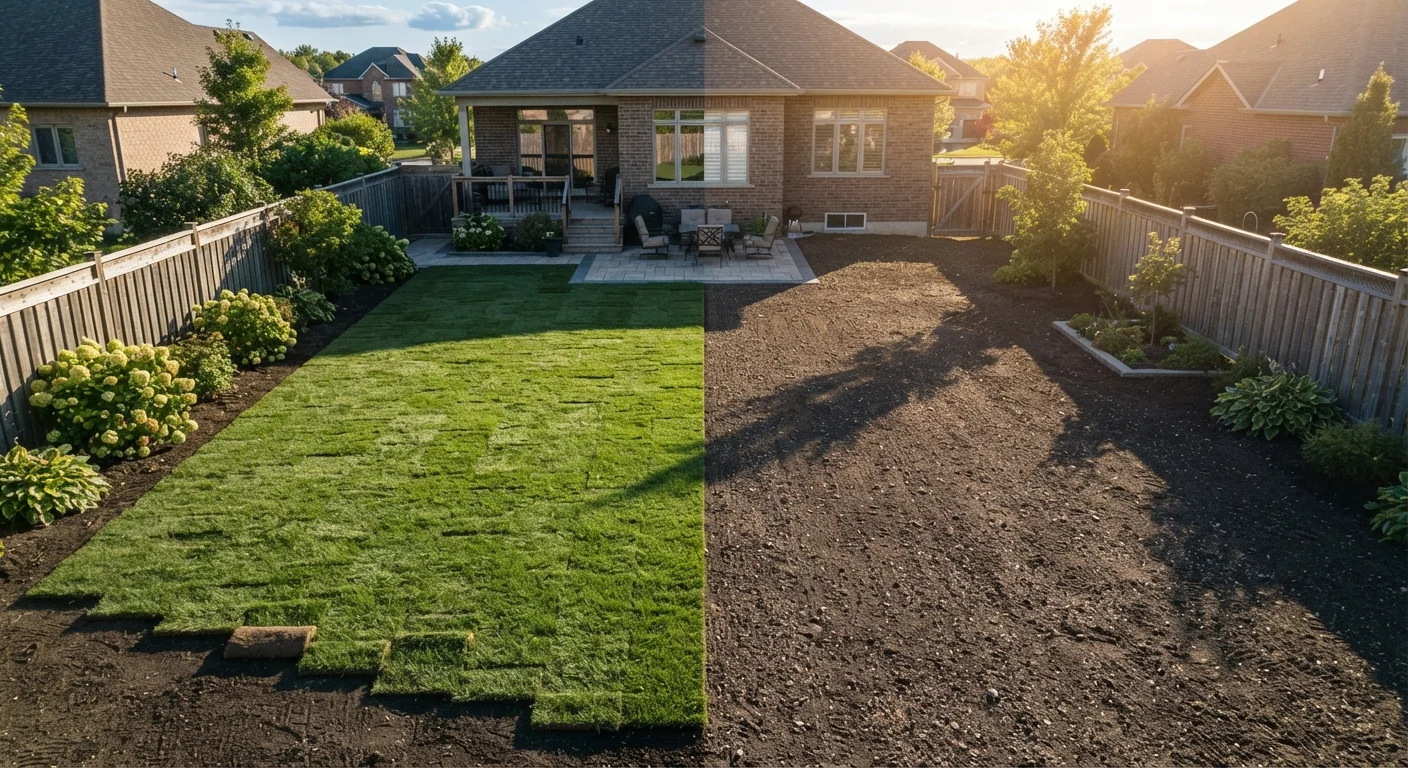
Sod knits into the soil in as little as two to three weeks and can handle light foot traffic shortly after. It's the practical choice when timeline is non-negotiable.
If you have a sloped yard prone to erosion
Sod
Seed washes away easily on slopes before roots establish. Sod holds soil in place immediately, protecting both your investment and the landscape.
If you want a specific or regionally adapted grass variety
Grass Seed
Seed offers a far broader selection of species and cultivars, letting you match the grass to your climate, sun exposure, and soil type with precision.
If you're repairing patches rather than starting fresh
Grass Seed
Seed blends are easy to match to existing turf and are far more practical for small repairs, where purchasing a full pallet of sod would be wasteful and costly.
The Core Trade-Off: Time vs. Money
The seeding vs. sod decision usually comes down to one fundamental question: how much are you willing to spend to save time? Seed is inexpensive - a full lawn from seed can cost three to five times less than installing sod over the same area, once you factor in materials and labor. Sod, however, delivers something seed cannot: a near-complete lawn in a matter of weeks rather than months.
Neither approach is inherently superior. The right choice depends on your budget, how quickly you need the lawn functional, and the specific challenges your yard presents. Understanding the real demands of each method helps you avoid the most common mistake homeowners make - choosing based on cost or impatience alone, without accounting for what comes after installation.
| Criterion | Grass Seed | Sod |
|---|---|---|
| Upfront cost | Low (materials only) | High (materials + labor) |
| Time to usable lawn | 8-12 weeks minimum | 2-4 weeks |
| Variety selection | Very wide | Limited by farm stock |
| Erosion control | Poor until established | Immediate |
| Soil prep required | Yes - essential | Yes - equally essential |
| Watering intensity | High during germination | High for first 2-3 weeks |
| Best for slopes | No | Yes |
| Best for patch repairs | Yes | Rarely practical |
What Seeding Actually Involves
Seeding a lawn from scratch requires more patience than most homeowners expect, but the process itself is straightforward. The most important step is soil preparation: loosening the top 4-6 inches of soil, removing debris and large rocks, and correcting pH if a soil test indicates it's needed. Our guide to soil amendments explains how compost and topsoil can improve germination conditions.
Timing is equally critical. Cool-season grasses - fescues, bluegrass, ryegrass - germinate best when soil temperatures are between 50°F and 65°F, which typically means early fall in most US regions. Warm-season grasses like Bermuda and Zoysia prefer late spring once soil temperatures exceed 65°F. Planting outside these windows significantly reduces germination rates.
After seeding, consistent moisture is non-negotiable. Seed needs the top inch of soil kept damp - without saturation - until germination, which can take 7 to 21 days depending on the variety. Light foot traffic should be avoided for at least six weeks. Once established, a newly seeded lawn benefits from a starter fertilizer regimen; see our overview of lawn fertilization timing for guidance on when and how to feed new grass.
What Sodding Actually Involves
Sod is grown on a farm, harvested as mature grass with a thin layer of roots and soil attached, then delivered in rolls or slabs. The appeal is obvious: you skip the germination waiting period entirely. But sod isn't a plug-and-play solution - poor preparation before installation leads to dead patches, uneven settling, and failed root establishment.
Soil prep for sod mirrors what seeding requires: grade the area so water drains away from structures, loosen the top 4 inches, and amend as needed. Lay sod pieces tightly together in a staggered brick pattern to minimize gaps. Roll the surface after installation to eliminate air pockets between the sod and soil - air pockets are the leading cause of sod failure.
Water newly laid sod deeply immediately after installation, then keep it consistently moist for the first two weeks. Lift a corner after 10-14 days - if you feel resistance, roots are establishing. Avoid heavy use until the sod has fully knit to the soil, which typically takes three to four weeks. Overwatering during this window is a real risk; our article on harmful watering habits outlines the patterns to avoid.
Sod in Hot Weather: Extra Care Required
Sod installed during peak summer heat faces higher stress and can fail if moisture isn't carefully managed. If you're in a warm climate or installing during a heat wave, consider waiting for cooler temperatures - typically early fall for cool-season grasses or late spring for warm-season varieties. Newly laid sod cannot be left to dry out even briefly during its first two weeks.
Situations Where One Method Clearly Wins
For erosion-prone slopes, sod is the practical choice every time. Grass seed on a grade will wash downhill before it has any chance to germinate. Sod holds soil mechanically from the moment it's laid, making it the only realistic option for moderate to steep inclines.
For large, flat areas on a budget, seed wins without much debate. A 5,000-square-foot lawn can cost hundreds of dollars to seed and potentially several thousand to sod - a gap large enough to fund significant soil improvement, irrigation, and post-establishment care.
When variety selection matters, seed is the clear answer. Sod farms grow a limited range of commercially viable cultivars. If you need a specific drought-tolerant fescue blend suited to your region, or a fine-textured Bermuda for a specific look, you'll almost always find it in seed form before you find it as sod.
If you're doing small patch repairs, seed is almost always more practical. Matching sod to an existing lawn's color, texture, and density is difficult, and purchasing sod for a few square feet is rarely cost-effective. Choosing the right seed blend for repairs is covered in our piece on common lawn care myths, including why matching species matters more than most homeowners realize.