

Key Takeaways
Our Verdict
Neither pure DIY nor always-hire-a-pro is the right answer for every homeowner. The smartest approach uses a consistent decision framework: assess your honest skill level, weigh the safety and legal stakes, calculate total true cost, and default to a professional whenever the consequences of error are serious. Most homeowners will find that DIY works well for low-risk cosmetic and maintenance tasks, while licensed trades are worth every dollar for code-regulated or hazardous work.
| Best for | Recommended |
|---|---|
| Confident, experienced home improvers tackling low-risk tasks | DIY |
| Work involving electrical, gas, structural, or roofing systems | Hire a Pro |
| Homeowners who want to reduce labor costs on larger projects | Hybrid approach (DIY prep + professional finish) |
| First-time homeowners unsure of scope or safety requirements | Hire a Pro |
Why the Decision Matters More Than Most People Think
Every homeowner eventually faces the same crossroads: tackle a repair yourself or call someone in. The instinct to save on labor costs is understandable, but choosing DIY on the wrong project-or overpaying a contractor for something simple-both carry real costs. A practical framework helps you make that call confidently, every time.
For a broader view of your home's systems and what each one typically needs, see the complete picture of home maintenance. And if you're relatively new to hands-on work, The Weekend Warrior's Introduction to Home Improvement is a solid starting point for understanding your own skill level and limits.
The Four-Factor Framework
Before picking up a tool or calling a contractor, run any project through these four questions:
- Skill match: Do you have the knowledge and experience this specific task requires-not just general handiness? Replacing a light fixture is not the same as running new circuits.
- Safety stakes: What is the worst realistic outcome if something goes wrong? A botched drywall patch is an inconvenience; a faulty gas connection is a life-safety emergency.
- Permit and code requirements: Many jurisdictions require permits for electrical, plumbing, HVAC, structural, and roofing work. Unpermitted improvements can complicate home sales and void insurance claims. Always verify local requirements before starting.
- True cost: Labor savings evaporate if you buy the wrong materials, damage adjacent systems, or need a pro to fix your fix. Add up materials, tool rentals, your time, and the realistic cost of a do-over before deciding.
| DIY | Hire a Pro | Hybrid | |
|---|---|---|---|
| Upfront cost | Low (materials only) | Higher (labor + materials) | Moderate |
| Risk if done wrong | Low to moderate | Low (professional accountability) | Low on critical phases |
| Permit handling | Your responsibility | Typically managed by contractor | Split by task |
| Time commitment | High (your time) | Low (your time) | Moderate |
| Skill requirement | Must match task complexity | None required from owner | Basic to moderate |
| Best suited for | Cosmetic, low-risk tasks | Regulated or hazardous work | Larger projects with mixed scope |
Use this framework consistently and most decisions become clear. The edge cases-where it still feels close-are usually worth a free estimate from a licensed contractor before committing either way.
Tasks That Typically Belong in the DIY Column
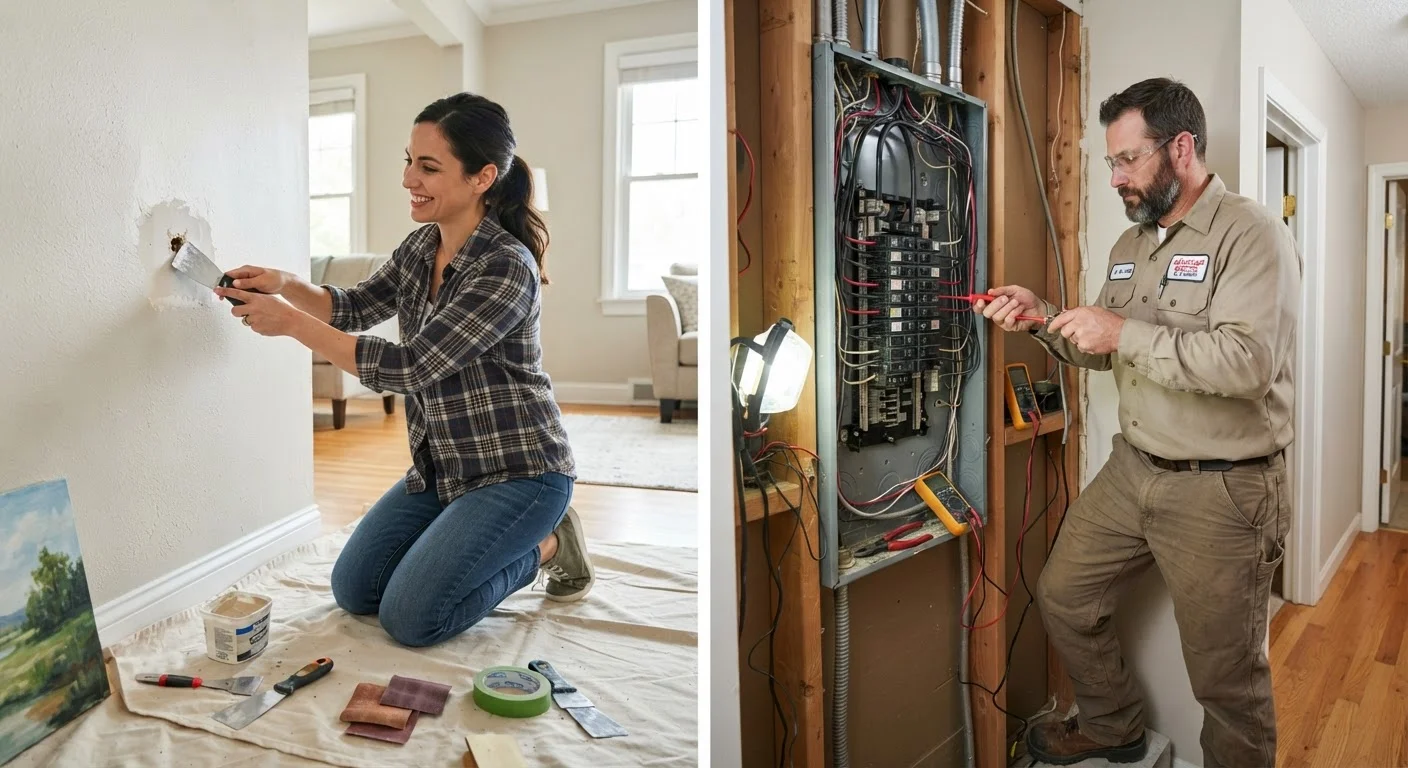
A wide range of routine maintenance and cosmetic work is genuinely well-suited for confident homeowners. These tasks share common traits: low safety stakes, no permit requirements, widely available guidance, and forgiving margins for error.
- Painting interior walls and trim
- Patching small to medium drywall holes - see how to patch drywall without calling a pro for technique guidance
- Replacing faucet aerators, showerheads, and toilet flappers
- Caulking around tubs, sinks, and windows
- Cleaning gutters and downspouts
- Replacing outlet covers, light switch plates, and basic light fixtures (with power off and confidence in the task)
- Seasonal HVAC filter changes and exterior hose bib winterization
Start Small to Build Confidence
If you're newer to DIY, begin with low-stakes tasks that have clear, well-documented steps-caulking, filter changes, or minor patching. Each completed project gives you a more realistic picture of your skill level and comfort with tools, which makes future go/no-go decisions much easier. Track what took longer than expected or required a correction; those patterns reveal where your personal limits lie.
The common thread: these tasks are reversible or low-consequence if imperfect, and the skills are learnable from reliable instructional resources.
Tasks That Typically Require a Licensed Professional
Some work carries legal, structural, or life-safety implications that make DIY genuinely risky-not just technically difficult. Attempting these without proper licensing can result in failed inspections, voided homeowner's insurance, personal liability, or serious physical harm.
- Electrical panel work - upgrades, new circuits, or service changes
- Gas line installation or repair - including appliance hookups in many jurisdictions
- Structural modifications - removing load-bearing walls, adding or modifying beams
- Roof replacement - beyond minor patching; most require permits and affect warranties
- Main plumbing line work - connecting to municipal supply or sewer
For a detailed breakdown of which projects fall into this category and why, Home Improvement Projects That Typically Require a Licensed Professional is worth reading before you start planning. If you're unsure whether your project needs a general contractor to coordinate multiple trades, What a General Contractor Actually Does clarifies their role.
The Hybrid Approach: Getting the Best of Both
Many projects don't require an all-or-nothing choice. A hybrid approach lets homeowners handle low-skill prep work-demo, cleanup, material sourcing, painting after the fact-while licensed trades handle the code-regulated or technically demanding phases. This can meaningfully reduce total project cost without compromising safety or compliance.
For example: on a bathroom remodel, a homeowner might remove old tile and fixtures themselves, then hire a licensed plumber for rough-in work and an electrician for any new circuits, before returning to handle tiling and finishing. The contractor vs. DIY framework explores this kind of scoped decision-making in more detail.
The key is honest self-assessment. Overestimating your skill on a critical phase erases the savings-and then some. When in doubt on a specific task, a paid consultation with a licensed professional is almost always money well spent.