

Key Takeaways
Our Verdict
No single unlimited plan is right for every household. The differences between tiers - in hotspot data, video resolution, and deprioritization thresholds - are substantial enough to matter in daily use. Understanding those distinctions before signing up is the most reliable way to avoid paying for features you don't need, or missing ones you do.
| Best for | Recommended |
|---|---|
| Light data users who mostly stream video at home on Wi-Fi | Entry-level unlimited tier |
| Remote workers or commuters who rely on mobile hotspot regularly | Mid- or premium-tier unlimited plan with high hotspot allowance |
| Frequent international travelers who need roaming voice and data | Premium unlimited tier with international roaming included |
| Families balancing cost across multiple lines | Mid-tier plan - review our guide on <a href="/tech-telecom/phones-and-plans/family-plans-what-they-include-what-they-assume-and-what-they-leave-out">family plan trade-offs</a> |
What 'Unlimited' Actually Means on a Phone Plan
Carriers use the word unlimited to describe plans that, on closer inspection, include several meaningful limits. The term is legally permissible as long as the restrictions are disclosed somewhere in the plan's terms - which is exactly why reading beyond the headline price matters. As the phone plan glossary explains, industry terminology rarely means what everyday language suggests.
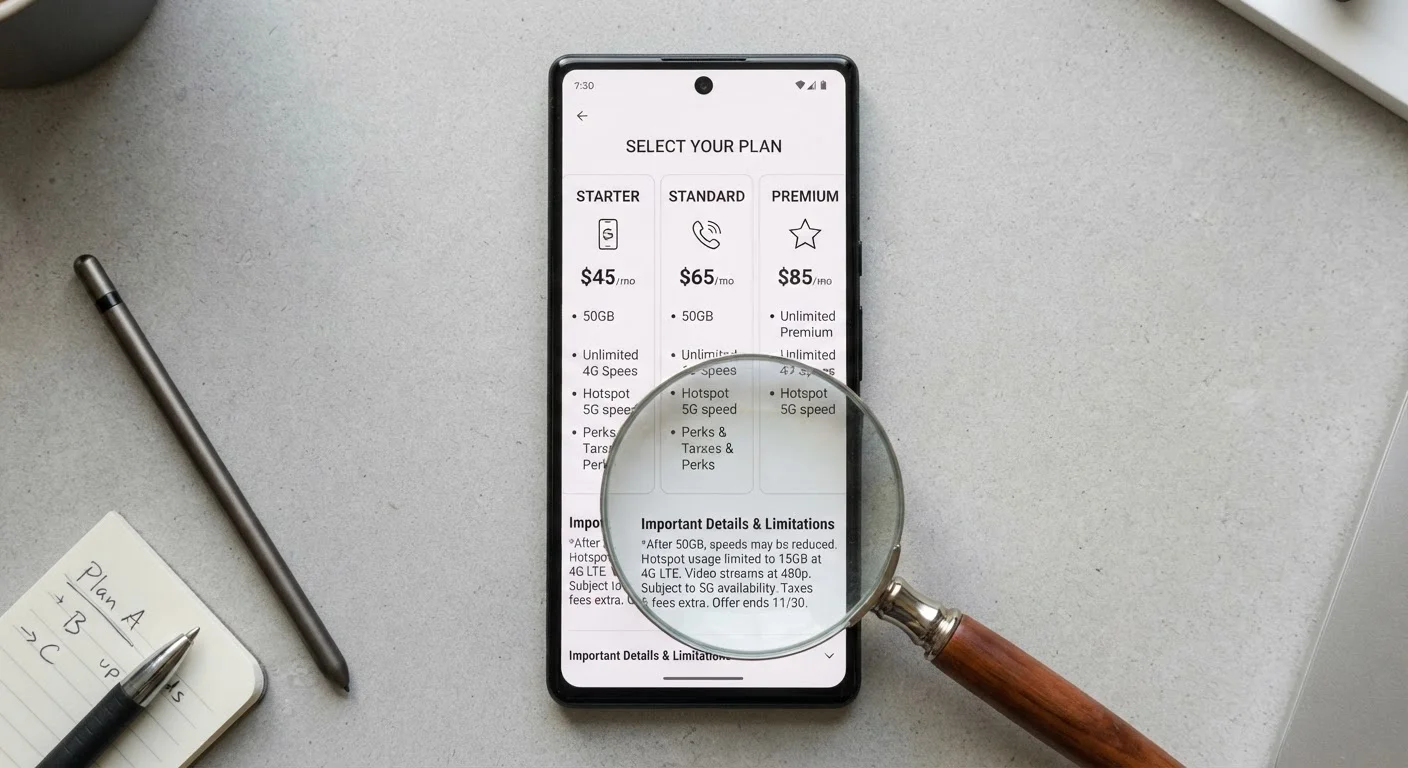
Three variables do the most work in separating unlimited plans from one another: deprioritization thresholds, mobile hotspot allowances, and video streaming quality caps. Each one affects real-world performance in ways that a monthly price alone won't tell you.
Deprioritization: When Your Speed Depends on Network Traffic
Deprioritization - sometimes called network management - means that once you've used a defined amount of high-speed data in a billing cycle, your connection may be slowed when the network is congested. You're not cut off; you're just moved to the back of the queue behind subscribers who haven't hit that threshold yet.
25-50 GB
Common deprioritization threshold range
Carriers typically disclose these thresholds in their plan terms; the gap between entry and premium tiers can be as large as 25 GB or more.
480p
Video cap on many base unlimited plans
Standard-definition video streaming caps are a documented feature of entry-level unlimited tiers at major U.S. carriers.
The threshold varies significantly across plan tiers. Entry-level unlimited plans at major carriers have historically set this point lower - sometimes at 25-30 GB - while premium tiers push it to 50 GB or higher, or in some cases promise priority access that isn't subject to the same congestion rules. In dense urban areas where towers carry heavy traffic, the practical gap between a deprioritized and a prioritized connection can be noticeable during peak hours. The fine print carriers don't advertise is often where these thresholds live.
Mobile Hotspot: The Feature With the Most Hidden Variation
Mobile hotspot lets you share your phone's cellular connection with a laptop or tablet. Every major unlimited plan includes some form of hotspot - but the amount of high-speed hotspot data, and what happens after you exhaust it, differs sharply by tier.
| Entry-Level Unlimited | Mid-Tier Unlimited | Premium Unlimited | |
|---|---|---|---|
| Deprioritization threshold | ~25-30 GB | ~50 GB | 50 GB+ or priority access |
| High-speed hotspot data | 5-15 GB | 15-50 GB | 50 GB or more |
| Post-hotspot speed | ~600 Kbps | ~600 Kbps | Varies; may stay higher |
| Video streaming cap | 480p (SD) | 720p (HD) | 1080p or higher |
| International roaming | Often not included | Talk/text in some countries | Data + talk/text, more countries |
| Typical monthly price (single line) | Lower | Mid-range | Higher |
On entry-level plans, high-speed hotspot data may be limited to as little as 5-15 GB per month, after which the connection drops to speeds around 600 Kbps - slow enough to make video calls and large file transfers impractical. Mid-tier plans often extend this to 15-50 GB, while premium tiers may offer 50 GB or more at full speed. If you rely on your phone as a backup internet connection - or as a primary one - this single variable may matter more than any other feature on the plan.
Video Streaming Quality: The Throttle Most People Don't Notice at First
Many unlimited plans restrict the resolution at which video streams over the cellular connection. A common configuration caps streaming at 480p on base plans (standard definition), 720p on mid-tier plans (HD), and 1080p or higher only on premium tiers. The carrier's logic is that lower-resolution video uses less data and reduces network congestion - though the effect on your monthly data total is modest since data on unlimited plans doesn't run out in the traditional sense.
What this actually affects is picture quality on your device's screen. On a smartphone, the difference between 480p and 720p can be subtle; on a tablet or when casting to a TV, it's more apparent. Understanding how your devices actually consume video - whether streaming, downloading, or caching - helps frame why this matters. See the breakdown in how devices deliver video.
Check the Plan's Terms Page, Not the Ad
Carrier advertising typically highlights the plan's name and monthly price. The terms or 'plan details' page - usually one click deeper - is where hotspot data amounts, deprioritization thresholds, and video streaming caps are actually disclosed. Comparing those three data points across tiers takes about five minutes and can meaningfully change which plan makes sense for your usage.
International Roaming and Other Differentiators
Beyond the three core variables, unlimited plans differ in what they include for international travel, network access type (some lower-tier plans deprioritize onto slower network bands), and perks like streaming service subscriptions bundled into the monthly price. International roaming terms range from no coverage at all to unlimited talk and text with high-speed data in dozens of countries - all within the same carrier's plan lineup.
The assumptions that quietly cost money often come from treating plan tiers as interchangeable. Paying for a bundled streaming service you already subscribe to, or upgrading to a premium tier for international roaming you use once a year, are common examples of misaligned choices that a close read of the terms could prevent.
Whether you're on a prepaid or postpaid plan, the same questions apply: Where does deprioritization kick in? How much hotspot data runs at full speed? What resolution does video stream at? Those three answers will tell you more about a plan's real-world value than any marketing headline.