

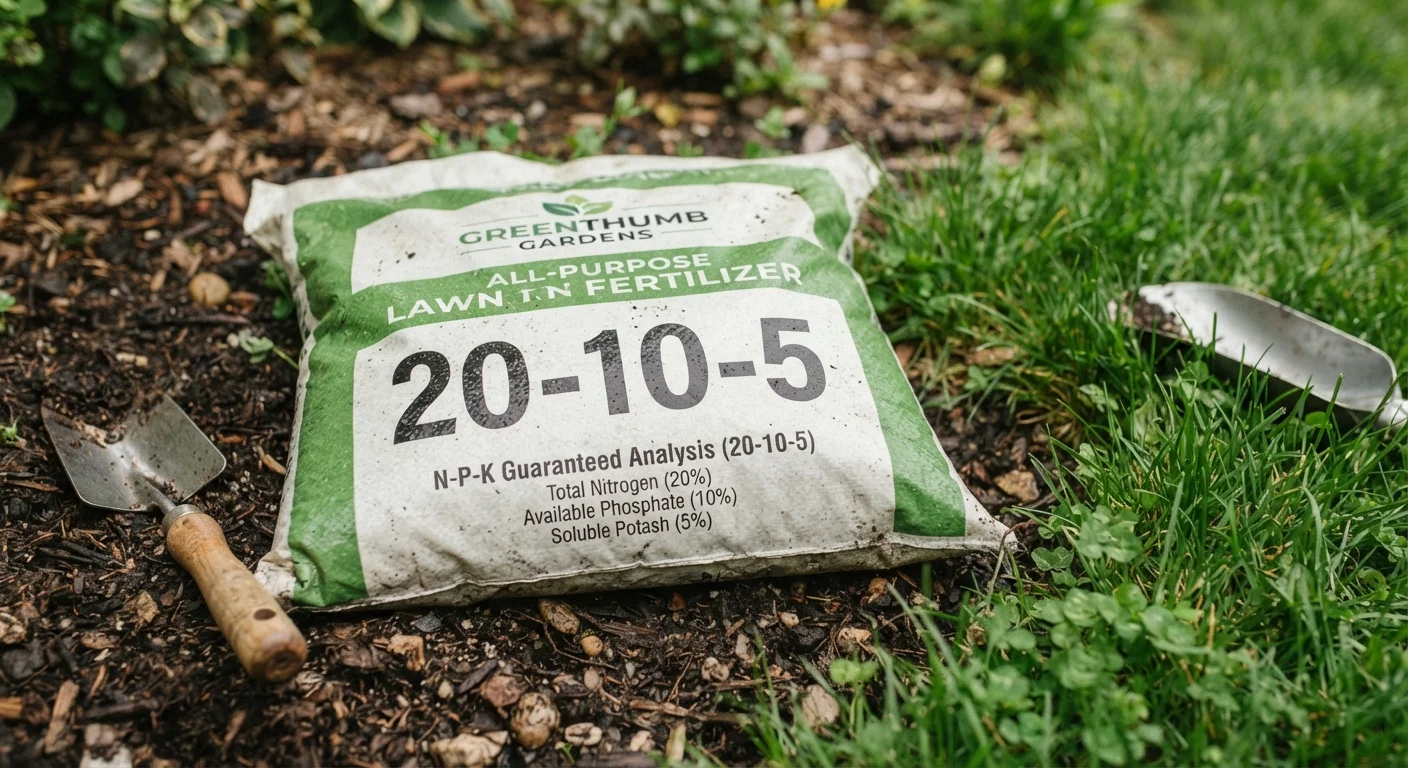
| N-P-K stands for | Nitrogen, Phosphorus, Potassium |
| Numbers represent | Percentage by weight of each nutrient |
| Order is always | N first, P second, K third (U.S. fertilizer labeling standard) |
| Nitrogen primary role | Leafy, green vegetative growth |
| Phosphorus primary role | Root development and flowering |
| Potassium primary role | Stress tolerance and cell regulation |
| Best first step before fertilizing | Soil test to check existing nutrient levels (Cooperative Extension Services) |
The Three Numbers on Every Fertilizer Bag
Every bag of fertilizer sold in the United States carries a guaranteed analysis - three numbers separated by hyphens, such as 10-10-10 or 32-0-6. These numbers represent the percentage by weight of three macronutrients: nitrogen (N), phosphorus (P), and potassium (K), always listed in that order. A 50-pound bag labeled 10-10-10, for example, contains 5 pounds each of nitrogen, phosphorus, and potassium, with the remainder made up of filler or carrier material.
Understanding what each nutrient does - and when your plants are short on it - is the single most practical skill you can develop as a home gardener. It prevents waste, protects waterways from nutrient runoff, and keeps you from guessing at the garden center.
| N-P-K stands for | Nitrogen, Phosphorus, Potassium |
| Numbers represent | Percentage by weight of each nutrient |
| Order is always | N first, P second, K third (U.S. fertilizer labeling standard) |
| Nitrogen primary role | Leafy, green vegetative growth |
| Phosphorus primary role | Root development and flowering |
| Potassium primary role | Stress tolerance and cell regulation |
| Best first step before fertilizing | Soil test to check existing nutrient levels (Cooperative Extension Services) |
What N, P, and K Each Do
Nitrogen (N) - The Growth Driver
Nitrogen is primarily responsible for leafy, green, vegetative growth. It is a core component of chlorophyll, the molecule plants use to convert sunlight into food. Lawns and leafy vegetables - lettuce, spinach, herbs - are heavy nitrogen users. A nitrogen-deficient plant typically shows yellowing that starts at the oldest (lower) leaves and moves upward.
Nitrogen is also the nutrient most easily lost from soil through leaching after heavy rain, which is why many lawn fertilizers carry a high first number. However, excess nitrogen pushes lush top growth at the expense of root development and can increase disease susceptibility.
Phosphorus (P) - The Root and Bloom Builder
The second number reflects phosphorus, which supports root establishment, flower formation, and seed development. It is especially important when transplanting seedlings or establishing new lawns from seed, because strong root systems help plants survive drought and competition. Phosphorus deficiency often appears as purplish discoloration on leaf undersides.
Note that many established lawns in average soil already have adequate phosphorus. Some states restrict or ban phosphorus in lawn fertilizers sold for use on established turf precisely because excess phosphorus runs off into waterways and fuels algae growth. Check your local regulations before choosing a product with a high middle number.
Potassium (K) - The Stress Shield
The third number represents potassium, which regulates water movement within plant cells and strengthens overall plant resilience. Adequate potassium helps grass and garden plants tolerate heat, cold, drought, and disease. It does not directly produce visible growth the way nitrogen does, making deficiencies harder to spot - scorched or brown leaf edges are one common sign.
Potassium is particularly useful in fall lawn fertilizer applications, where the goal shifts from pushing growth to hardening the turf for winter. See our seasonal lawn fertilization guide for timing recommendations across cool- and warm-season grasses.
N-P-K
The three-number code on every fertilizer label representing the percentage by weight of nitrogen (N), phosphorus (P), and potassium (K), always in that order.
Guaranteed Analysis
The legally required section of a fertilizer label that lists minimum nutrient percentages. Manufacturers must deliver at least what they claim here.
Macronutrient
A nutrient that plants require in relatively large quantities. Nitrogen, phosphorus, and potassium are the three primary macronutrients used in commercial fertilizers.
Slow-Release Nitrogen
A form of nitrogen coated or chemically bound so it breaks down gradually, feeding plants over weeks or months and reducing the risk of burning or rapid leaching.
Leaching
The process by which water-soluble nutrients, particularly nitrogen, are washed down through the soil and out of the root zone by rain or irrigation.
Micronutrients
Nutrients plants need in small amounts - such as iron, manganese, and zinc - sometimes listed on fertilizer labels below the main N-P-K guaranteed analysis.
Choosing the Right N-P-K Ratio for Your Situation
There is no universal "best" ratio. The right fertilizer depends on what your soil already contains and what you are trying to grow. The most reliable starting point is a soil test - many cooperative extension services and garden centers offer them at low or no cost. A soil test tells you existing nutrient levels and pH, so you are not guessing.
Soil pH also directly affects how well plants can absorb nutrients regardless of what the fertilizer label says. If your pH is off, nutrients already in the soil become locked up and unavailable. Our article on soil pH and plant health explains when and how to test and adjust.
As a general guideline:
- Established lawn maintenance: A higher-nitrogen formula (e.g., 32-0-6) supports green color and density without overloading phosphorus.
- New lawn seeding or overseeding: A balanced or higher-phosphorus formula supports root establishment.
- Flowering plants and vegetables: Lower nitrogen, higher phosphorus formulas encourage bloom and fruit set rather than excess foliage.
- Fall lawn prep: Look for lower nitrogen with higher potassium to harden plants before cold weather.
Organic amendments like compost release nutrients slowly and improve soil structure alongside their nutrient contribution. Our guide to mulch, compost, and topsoil covers how these materials complement fertilizer use rather than replace it.