

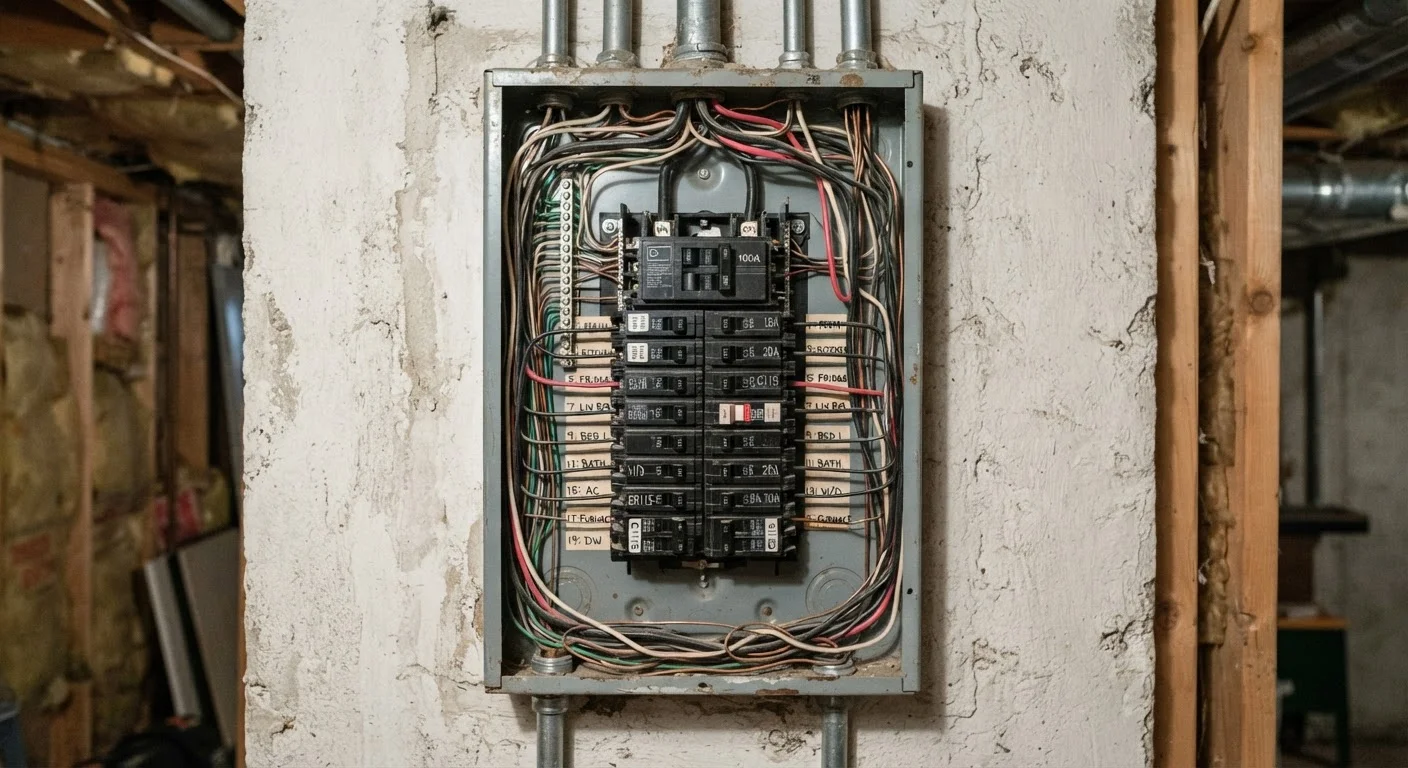
What Your Electrical Panel Actually Does
Your home's electrical panel - sometimes called a breaker box or load center - is the central hub that receives power from the utility grid and distributes it to every circuit in your home. Each circuit breaker inside the panel serves a specific zone or appliance, and it's designed to cut power automatically if something goes wrong. Think of it less as a box of switches and more as a built-in safety system.
Most panels are rated at either 100 amps or 200 amps of total capacity. A 100-amp panel is common in older homes and may struggle to meet the demands of modern appliances; 200-amp panels are the current standard for new construction. If your panel is showing its age or you're planning a major renovation, it's worth having a licensed electrician evaluate whether your capacity still matches your load - and note that panel replacement typically requires a permit. See what triggers permit requirements before starting any electrical project.
Decoding a Tripped Circuit Breaker
A tripped breaker sits in a middle position - neither fully on nor fully off - and is one of the most common electrical events homeowners encounter. It's not a malfunction; it's the breaker doing exactly what it's designed to do. Understanding why it tripped tells you whether you can safely reset it or whether you need professional help.
Common Causes of a Tripped Breaker
- Overloaded circuit: Too many devices drawing power simultaneously exceed the breaker's rated amperage. Running a space heater, microwave, and hair dryer on the same 15-amp circuit is a classic example.
- Short circuit: A hot wire contacts a neutral wire - often inside a faulty appliance or damaged outlet - causing a sudden, high-current surge. Short circuits trip breakers instantly and can be more serious than overloads.
- Ground fault: Electricity finds an unintended path to ground, such as through water or a damaged wire. GFCI outlets (covered below) are specifically designed to catch these before a breaker has to.
How to Safely Reset a Breaker
- Unplug devices from the affected circuit before resetting.
- Push the breaker fully to the OFF position, then firmly to ON.
- If it trips again immediately or repeatedly, stop - do not keep resetting it. That pattern signals a wiring problem or failing breaker that requires a licensed electrician.
When to Stop Resetting and Call a Pro
A breaker that trips repeatedly - especially without an obvious overload cause - is signaling a potential wiring fault, failing breaker, or short circuit inside the wall. Repeatedly resetting it without investigation can create a fire hazard. Turn off devices on that circuit and have a licensed electrician diagnose the problem before restoring power. This is not a job for DIY troubleshooting beyond the basics.
For jobs that go beyond resetting a breaker - including replacing a breaker, adding circuits, or upgrading a panel - see projects that typically require a licensed professional.
GFCI Outlets: Where They're Required and What They Do
A GFCI outlet monitors the balance of electrical current flowing in and out of a circuit. When it detects even a tiny imbalance - as little as 4 to 6 milliamps - it cuts power in under one-tenth of a second. That's fast enough to prevent electrocution in most scenarios.
Circuit Breaker
An automatic safety switch inside your electrical panel that cuts power to a circuit when the current exceeds a safe level. Unlike a fuse, a breaker can be reset and reused.
GFCI (Ground Fault Circuit Interrupter)
A fast-acting outlet or breaker that detects tiny imbalances in electrical current - a sign electricity may be flowing through an unintended path - and shuts off power within milliseconds.
Overloaded Circuit
A condition where the total electrical demand of devices on a single circuit exceeds the breaker's rated capacity, causing the breaker to trip as a protective measure.
Short Circuit
A fault where a hot (live) wire makes unintended contact with a neutral wire, creating an abnormally low-resistance path that causes a sudden, dangerous surge of current.
Ground Fault
An unintended electrical connection between a live conductor and a grounded surface - such as a wet floor or metal appliance casing - creating a shock or fire hazard.
Arc Fault
An unintended electrical discharge between conductors that can generate intense heat. Arc faults are a leading cause of home electrical fires and are detected by AFCI (Arc Fault Circuit Interrupter) breakers.
Where GFCI Protection Is Required
Current U.S. electrical codes (National Electrical Code, or NEC) require GFCI outlets in areas where water and electricity could come into contact. These typically include:
- Bathrooms
- Kitchens (countertop receptacles within 6 feet of a sink)
- Garages and unfinished basements
- Outdoor receptacles
- Laundry and utility rooms
- Crawl spaces and boathouses
Older homes may not have GFCI outlets in these locations. Adding them is a relatively straightforward upgrade but still involves working inside a live circuit - if you're not confident with electrical work, hire a licensed electrician. Local requirements may also differ slightly from the NEC baseline, so verify with your local authority.
Testing GFCI Outlets
Every GFCI outlet has a TEST and RESET button on its face. Press TEST - the outlet should lose power immediately. Press RESET to restore it. Manufacturers generally recommend testing monthly. A GFCI outlet that doesn't respond to the test button may have failed internally and should be replaced. Just as your car's dashboard warns you of problems beneath the surface - much like dashboard warning symbols signal issues in a vehicle - your home's electrical system uses its own language to flag when something needs attention.
Warning Signs You Should Never Ignore
Some electrical signals are easy to dismiss as minor nuisances - a flickering light, a warm outlet cover - but certain patterns consistently indicate hazards that warrant professional evaluation. This is general informational guidance; for anything involving your specific wiring, always consult a licensed electrician.
| Signal | Possible Cause | Action |
|---|---|---|
| Breaker trips repeatedly on the same circuit | Persistent overload, failing breaker, or wiring fault | Call a licensed electrician |
| Burning smell or scorch marks near outlets | Arcing or overheating wiring | Stop using outlet; call electrician immediately |
| Buzzing or crackling sounds from outlets or panel | Loose wiring, failing breaker, or arcing | Call a licensed electrician |
| Warm or hot outlet cover plates | Overloaded circuit or internal wiring issue | Unplug devices; have outlet inspected |
| Lights dim when appliances start | Voltage drop from overloaded or undersized circuit | Consult electrician about circuit capacity |
Electrical hazards are among the leading causes of residential fires in the U.S. If you're ever uncertain whether a symptom is serious, err on the side of caution and have it evaluated. No online guide - including this one - can substitute for a professional inspection of your specific system.
This article provides general educational information about residential electrical systems. It is not a substitute for advice from a licensed electrician or compliance with local electrical codes. Always consult a qualified professional before performing any electrical work, and verify permit requirements with your local building authority.