

Key Takeaways
Tire Sidewall Code
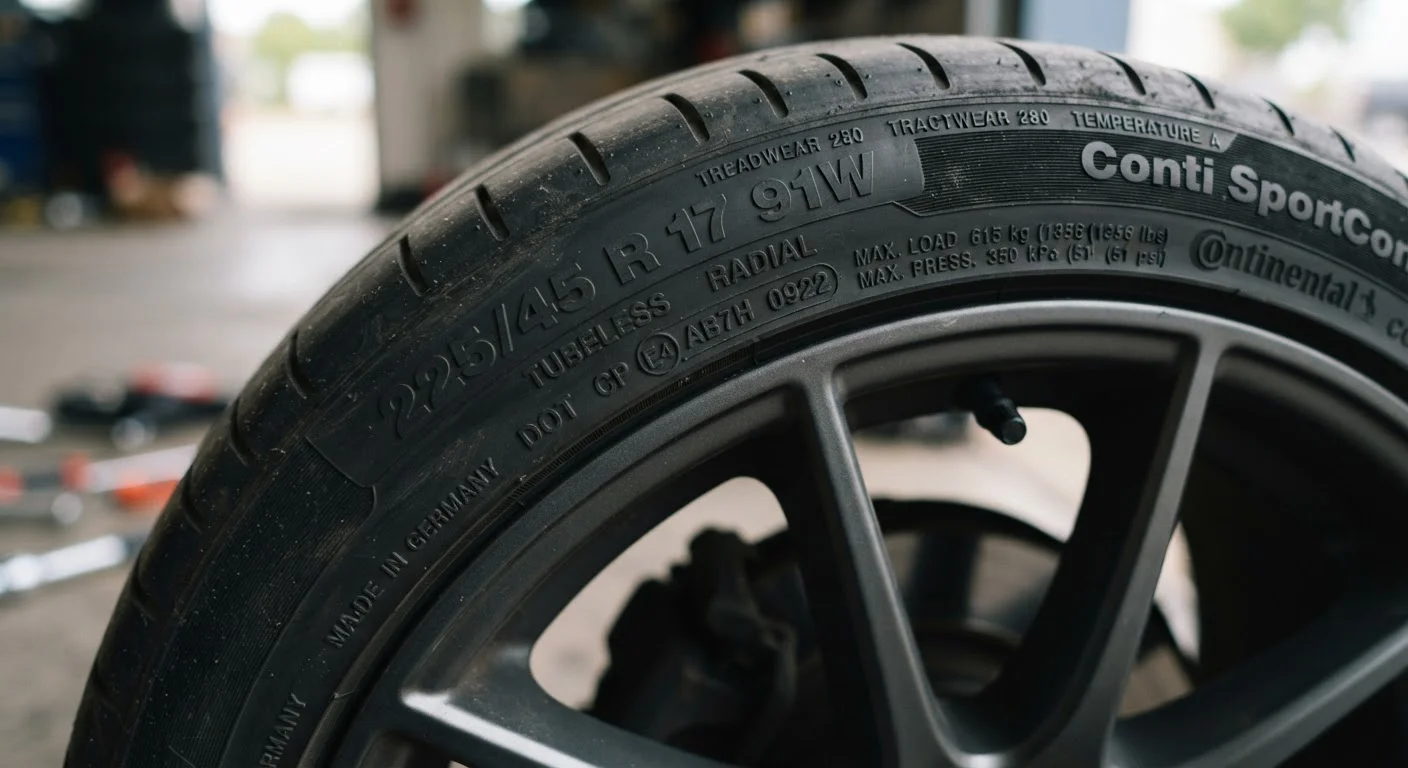
The tire sidewall code is the string of letters and numbers molded into the side of every passenger tire. It encodes the tire's width, height, construction type, wheel diameter, load capacity, and maximum speed rating - all in a standardized format regulated by the U.S. Department of Transportation.
The full sequence follows the ISO Metric format (e.g., P215/65R17 98H), where each segment maps to a specific engineering specification defined by the Tire and Rim Association (TRA).
The Anatomy of a Tire Code
Pick up any passenger tire and you'll find a sequence like P215/65R17 98H molded into the sidewall. It looks cryptic at first, but each segment has a precise meaning - and knowing them helps you confirm you're running the right tire for your vehicle.
Here's how to break that example down:
- P - Service type. 'P' means passenger vehicle. 'LT' means light truck.
- 215 - Section width in millimeters, measured from sidewall to sidewall at the tire's widest point.
- 65 - Aspect ratio. The sidewall height is 65% of the section width.
- R - Construction type. 'R' stands for radial, the dominant construction used in modern tires.
- 17 - Wheel (rim) diameter in inches. This must match your wheel size exactly.
- 98 - Load index. A numeric code representing the maximum weight the tire can safely carry. An index of 98 equals approximately 1,653 lbs per tire.
- H - Speed rating. 'H' indicates a maximum sustained speed of 130 mph under load. Speed ratings range from L (75 mph) through Y (186 mph).
Never install a tire with a lower load index or speed rating than your vehicle manufacturer specifies - doing so is a safety risk, not just a technicality.
~11,000
Annual US tire-related crash fatalities and injuries
The National Highway Traffic Safety Administration (NHTSA) has estimated that tire-related crashes cause thousands of injuries and deaths on US roads each year, underscoring the importance of proper tire maintenance and fitment.
6 years
Recommended age threshold for tire inspection
Many vehicle manufacturers and tire industry groups recommend professional inspection of tires that have reached six years of age, regardless of remaining tread depth, due to rubber degradation over time.
~26%
Vehicles on US roads with at least one underinflated tire
NHTSA research has found that a significant share of passenger vehicles operate with at least one tire below the recommended pressure, a condition that reduces fuel efficiency and increases blowout risk.
The DOT Code and Tire Age
Elsewhere on the sidewall - sometimes on the inboard face - you'll find a string beginning with DOT (Department of Transportation). This confirms the tire meets federal safety standards. The final four digits are the most useful part for everyday drivers: they encode the week and year the tire was manufactured.
A marking of DOT ...1821 means the tire was made in the 18th week of 2021. This matters because rubber compounds degrade over time, even in tires that look fine and have plenty of tread left. Exposure to heat, UV light, and oxygen causes the rubber to stiffen and micro-crack internally - a process that's invisible until a blowout occurs.
Many tire industry organizations and vehicle manufacturers recommend having tires professionally inspected once they reach six years of age, and replacing them at ten years regardless of condition. If you're buying a used vehicle, check the DOT dates on all four tires - and the spare. For more on how a slow tire problem can quietly become a serious hazard, see why ignoring a slow tire leak is riskier than it sounds.
Check All Four DOT Dates, Not Just One
Tires on the same vehicle can have different manufacture dates, especially if one or more have been replaced individually over the years. Take two minutes to check the DOT date on each tire - don't assume they all match. Write down the dates and factor them into any upcoming service decision.
Other Markings Worth Knowing
Beyond the main size code and DOT sequence, sidewalls often carry additional markings that provide useful context:
- UTQG ratings (Uniform Tire Quality Grading): Three grades - Treadwear, Traction, and Temperature - set by the National Highway Traffic Safety Administration (NHTSA). A treadwear grade of 400 indicates a tire expected to last roughly twice as long as a baseline tire rated at 200. Traction grades run AA, A, B, C; temperature grades run A, B, C.
- M+S or M/S: Mud and Snow designation. This indicates the tire meets a minimum standard for winter traction, though it doesn't qualify as a dedicated winter tire.
- Three-peak mountain snowflake symbol (3PMSF): A more rigorous winter performance standard. Tires carrying this symbol have passed standardized snow traction tests.
- MAX LOAD and MAX PRESSURE: The maximum load capacity and maximum cold inflation pressure for that specific tire. Note that maximum pressure is not the same as recommended pressure - your vehicle's door-jamb placard specifies the correct inflation target.
Understanding these additional codes complements other vehicle literacy skills. See also tire rotation, balancing, and alignment explained for related maintenance context, and your vehicle's scheduled maintenance intervals to understand how tires fit into a broader service plan.
Putting It All Together
The most practical step you can take right now is to locate your vehicle's tire placard - typically a sticker on the inside edge of the driver's door - and compare it with what's actually on your tires. The size, load index, and speed rating should all meet or exceed the manufacturer's specifications.
If you're unsure whether your current tires are correct for your vehicle, a tire shop or dealership can verify fitment quickly. And if your dashboard TPMS (Tire Pressure Monitoring System) light has come on, that's a separate but related concern - your car's warning lights decoded explains what that icon means and when to act on it.
Reading your sidewall takes less than a minute once you know the format. That minute of knowledge can inform smarter tire purchases, help you catch a fitment problem before it becomes a safety issue, and give you more confidence every time you talk to a service technician.
This article provides general information about tire markings for educational purposes. Always consult a qualified tire or automotive professional for advice specific to your vehicle and situation.