

Key Takeaways
What a Slow Leak Actually Does to Your Tire
A tire that drops one pound per square inch (PSI) of pressure each week may seem like a nuisance rather than a hazard. But over four weeks, that tire could be running 4 PSI below the vehicle manufacturer's recommended inflation level - a threshold at which handling, braking performance, and structural integrity are all measurably compromised.
Underinflated tires flex more than designed as they roll. That excess flexing generates heat, and heat is one of the primary contributors to tire failure. The sidewall - the portion of the tire between the tread and the wheel - is not built to absorb that kind of sustained stress. Over time, the internal structure of the tire can weaken, making a sudden blowout more likely, especially at highway speeds.
It's also worth noting that a tire can look acceptably inflated to the naked eye even when it's significantly underinflated. A tire that's 6-8 PSI low may not appear visibly flat. That's what makes slow leaks particularly deceptive. See our guide to warning signs drivers commonly brush off for more on subtle vehicle problems that are easy to overlook.
25%
PSI drop before TPMS warning activates
The U.S. National Highway Traffic Safety Administration (NHTSA) requires TPMS to alert drivers when a tire is 25% below the vehicle's recommended inflation pressure - meaning significant underinflation can exist before any dashboard warning appears.
~11,000
Annual crashes linked to tire problems
NHTSA data has consistently attributed thousands of annual motor vehicle crashes to tire-related factors, including underinflation and blowouts resulting from tire deterioration.
Common Mistakes Drivers Make With Slow Leaks
Understanding the errors most drivers make helps explain why slow leaks so often escalate into larger, more dangerous problems.
Relying on a visual inspection instead of a pressure gauge to monitor tire inflation.
Why it happens: Most drivers were never taught that a tire can appear normal while being significantly underinflated. A quick glance before a trip feels sufficient.
Repeatedly adding air to a leaking tire instead of having the source of the leak diagnosed and repaired.
Why it happens: Adding air is fast, free at many stations, and provides immediate relief. It feels like a solution even though it only masks the underlying problem.
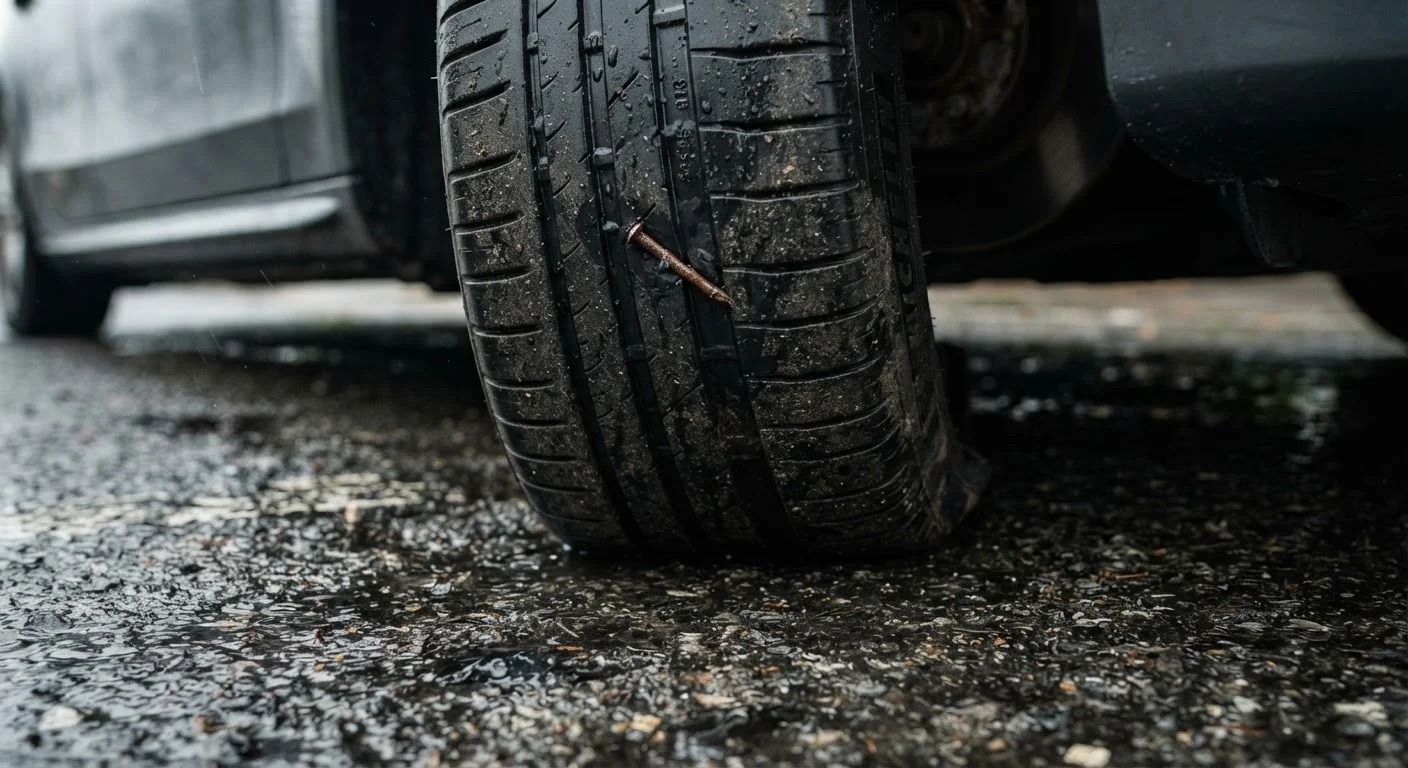
Assuming a slow leak will resolve on its own or that a nail lodged in the tread is harmless.
Why it happens: A nail embedded in a tire sometimes acts as a temporary plug, keeping the pressure loss gradual. This can create the false impression that the situation is stable.
Ignoring a slow leak in a spare or infrequently used tire.
Why it happens: Spares and seasonal vehicles often go months without a pressure check, making them vulnerable to quiet pressure loss through natural permeation or a developing fault.
Dismissing a TPMS warning light after briefly inflating the tire to silence the alert.
Why it happens: Drivers often interpret the warning light going off as confirmation that the problem is solved, not just temporarily addressed.
When to See a Professional - and What to Expect
Not every slow leak requires a tire replacement. A qualified tire technician can identify the source of the leak and determine whether a repair is safe and appropriate. A puncture in the central tread area, for instance, is often repairable using an industry-standard patch-plug combination. Damage to the sidewall, however, generally means the tire must be replaced - repairs in that area are not considered structurally safe.
If the leak stems from a faulty valve stem, the fix is typically straightforward and inexpensive. Bead leaks - where the tire meets the wheel rim - may require the tire to be dismounted, the rim cleaned of corrosion, and the tire reseated. This is common on older vehicles or aluminum alloy wheels prone to oxidation.
Never Repair a Sidewall Puncture
If the source of a slow leak is found in the tire's sidewall rather than the tread, the tire must be replaced - not patched. Sidewall repairs are not recognized as safe by major tire industry standards because the sidewall flexes continuously under load, making any repair vulnerable to failure. A technician who offers a sidewall patch should be a reason to seek a second opinion.
Understanding your tire's specifications can also help you have more informed conversations with a technician. The plain-language guide to reading your tire sidewall explains what those numbers and letters actually mean for your vehicle's safety and performance.
Slow leaks rarely fix themselves. A small nail may temporarily act as its own plug, but road vibration and continued driving will eventually work it loose. If your tire pressure warning light has come on, or if you find yourself adding air more than once a month to the same tire, it's time to have it inspected rather than refilled again.