

Key Takeaways
Lisbon as a Travel Destination
Lisbon is Portugal's capital city, situated on the Atlantic coast at the mouth of the Tagus River. It's a mid-sized European capital known for its hilly neighborhoods, historic streetcars, seafood-forward cuisine, and a cultural atmosphere that blends old-world architecture with a lively contemporary arts scene. For American travelers, it offers a distinctly European experience with relatively fewer logistical hurdles than some other major capitals.
Lisbon operates in the Western European Time zone (UTC+0 in winter, UTC+1 in summer), making it one of the closest European capitals in time zone terms to the US East Coast.
What Lisbon Actually Is
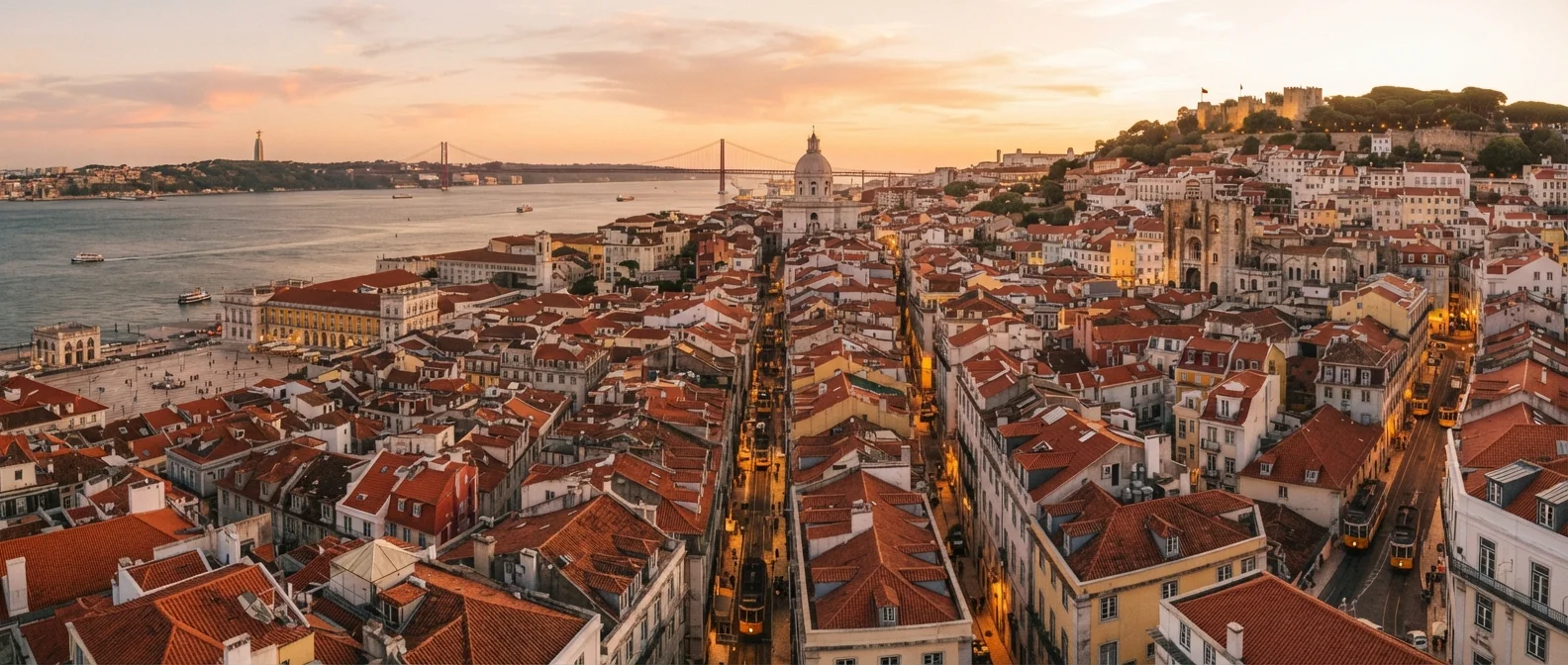
Lisbon sits where the Tagus River meets the Atlantic, spread across a series of hills that give the city its defining visual quality - the sense that there's always another angle, another tiled staircase, another viewpoint (miradouro) revealing something new. It's a city of around 550,000 people in the core municipality, which makes it smaller and more manageable than Paris or Rome without feeling provincial.
The architecture reflects layers of history: Moorish-era layouts in Alfama, ornate Manueline stonework at the Jerónimos Monastery in Belém, and Art Nouveau facades scattered through Chiado. A catastrophic earthquake in 1755 destroyed much of the original city, and what was rebuilt - the grid-planned Baixa district - gives travelers a clear sense of two distinct eras coexisting across a short walk.
A Note on Tram 28
Lisbon's streetcar system, particularly the iconic yellow Tram 28, is a legitimate way to get around - but it's also extremely popular with tourists. Expect crowds on the most famous routes during peak hours, and consider walking or using the metro for efficiency. Pickpocketing has been reported on crowded tram routes; keep valuables secured.
Lisbon's streetcar system, particularly the iconic yellow Tram 28, is a legitimate way to get around - but it's also extremely popular with tourists. Expect crowds on the most famous routes during peak hours, and consider walking or using the metro for efficiency.
The Neighborhoods That Define the Experience
Each of Lisbon's major neighborhoods has enough character to occupy a full afternoon. Alfama, the oldest district, climbs steeply from the riverfront toward São Jorge Castle. Its narrow alleys and tiled houses have become a shorthand image for the city, but it still functions as a lived-in community with local bakeries and small restaurants alongside the tourist traffic.
Mouraria, adjacent to Alfama, is historically the city's Moorish quarter and today one of its most multicultural areas - a good place to eat and wander without the same visitor density. Bairro Alto is quieter by day and livelier at night, with small restaurants and bars packed into a compact grid. LX Factory, a repurposed industrial complex in Alcântara, hosts a Sunday market that draws both locals and visitors and gives a sense of Lisbon's contemporary creative scene.
Belém, about 6 kilometers west along the river, is worth a separate half-day for the Jerónimos Monastery, the Tower of Belém, and the original Pastéis de Belém bakery - the birthplace of Portugal's famous custard tart. Destinations like Lisbon reward slower pacing, where spending a morning in one neighborhood yields more than rushing through five.
~550,000
Population of Lisbon proper
Lisbon is a smaller European capital than many visitors expect, making it navigable on foot across several key neighborhoods within a single day.
40 min
Train ride from Lisbon to Sintra
The Sintra rail line runs from Rossio station in central Lisbon, making the UNESCO-listed hill town one of the most accessible day trips from any European capital.
1755
Year of the Great Lisbon Earthquake
The earthquake and subsequent tsunami reshaped much of the city's layout, which is why Baixa's orderly grid contrasts so visibly with Alfama's winding medieval streets.
Food, Fado, and Cultural Context
Portuguese cuisine in Lisbon is rooted in simplicity and quality of ingredient. Bacalhau (salt cod) appears in dozens of preparations - locals will tell you there are 365 recipes. Petiscos, Portugal's answer to tapas, are a practical way to eat across several small dishes at once. Seafood is fresh and central; grilled sardines in summer are something of a cultural ritual. The custard tart, pastel de nata, is genuinely ubiquitous and worth trying multiple times from different bakeries.
Fado - Lisbon's native musical genre - is a UNESCO-recognized tradition of melancholic, emotionally direct songs typically performed in intimate venues. Authentic fado houses exist, though the most tourist-focused venues can feel performative rather than genuine. Asking locals or checking community-oriented listings tends to turn up better options than the most-advertised spots.
For travelers weighing how to structure their time, the city suits both solo exploration and group travel differently. Our piece on solo vs. group travel trade-offs covers how each style changes the experience in a city like this.
“Fado is the music of longing - saudade - a word the Portuguese use for a feeling that has no direct translation in English. It is sadness and love and memory all at once.”
— Mariza, Portuguese fado singer and cultural ambassador for the genre
Honest Considerations Before You Go
Lisbon's growing international profile has brought real changes. Certain neighborhoods - particularly parts of Alfama and Chiado - see heavy foot traffic during peak season, and short-term rental growth has shifted the character of some residential streets. This doesn't diminish the city, but it does mean the experience varies considerably depending on when you visit and how much you're willing to move beyond the obvious routes.
The city is hilly, and that's not a minor point. Comfortable shoes are genuinely necessary, and travelers with mobility considerations should research specific neighborhoods carefully before planning a walking-heavy itinerary. The historic streetcars are charming but slow and crowded; the metro is faster and easier for covering distance.
Day trips extend the visit meaningfully. Sintra, about 40 minutes by train from Rossio station, offers UNESCO-listed palaces in a forested hillside setting that contrasts sharply with urban Lisbon. The Alentejo coast to the south has quieter beaches that differ from the more developed Algarve. Compared to planning a similar multi-city trip - say, the approach described in what guidebooks often get wrong about Italy - Lisbon's compact geography makes it easier to combine urban and rural experiences without heavy logistical planning.
This article is for general informational purposes only. Travel conditions, entry requirements, and local circumstances can change. Always verify visa rules, health requirements, and safety advisories with official government sources before traveling.