
Caribbean Islands Compared: Key Differences in Character, Terrain, and Travel Experience

Key Takeaways
Our Verdict
No single Caribbean island is universally superior - what makes one perfect for one traveler makes it wrong for another. The clearest path to a great trip is identifying what you actually want: nightlife and resort convenience, volcanic hikes and rainforest trails, quiet beaches with minimal crowds, or a deep dive into local history and cuisine. Once you know your priorities, the Caribbean's diversity becomes an advantage rather than a source of confusion.
| Best for | Recommended |
|---|---|
| Resort amenities, nightlife, and easy logistics | Puerto Rico or Dominican Republic |
| Dramatic volcanic scenery and hiking | St. Lucia or Dominica |
| Calm waters and flat terrain for sailing or snorkeling | British Virgin Islands or Turks and Caicos |
| Distinct local culture with European character | Martinique, Guadeloupe, or Curaçao |
Why 'The Caribbean' Is Not One Place
Ask ten different travelers about their Caribbean trip and you might hear about dense rainforest hikes, all-inclusive beach resorts, French bistros on cobblestone streets, or a bareboat sailing itinerary through quiet anchorages. They are all describing the same region - and all of them are right. The Caribbean stretches across more than 700 islands, islets, and cays, governed by more than a dozen different nations and territories, with colonial histories that shaped everything from local cuisine to official language to the architecture of the nearest town square.
That variety is the region's greatest strength and, for first-time visitors, its greatest source of confusion. Understanding a few key dividing lines - terrain type, cultural heritage, and general atmosphere - makes it far easier to choose the island that actually fits your trip. If you are weighing whether to fly or position yourself as a slow traveler who lingers in one place, those questions matter just as much as the destination itself. See our guide to slow travel vs. fast itineraries for more on matching pace to place.
Terrain: Volcanic Islands vs. Flat Limestone Platforms
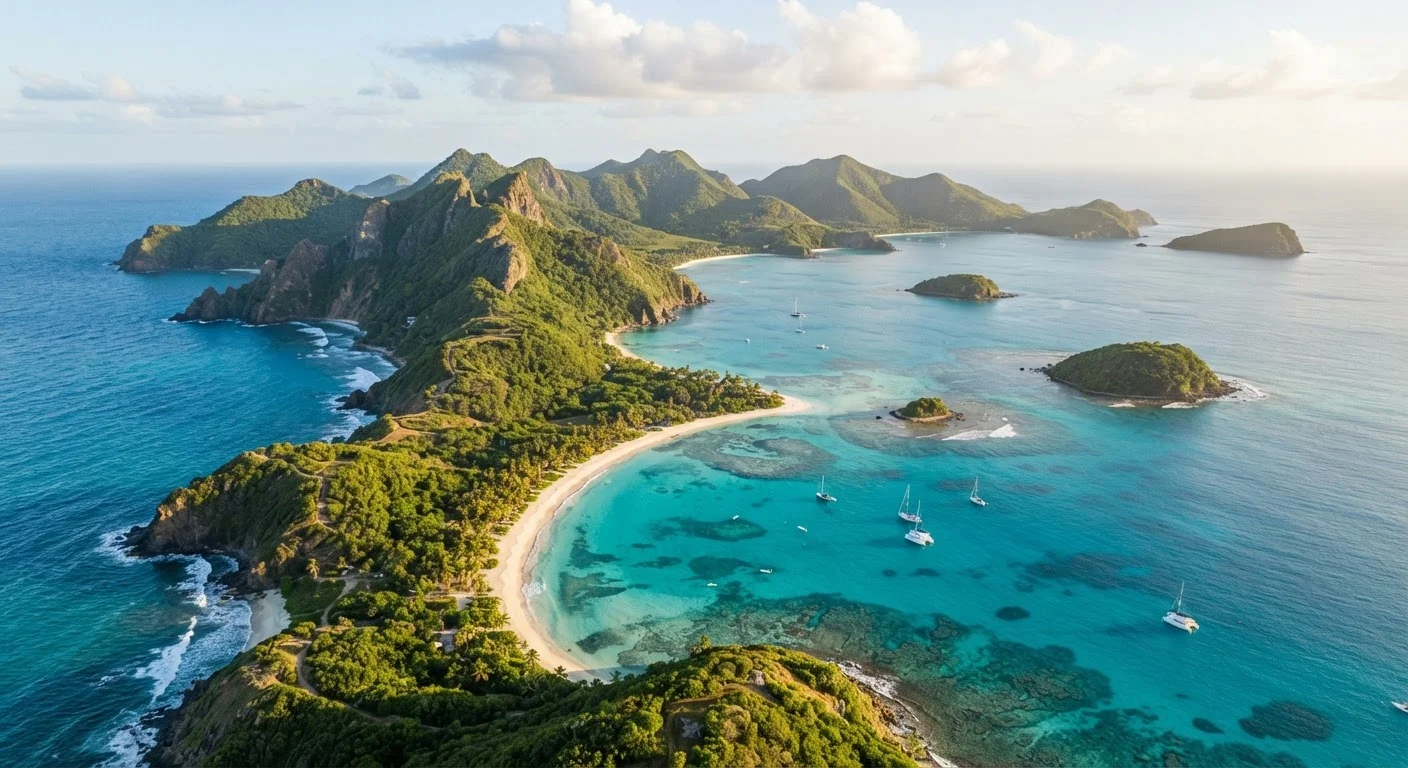
The single biggest physical divide in the Caribbean is geology. The eastern arc of islands - including St. Lucia, Dominica, Grenada, and St. Vincent - are young volcanic formations. They rise steeply from the sea, with mountainous interiors draped in rainforest, rivers cutting through gorges, hot springs, and in some cases active volcanic features. Hiking, waterfall chasing, and lush botanical scenery are natural draws here. Beaches tend to be smaller, sometimes dark-sand, and framed by dramatic topography.
By contrast, islands like Turks and Caicos, the Bahamas, Anguilla, and Barbados sit atop ancient coral limestone shelves. They are low, flat, and defined by long stretches of powdery pale sand and extraordinarily clear, calm water in multiple shades of blue. The diving and snorkeling around these islands - particularly on barrier reefs and wall systems - is among the most accessible in the world. Hikers or waterfall seekers will find little to work with, but that is rarely why people come.
Puerto Rico and Jamaica sit somewhere in the middle: both have interior mountain ranges with genuine hiking, including El Yunque National Forest in Puerto Rico, but also well-developed coastal resort infrastructure. This dual nature makes them popular with groups whose members want different things from the same trip.
| Puerto Rico | St. Lucia | Turks & Caicos | Martinique | Dominica | |
|---|---|---|---|---|---|
| Terrain type | Mountain & coastal | Volcanic peaks | Flat coral limestone | Volcanic interior | Rugged volcanic |
| Primary language | Spanish / English | English | English | French | English |
| Cultural heritage | Spanish / US territory | British colonial | British colonial | French department | British colonial |
| Beach character | Varied, extensive | Smaller, scenic coves | Long, powdery white sand | Mix of black & white sand | Limited, black sand |
| Adventure / nature focus | Moderate (El Yunque) | High (hiking, waterfalls) | Low (diving, snorkeling) | Moderate (trails, rum) | Very high (eco-tourism) |
| US passport required | No (US territory) | Yes | Yes | Yes | Yes |
| Best suited for | First-timers, groups | Couples, adventurers | Beach purists, divers | Foodies, cultural explorers | Eco-travelers, divers |
Culture and Colonial Heritage: Who Shaped Each Island
Walk through Willemstad in Curaçao - a Dutch colonial city with pastel Dutch-style facades lining a harbor - then fly an hour east to Martinique, where French is spoken, the bread is a baguette, and the currency is the euro. These are Caribbean islands, but they feel nothing alike on the ground. Colonial history is the single most reliable predictor of an island's cultural character.
British-influenced islands (Jamaica, Barbados, St. Kitts, Antigua) tend to share a cricket culture, a tradition of rum production, and English as the primary language with its own distinct local patois. French territories like Martinique, Guadeloupe, and St. Barthélemy operate as actual French departments - governed from Paris, with French schools, French healthcare, and French food culture. Dutch islands including Curaçao, Bonaire, and Sint Maarten reflect a different European overlay, often with notable local Papiamentu-speaking populations. Spanish-heritage islands - Cuba, the Dominican Republic, and Puerto Rico - bring a third distinct cultural current, with salsa music, Spanish-language daily life, and culinary traditions rooted in both Iberian and West African influences.
For travelers who care about food, music, local markets, and genuine cultural immersion, this dimension matters as much as beach quality. It is also worth comparing the Caribbean to other culturally layered warm-weather destinations. Our piece on Costa Rica vs. Mexico explores how two neighboring countries can offer radically different cultural experiences despite sharing a region.
Language Goes Further Than You Think
On French islands like Martinique and Guadeloupe, English is spoken in tourist areas but daily life runs in French. Even a handful of French phrases - ordering coffee, greeting shopkeepers, saying thank you - changes how locals receive you and can open doors to restaurants and neighborhoods that feel entirely off the tourist circuit. The same applies to Spanish on Dominican Republic or Cuban itineraries.
Atmosphere and Travel Experience: Who Each Island Suits
Beyond terrain and culture, islands develop distinct travel personalities over time - partly by design, partly by geography. St. Barts has cultivated an upscale, low-key luxury identity: expensive, quiet, and not oriented toward large resort tourism. Ibiza comparisons are wrong; the vibe is closer to understated privacy. Contrast that with Nassau in the Bahamas or Cancún-adjacent Caribbean-facing resorts in the Dominican Republic, which cater explicitly to high-volume tourism with cruise infrastructure, all-inclusive compounds, and organized excursions.
Dominica calls itself the "Nature Isle" for good reason - it is one of the least developed islands in the region, with minimal beach infrastructure but extraordinary diving (including the famous Champagne Reef) and hiking. It actively attracts eco-conscious travelers who want to work a little for their reward. Bonaire is similarly specialist: it is one of the world's premier shore-diving destinations, and that identity shapes almost everything about what the island offers visitors.
For travelers deciding between going solo and traveling with others, the Caribbean's variety becomes a real factor - some islands are well-suited to independent exploration, while others reward the shared logistics of a group. Our solo vs. group travel guide lays out those trade-offs clearly.
Practical Considerations Before You Book
Entry requirements, currency, and language all vary by island and territory. US citizens can travel to Puerto Rico and the US Virgin Islands without a passport, which makes them a practical first Caribbean experience for many Americans. Most other islands require a valid passport, and some require visas or entry forms depending on nationality - always verify current requirements through official government sources or your country's foreign affairs office before booking.
Hurricane season runs roughly from June through November, with peak risk in August and September. That does not mean the entire Caribbean is off-limits in those months - the southern islands below roughly 12 degrees north latitude (including Trinidad, Tobago, Aruba, Bonaire, and Curaçao) sit largely outside the typical hurricane belt. But travelers booking in peak season should understand the weather risk and consider whether travel insurance aligns with their risk tolerance.
If you are still working out whether to fly directly to your island of choice or position yourself regionally and island-hop, the logistics of that decision are worth thinking through carefully - similar to the core questions in our road trip vs. flying comparison. Inter-island flights and ferries vary significantly in reliability, frequency, and cost depending on the route.
This article provides general travel information and education. Entry requirements, weather conditions, and travel advisories change frequently. Always verify visa rules, safety information, and current conditions through official government and provider sources before making travel plans.