

Key Takeaways
Our Verdict
Costa Rica and Mexico both deliver sun, warmth, and unforgettable experiences - but they deliver them in very different ways. Mexico's sheer size gives it unmatched variety, from ancient ruins to resort beaches, while Costa Rica punches above its weight with concentrated biodiversity and adventure. Neither is objectively better; the right answer comes down to what kind of traveler you are.
| Best for | Recommended |
|---|---|
| Wildlife lovers and outdoor adventurers | Costa Rica |
| History and culture seekers | Mexico |
| Budget-conscious travelers seeking flexibility | Mexico |
| Travelers wanting a quieter, less crowded destination | Costa Rica |
The Core Personality of Each Destination
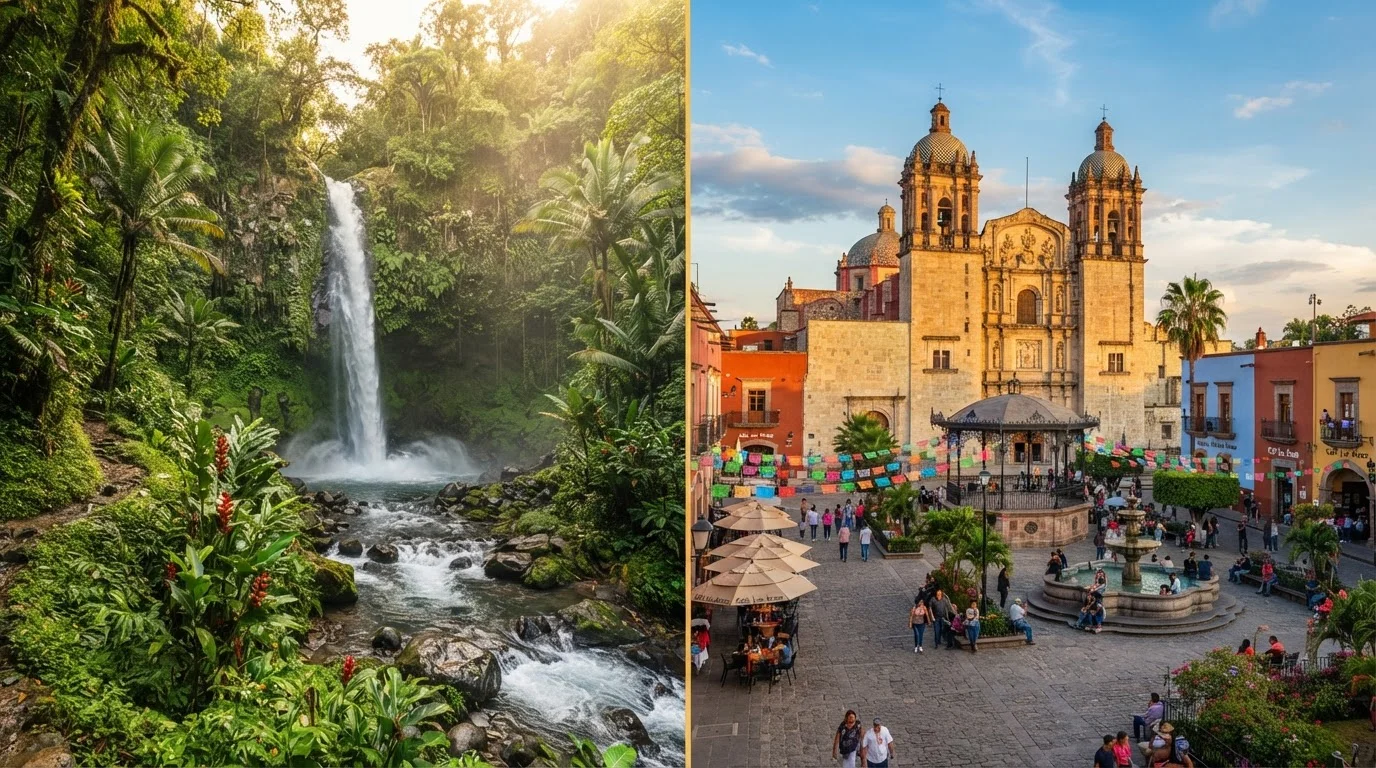
Strip away the resort brochures and these two destinations reveal genuinely different characters. Costa Rica is a compact country - roughly the size of West Virginia - that has built its entire tourism identity around nature. Rainforests, cloud forests, volcanoes, and coastline on both the Pacific and Caribbean sides pack extraordinary variety into a small footprint. Wildlife encounters aren't incidental; they're the point. Scarlet macaws, sloths, sea turtles, and howler monkeys are reliable sightings, not lucky ones.
Mexico, by contrast, is vast and layered. It offers Maya and Aztec ruins, UNESCO-listed colonial cities, some of the world's most celebrated cuisine, and coastal regions that run from the turquoise Caribbean waters of the Yucatán to the dramatic Sea of Cortez in Baja. A trip to Oaxaca feels nothing like a trip to Tulum, which feels nothing like Mexico City. That variety is Mexico's great strength - and its primary logistical challenge.
| Costa Rica | Mexico | |
|---|---|---|
| Primary draw | Biodiversity and eco-adventure | Culture, history, and varied coastlines |
| Country size | Small and concentrated | Vast, highly varied by region |
| Flight accessibility from U.S. | Moderate - fewer direct routes | High - many U.S. cities served |
| Typical cost level | Moderate to high | Budget-friendly to high (varies) |
| Best season to visit | December-April (dry season) | Varies by region; generally Nov-April |
| Wildlife and nature | Outstanding, world-class density | Strong in select areas (Yucatán, Baja) |
| Cultural and historical sites | Limited but present | Exceptional depth and variety |
| Getting around | Challenging roads; plan carefully | Easier between major hubs |
Getting There and Getting Around
For most Americans, Mexico wins on sheer accessibility. Dozens of U.S. cities offer direct flights to Mexican destinations, and flight times from the East and Midwest can be as short as two to three hours to Cancún. No passport is required for U.S. citizens visiting Mexico by air (a passport card or book works), though a passport book is recommended. Ground transportation inside Mexico ranges from budget buses to domestic flights connecting distant regions.
Costa Rica is well-served from major U.S. hubs - San José and the Liberia airport both receive direct flights - but the route options are narrower and fares can run higher. Once inside the country, getting around requires planning. Roads between destinations vary dramatically in quality, and the famously rugged terrain means a trip that looks short on a map can take several hours. Many travelers opt for domestic flights between regions or join organized transfers. If you enjoy the flexibility of self-directed travel, think through your Costa Rica logistics carefully - see our guide to road trip vs. flying trade-offs for a useful framework.
Plan Costa Rica Logistics Early
Popular national parks like Manuel Antonio and Corcovado have limited daily entry slots that sell out well in advance. Book park permits and lodge transfers before you leave home - showing up without reservations at peak season can mean missing the experience entirely. For Mexico, flight and hotel flexibility is generally higher, but resort areas during U.S. school holidays fill fast.
Cost, Crowds, and Practical Realities
Mexico generally edges out Costa Rica on overall cost. Budget accommodations, street food, and local transportation keep expenses manageable across most of Mexico, particularly outside major resort zones. Costa Rica has a well-earned reputation for higher-than-expected prices - eco-lodges, park entrance fees, and activity costs add up quickly, and the country has made a deliberate choice not to compete on price.
Crowd dynamics differ too. Mexico's resort corridors like Los Cabos or the Riviera Maya can feel intensely developed during peak season. Costa Rica's national parks cap daily visitor numbers at some locations, which preserves the experience but requires advance planning. If you're weighing a quieter, slower pace against a packed itinerary, it's worth reading our thoughts on slow travel vs. fast itineraries - both destinations support both approaches, but in very different ways.
On safety: both countries have regions that are well-established for tourism and areas where caution is warranted. The U.S. State Department publishes travel advisories for both; checking those before finalizing any trip is strongly recommended. Conditions can change, and no general article can substitute for current, official guidance.
Experiences You Can't Replicate Elsewhere
Costa Rica's signature experiences are rooted in the natural world. Zip-lining through Monteverde's cloud forest canopy, watching Arenal Volcano at dusk, or snorkeling off the Osa Peninsula's Corcovado coast are encounters shaped by ecosystems that exist nowhere else in the Americas at this concentration. The country has protected roughly 25% of its land in national parks and reserves - a remarkable commitment that shapes every visitor's experience.
Mexico's irreplaceable moments are more culturally layered. Standing inside Teotihuacán at sunrise, eating at a Oaxacan market that has operated for centuries, or snorkeling the cenotes of the Yucatán Peninsula - these are experiences woven from history, geology, and living tradition simultaneously. Mexico's culinary scene alone draws dedicated food travelers; UNESCO recognized Mexican cuisine as an Intangible Cultural Heritage of Humanity.
If you're still narrowing down the broader region, our Caribbean island comparison may also help you weigh adjacent options worth considering alongside these two destinations.