

Key Takeaways
Summary
32 items · 20-40 minutes
Why a Grocery Checklist Supports Better Eating Patterns
Most gaps in everyday nutrition aren't caused by lack of willpower - they result from an under-stocked kitchen. When the pantry runs low on versatile staples, meals tend to drift toward convenience options that are higher in sodium, refined carbohydrates, and added sugars. A structured weekly checklist shifts decision-making to the grocery store rather than the dinner table, making it easier to build balanced meals without overthinking every choice.
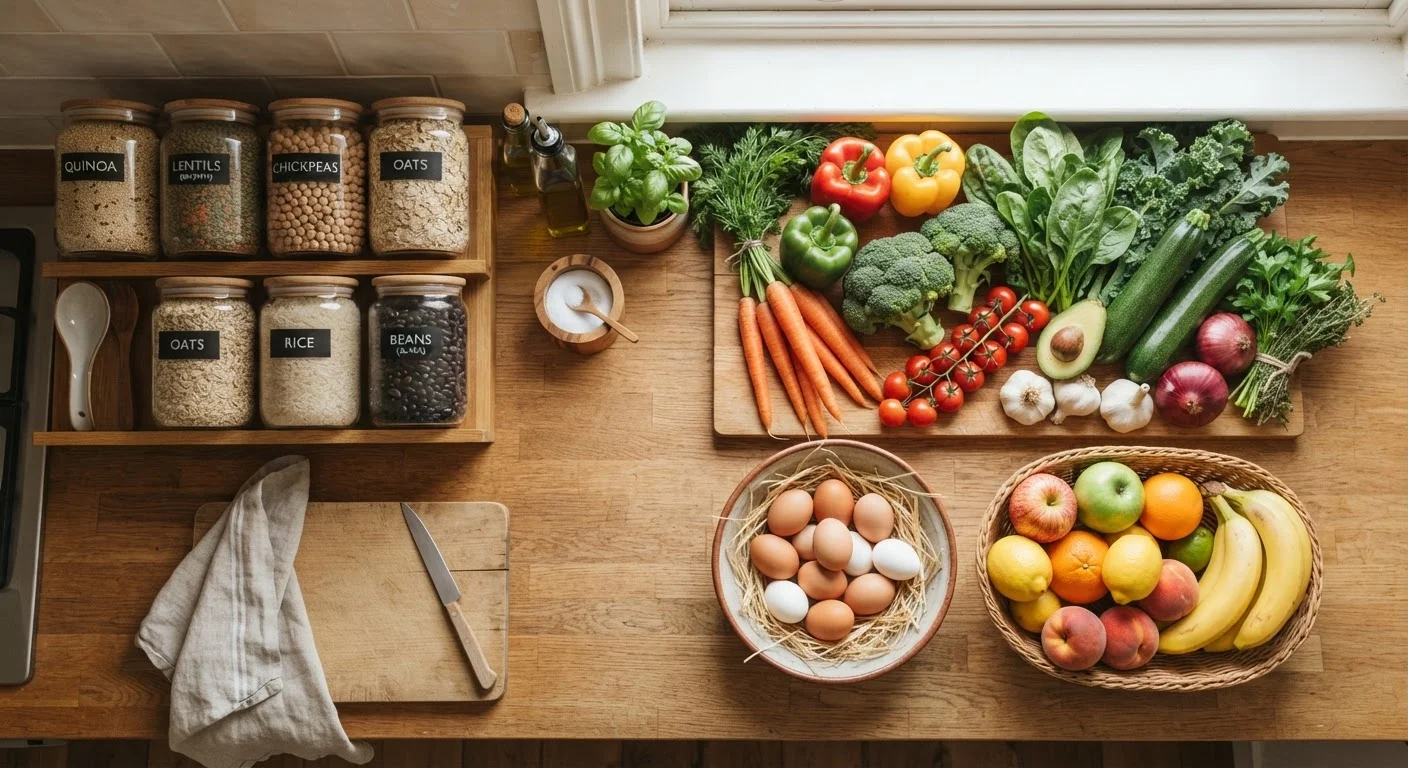
This checklist is organized by food category. Use it as a reusable audit tool: scan your refrigerator and pantry before shopping, check off what you already have, and fill in what's running low. It's not a rigid prescription - individual nutritional needs vary based on age, health status, activity level, and dietary preferences. For personalized guidance, consult a registered dietitian or your primary care provider.
If you're also trying to manage grocery costs, our companion article on eating well on a tight budget outlines evidence-informed ways to stretch your food dollars without sacrificing nutritional quality. And if a broader meal planning framework is what you need, see building a weekly meal plan you'll actually stick to.
Reusable grocery list app or notepad
Tracks what's already in your pantry and what needs restocking before each shopping trip.
Measuring cups and kitchen scale
Helps with portioning dry goods like grains, legumes, and nuts when cooking in bulk.
Airtight storage containers
Extends the shelf life of dry pantry staples like grains, legumes, and seeds.
Refrigerator and pantry inventory list
A simple written or digital log of current stock to prevent duplicate purchases and reduce food waste.
The Weekly Grocery and Pantry Checklist
Work through each category below. Items marked must represent nutritional cornerstones that are difficult to replace; should items add meaningful variety and nutrient density; nice-to-have items enhance meals without being essential. Quantities are left open intentionally - household size, cooking frequency, and dietary patterns all differ.
Vegetables
Fruits
Protein Sources
Whole Grains and Starches
Healthy Fats
Dairy or Dairy Alternatives
Pantry Staples and Flavor Builders
Hydration and Beverages
One Checklist Does Not Fit All Diets
This checklist reflects general, population-level nutritional guidance and is not tailored to specific health conditions, allergies, intolerances, or life stages such as pregnancy, infancy, or older adulthood. If you manage a chronic condition, follow a therapeutic diet, or have food allergies, work with a registered dietitian to adapt these categories to your needs. Never use a general food list as a substitute for individualized medical nutrition therapy.
Following plant-based or other specialized dietary patterns? Our article on plant-based nutritional gaps covers nutrients that often need closer attention when animal products are reduced or eliminated.
This article provides general nutrition information for educational purposes and is not a substitute for personalized medical or dietary advice. Consult a qualified healthcare professional or registered dietitian before making significant changes to your diet.