

Key Takeaways
Why Budget Eating Often Gets a Bad Reputation
The idea that nutritious food is inherently expensive is one of the most persistent myths in nutrition. While fresh organic produce and specialty health foods can carry high price tags, the foundational foods that dietitians consistently recommend - legumes, whole grains, eggs, seasonal produce, and frozen vegetables - are among the most affordable items at any grocery store.
The challenge isn't finding nutritious food on a budget. It's building habits and a shopping approach that make it consistent. That's where most people run into trouble: not for lack of knowledge, but lack of a reliable system. See our step-by-step meal planning guide for a practical framework to get started.
This article is for general informational purposes only and does not constitute medical or nutritional advice. Consult a registered dietitian or qualified healthcare professional for guidance tailored to your individual needs.
Proven Practices for Eating Well Without Overspending
The following evidence-informed strategies are grounded in how actual grocery economics and nutrition science intersect. They work because they reduce waste, increase nutrient density per dollar, and lower reliance on expensive convenience products.
Build meals around legumes and whole grains as your primary protein and carbohydrate sources.
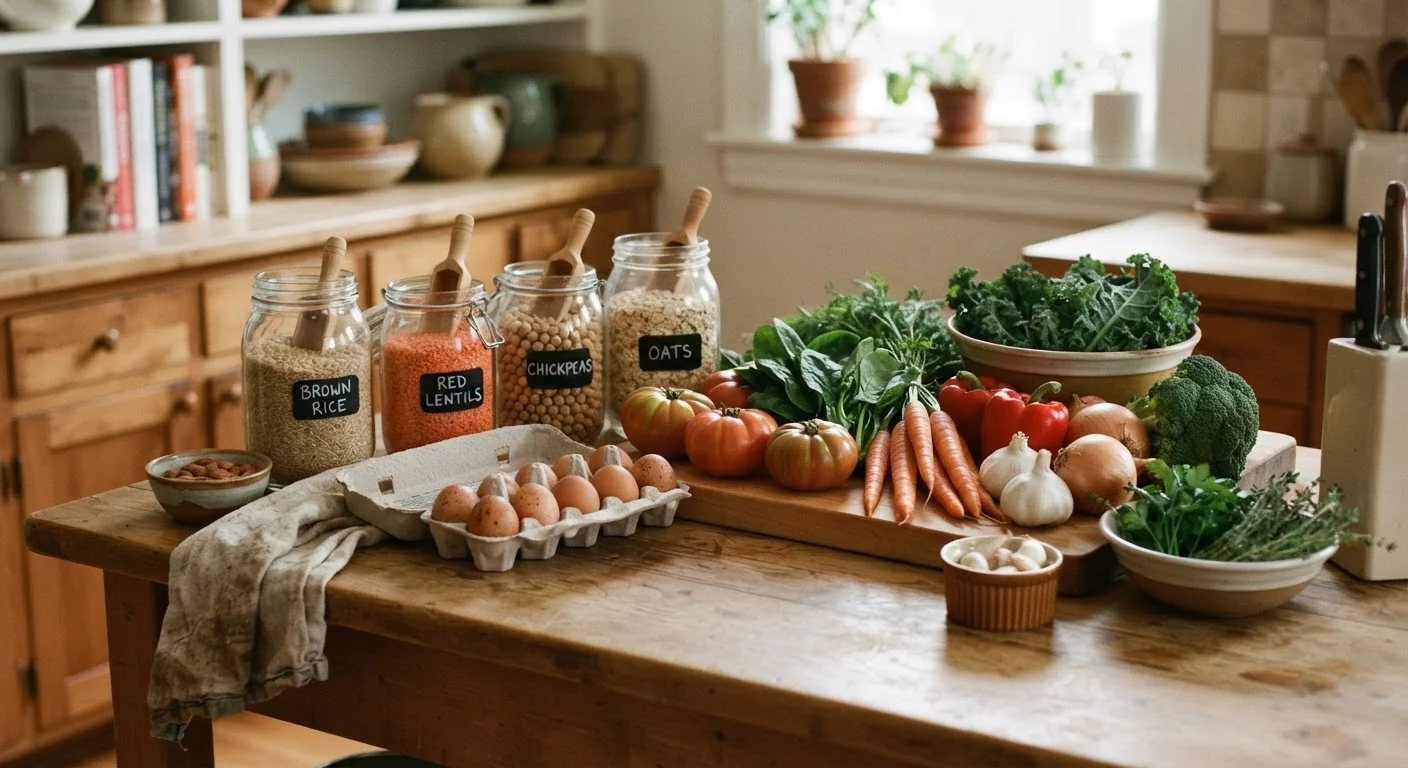
Dried beans, lentils, and whole grains such as oats, brown rice, and barley consistently rank among the lowest cost-per-serving foods available, while delivering fiber, protein, and key micronutrients. Centering meals on these ingredients - rather than treating them as sides - dramatically lowers the cost of an individually nutritious plate.
Plan your weekly meals before you shop and build your list around what you already have.
Unplanned shopping is the leading driver of both food waste and grocery overspending. When meals are mapped out in advance, you buy only what you need, reduce duplicate purchases, and avoid the costly habit of buying last-minute convenience items to fill meal gaps.
Choose frozen vegetables over fresh when fresh is out of season or unaffordable.
Frozen vegetables are harvested at peak ripeness and flash-frozen, which preserves most vitamins and minerals effectively. They are reliably less expensive than fresh out-of-season produce and have far less waste, since you use only what you need.
Buy shelf-stable staples in bulk when storage space allows.
Dried beans, lentils, oats, rice, pasta, and canned goods have long shelf lives and consistently have a lower cost per serving when purchased in larger quantities. Buying in bulk reduces per-unit cost without requiring you to eat more - you simply have a stocked pantry to draw on over time.
Diversify protein sources beyond fresh meat to include eggs, canned fish, and dried legumes.
Fresh meat - particularly chicken breast, beef, and seafood - is often the most expensive item in a grocery cart per gram of protein. Eggs, canned sardines, tuna, and dried legumes deliver comparable or superior nutrition at a fraction of the cost, and they integrate naturally into a wide range of meals.
Avoid heavily processed convenience foods, which carry a premium for packaging and preparation rather than nutrition.
Pre-cut vegetables, individually portioned snacks, frozen entrées, and meal kits are priced to reflect labor and packaging, not nutritional value. For most households, these products represent the largest opportunity to reduce spending without reducing food quality. Cooking from whole ingredients - even simple ones - almost always yields better value and nutritional quality.
Quick Actions You Can Take This Week
You don't need to overhaul everything at once. A few targeted changes this week can meaningfully lower your food spending while maintaining - or even improving - the nutritional quality of your meals. The weekly grocery and pantry checklist can help you identify gaps and anchor your shopping around nutrient-dense staples.
A Note on Nutrition Programs and Assistance
If your food budget is severely constrained, federal nutrition assistance programs such as SNAP (Supplemental Nutrition Assistance Program) and WIC (Women, Infants, and Children) may provide additional support. Community food banks and local nutrition programs can also be a resource. A registered dietitian or social worker can help identify options available in your area.
The Bigger Picture: Food Budgets and Long-Term Habits
Eating well on a tight budget isn't a short-term workaround - it's a set of durable habits. Research on household food spending consistently shows that planning, reducing waste, and anchoring meals around whole ingredients are more predictive of food quality than income alone.
~$1.50
Average cost per serving of dried legumes
USDA food cost data consistently shows dried beans and lentils provide protein and fiber at under $1.50 per cooked serving in most U.S. markets.
30-40%
Household food waste rate in the U.S.
According to the USDA Economic Research Service, American households waste an estimated 30-40% of the food supply, representing a major source of unnecessary spending.
If you're also working on broader financial habits, the same principles apply: consistency and systems matter more than perfection. Habits that make budgets work over the long term explores this connection directly.
For readers shifting toward more plant-forward eating, it's worth knowing that budget-friendly diets heavy in legumes and grains align well with plant-based patterns - though some nutrients deserve attention. Our article on plant-based nutritional gaps covers what to watch for.
“The most nutrient-dense foods - beans, lentils, oats, leafy greens - are also among the cheapest. The idea that eating well costs more is largely a product of marketing, not nutritional science.”
— Marion Nestle, Professor Emerita of Nutrition, Food Studies, and Public Health, New York University