

| Baseline adult protein reference intake | ~0.8 g per kg of body weight/day (National Academies of Sciences, Dietary Reference Intakes) |
| Suggested older adult intake (60+) | 1.0-1.2 g per kg of body weight/day (PROT-AGE Study Group and related geriatric nutrition research) |
| Life stage with highest relative protein need | Infancy (Relative to body weight; WHO/FAO dietary guidance) |
| Key age-related muscle change | Sarcopenia accelerates after ~age 60 (General clinical consensus in geriatric medicine) |
| Essential amino acids required from diet | 9 (Standard nutritional biochemistry) |
Why Protein Needs Are Not One-Size-Fits-All
Protein is essential at every age - it supports tissue repair, immune function, enzyme production, and muscle maintenance. But the amount the body requires, and the reasons behind those requirements, shift considerably as we move through life. Growth, hormonal changes, activity levels, and the natural aging process all influence how much protein the body needs and how efficiently it uses what it gets.
Understanding these shifts can help individuals and caregivers make more informed choices about food patterns - without turning every meal into a calculation. Just as emotional needs evolve across the lifespan, so do our nutritional ones.
| Baseline adult protein reference intake | ~0.8 g per kg of body weight/day (National Academies of Sciences, Dietary Reference Intakes) |
| Suggested older adult intake (60+) | 1.0-1.2 g per kg of body weight/day (PROT-AGE Study Group and related geriatric nutrition research) |
| Life stage with highest relative protein need | Infancy (Relative to body weight; WHO/FAO dietary guidance) |
| Key age-related muscle change | Sarcopenia accelerates after ~age 60 (General clinical consensus in geriatric medicine) |
| Essential amino acids required from diet | 9 (Standard nutritional biochemistry) |
This article provides general nutritional information and is not a substitute for personalized medical or dietary advice. Consult a registered dietitian or healthcare provider for guidance specific to your health needs.
Protein Needs by Life Stage
Infancy and Early Childhood (0-5 Years)
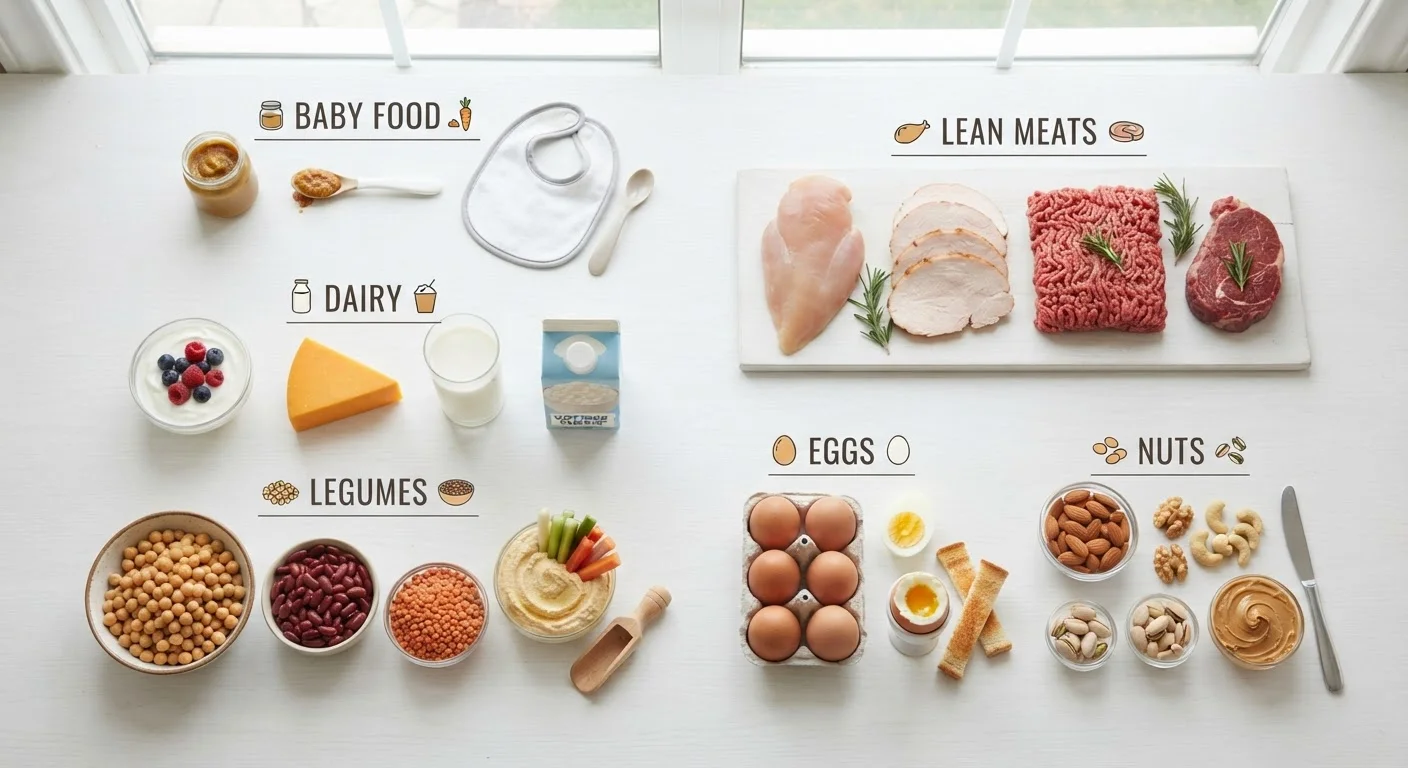
Infancy is the most protein-intensive period relative to body weight. Breast milk or formula delivers protein calibrated for rapid brain and body development. As children transition to solid foods, protein from eggs, dairy, legumes, and soft meats supports continued growth. General dietary guidelines suggest young children need more protein per kilogram of body weight than adults do, reflecting the energy demands of growth.
School Age and Adolescence (6-17 Years)
Protein requirements rise in absolute terms during the adolescent growth spurt. Muscle development, bone density accumulation, and hormonal changes during puberty all increase demand. Active teens involved in sports may have particularly high needs. Adequate protein during these years is associated with healthy development - but needs vary based on sex, body size, and activity level.
Adulthood (18-59 Years)
For most healthy adults, general guidance from bodies like the National Academies of Sciences points to a baseline dietary reference intake of around 0.8 grams of protein per kilogram of body weight per day - though this figure represents a minimum, not an optimal target. Those who are physically active, pregnant, or breastfeeding typically need more. Eating a varied diet that includes legumes, whole grains, dairy, eggs, fish, poultry, or meat can help meet these needs. For those following plant-focused diets, certain nutritional gaps deserve attention.
Older Adulthood (60+ Years)
This is where protein needs often diverge most significantly from common assumptions. Research consistently suggests that older adults need more protein relative to body weight than younger adults - not less. Age-related muscle loss, known as sarcopenia, accelerates after roughly age 60, and adequate protein intake combined with resistance activity is among the most well-supported strategies for preserving muscle mass and functional independence. Some researchers and clinical bodies suggest intakes of 1.0-1.2 grams per kilogram or higher for older adults, though individual needs vary. A healthcare provider or registered dietitian can help determine appropriate targets.
Sarcopenia
The gradual loss of skeletal muscle mass and strength associated with aging. It typically accelerates after age 60 and is linked to reduced physical function and independence.
Essential Amino Acids
The nine amino acids the human body cannot synthesize on its own and must obtain from food. Complete proteins contain all nine in sufficient quantities.
Dietary Reference Intake (DRI)
A set of science-based reference values established by the National Academies of Sciences to guide nutrient consumption for healthy populations. They include recommended daily allowances and tolerable upper limits.
Complete Protein
A protein source that provides all nine essential amino acids in adequate amounts. Most animal-based foods are complete proteins; many plant sources are not on their own.
Protein Quality
A measure of how well a dietary protein supplies essential amino acids and how easily the body absorbs them. It is often assessed using tools like the Digestible Indispensable Amino Acid Score (DIAAS).
Practical Considerations Across the Lifespan
Beyond age, several factors shape how much protein a person needs and how well the body absorbs and uses it:
- Activity level: Resistance training and aerobic exercise both increase protein requirements.
- Health status: Recovery from illness, surgery, or injury typically elevates protein needs.
- Digestive efficiency: Older adults may absorb protein less efficiently, making adequate intake even more important.
- Protein quality: Animal proteins generally provide all essential amino acids in a single source; plant proteins often require thoughtful combination across the day.
Tracking grams is rarely necessary for most healthy people eating a varied diet. A practical approach is ensuring a quality protein source is present at most meals. Those navigating major financial or life transitions - including retirement, which can reshape food budgets and daily structure - may find it helpful to revisit nutrition habits alongside other priorities, much like reviewing a financial plan at each life stage.
Special populations - including pregnant individuals, children with growth concerns, and older adults managing chronic conditions - should work with a qualified healthcare professional rather than rely on general guidelines alone.