

Key Takeaways
Dietary Fiber
Dietary fiber is the indigestible portion of plant foods - such as vegetables, fruits, legumes, and whole grains - that passes through the digestive system largely intact. Unlike other nutrients, fiber isn't broken down for energy. Instead, it performs essential roles in gut health, blood sugar regulation, cholesterol management, and more. There are two main types: soluble fiber, which dissolves in water and forms a gel-like substance, and insoluble fiber, which adds bulk to stool and promotes regularity.
Fiber is classified as a non-digestible carbohydrate. Soluble fiber (found in oats, beans, and apples) is fermented by gut bacteria; insoluble fiber (found in wheat bran and most vegetables) is not. Both types serve distinct physiological functions.
The Fiber Gap: Why Most Americans Fall Short
Dietary fiber is one of the most consistently under-consumed nutrients in the American diet. Research drawing on federal nutrition survey data indicates that average fiber intake among U.S. adults hovers around 15-16 grams per day - roughly half the amount recommended by major health organizations. This shortfall isn't a minor oversight. Chronic low fiber intake is associated with a range of health concerns, from poor digestive function to elevated cardiovascular risk.
The primary driver of this gap is the structure of the modern American diet. Heavily processed, refined foods have displaced the whole grains, legumes, vegetables, and fruits that naturally supply fiber. As explored in our overview of ultra-processed foods, these products now account for a substantial share of daily calorie intake - and they deliver very little fiber in return.
~15g
Average daily fiber intake among U.S. adults
Federal dietary survey data consistently shows average American fiber consumption falls well below the recommended 25-38 grams per day.
95%
Americans falling short of fiber recommendations
Analysis of National Health and Nutrition Examination Survey (NHANES) data suggests dietary fiber is among the most widespread nutritional shortfalls in the U.S. population.
7-10%
LDL cholesterol reduction linked to soluble fiber
Research published in peer-reviewed nutrition journals has found that consistent soluble fiber intake from oats and legumes can lower LDL cholesterol by this range as part of a heart-healthy diet.
What Fiber Actually Does in the Body
Fiber's influence on health is broader than most people realize. Here's how its main mechanisms work:
- Digestive regularity: Insoluble fiber adds bulk to stool and accelerates its movement through the intestines, reducing the risk of constipation and supporting a well-functioning digestive tract.
- Heart health: Soluble fiber - particularly from oats, barley, and legumes - binds to cholesterol in the digestive tract and helps carry it out of the body, contributing to lower LDL ("bad") cholesterol levels. This effect is well-documented in clinical research.
- Blood sugar regulation: Soluble fiber slows the absorption of glucose into the bloodstream, helping to moderate blood sugar spikes after meals. This is particularly relevant for people managing or at risk of type 2 diabetes.
- Gut microbiome support: Fermentable fibers act as a prebiotic - feeding beneficial bacteria in the colon. A diverse, fiber-rich diet is associated with a more varied and resilient gut microbiome, which researchers increasingly link to broader health outcomes.
- Satiety: High-fiber foods tend to be more filling, helping regulate appetite as part of a balanced eating pattern.
“Dietary fiber is arguably the most important nutrient that most Americans aren't thinking about. Its effects span digestion, cardiovascular health, blood sugar, and the gut microbiome - and the evidence base for those benefits is robust.”
— Walter Willett, Professor of Epidemiology and Nutrition, Harvard T.H. Chan School of Public Health
Practical Ways to Increase Your Fiber Intake
Reaching adequate fiber doesn't require dramatic dietary overhauls. Small, consistent changes to existing meals are often the most sustainable path. Some evidence-based strategies:
- Swap refined grains for whole grains. Choose whole grain bread, brown rice, oatmeal, or whole wheat pasta in place of their refined counterparts. The fiber difference is substantial.
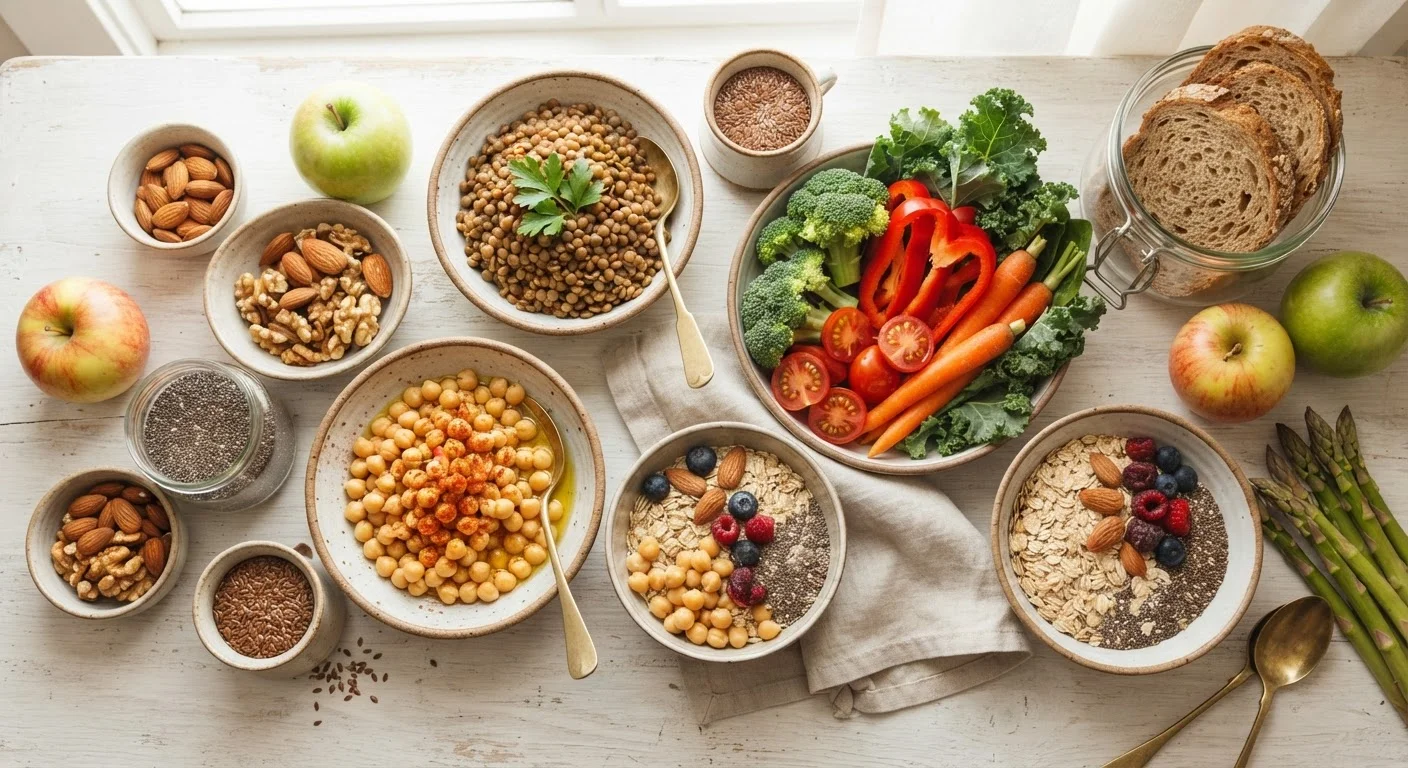
- Add legumes regularly. Lentils, chickpeas, black beans, and kidney beans are among the most fiber-dense foods available and are inexpensive and versatile. Adding half a cup to soups, salads, or grain bowls meaningfully raises daily intake.
- Keep the skin on fruits and vegetables. Much of the fiber in apples, potatoes, and cucumbers is concentrated in or just beneath the skin.
- Snack on nuts, seeds, or whole fruit rather than processed snack foods, which typically offer little fiber.
- Read nutrition labels. The label's "Dietary Fiber" row makes it easy to compare options side by side. A good target is foods providing 3 grams or more per serving. See how to read a nutrition label for a full walkthrough.
Increase Fiber Gradually to Avoid Discomfort
Adding large amounts of fiber too quickly - particularly from legumes or bran - can cause bloating and gas as gut bacteria adjust. A gradual increase over two to four weeks, combined with consistent water intake throughout the day, makes the transition much more comfortable for most people.
People following plant-focused diets often have a structural advantage in meeting fiber targets, though it still requires attention to food variety. For a broader look at nutritional considerations in those eating patterns, see our guide to plant-based nutritional gaps.
This article is for general informational and educational purposes only and is not a substitute for professional medical or dietary advice. Consult a qualified healthcare provider or registered dietitian before making significant changes to your diet, especially if you have an existing health condition.