

Key Takeaways
Why Nutrition Labels Matter - and Where Readers Go Wrong
The Nutrition Facts label is a federally standardized tool regulated by the U.S. Food and Drug Administration. Every packaged food sold in the United States must carry one. Despite its ubiquity, most readers scan it selectively - fixating on calories while ignoring the data that often tells a more complete story.
Part of the confusion stems from how nutrition information is framed in popular media. If you've ever wondered why dietary advice seems to change constantly, our article on how nutrition science actually works explores how study design shapes headlines. The label, by contrast, is a factual document - once you know what each section means, it becomes a reliable decision-making tool.
Use the Label to Compare, Not to Judge
Nutrition labels are most useful as a comparison tool between similar products. Rather than deciding a food is 'good' or 'bad' based on one figure, look at the overall profile. A food higher in sodium may also be higher in protein and lower in added sugars - the full picture matters. For a broader framework on what balanced eating looks like across meals, see our piece on what a balanced plate actually looks like.
This guide walks through the label in the order a reader encounters it from top to bottom, which also happens to be the logical order for interpreting the information accurately.
Step-by-Step: Reading the Label from Top to Bottom
Check the Serving Size First
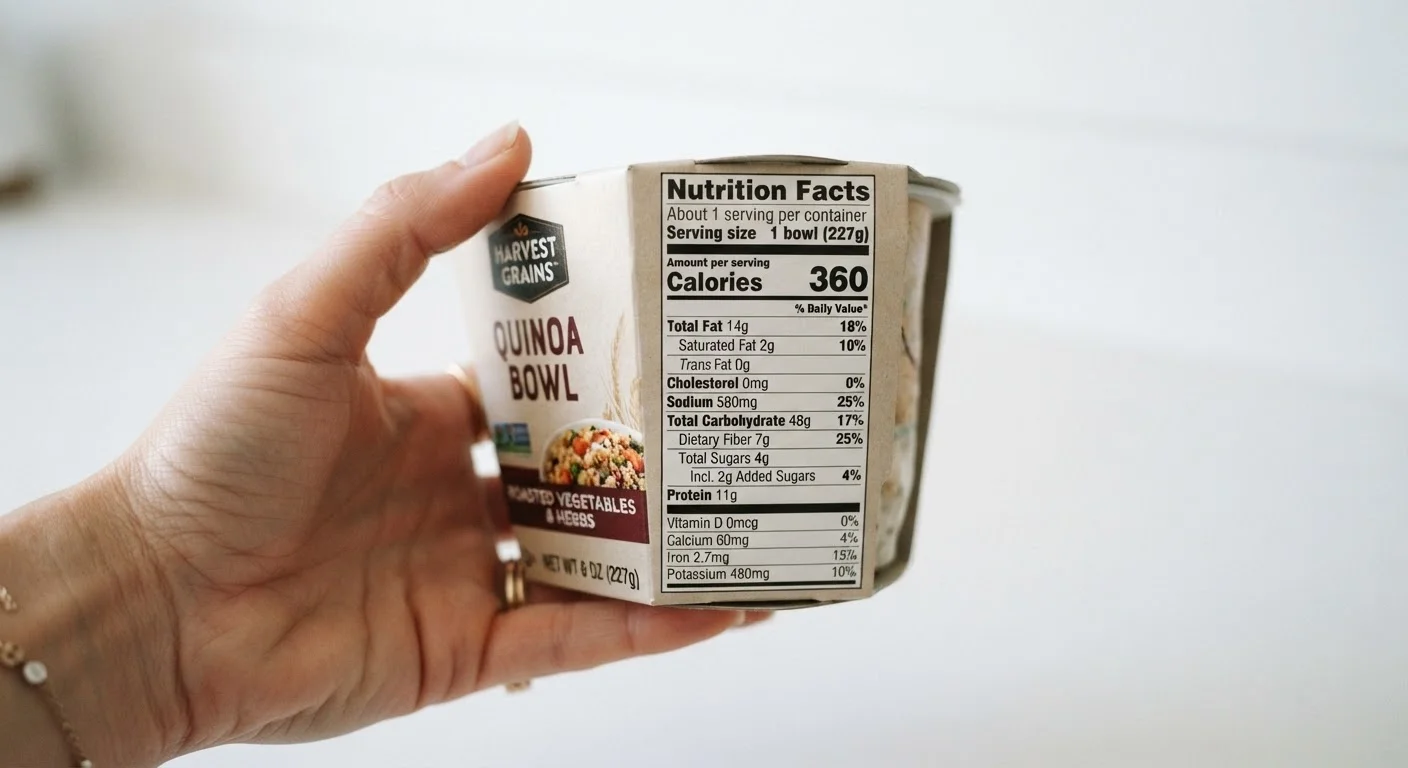
The very top of the Nutrition Facts panel shows the serving size and the number of servings per container. Every single number that follows - calories, grams of fat, milligrams of sodium - applies to that one serving, not the whole package. A bag of chips labeled as having three servings means that if you eat the whole bag, you triple every figure shown.
The FDA updated label requirements to use serving sizes that more closely reflect how people actually eat, but it is still worth comparing the listed serving size to your actual portion before drawing conclusions.
Look at Calories in Context
Calories measure the energy a food provides per serving. While total calorie intake is one factor in overall health, the source of those calories matters significantly. Two foods with identical calorie counts can differ substantially in protein, fiber, vitamins, and minerals.
Use the calorie figure as a rough orientation tool, not as the sole measure of a food's nutritional value.
Interpret % Daily Value (%DV)
The % Daily Value column shows how much of a nutrient one serving contributes toward a reference daily intake based on a 2,000-calorie diet. The FDA's general guidance: 5% DV or less is considered low for a nutrient; 20% DV or more is considered high.
- For nutrients you generally want more of - fiber, calcium, potassium, vitamin D, iron - higher %DV is favorable.
- For nutrients you generally want less of - saturated fat, sodium, added sugars - lower %DV is favorable.
Note that %DV is a reference figure, not a personal prescription. Individual needs vary based on age, health status, and activity level. For context on specific nutrients that may need attention in certain eating patterns, see our overview of nutritional gaps in plant-based diets.
Focus on Nutrients That Warrant the Most Attention
Not every line of the label requires equal scrutiny. Prioritize these four:
- Saturated fat: Most health guidelines recommend keeping this low; it is distinct from total fat, which includes unsaturated fats that are generally considered beneficial.
- Sodium: Many packaged foods supply a substantial fraction of the daily reference value in a single serving. Monitoring sodium is especially relevant for cardiovascular health.
- Added sugars: This line, added to the label in recent years, distinguishes sugars added during processing from those naturally occurring in ingredients like fruit or dairy. The distinction matters because added sugars provide energy without accompanying nutrients.
- Dietary fiber: Most Americans fall well short of recommended fiber intake. Foods with higher fiber %DV contribute meaningfully to digestive and metabolic health. Our dietary fiber guide explains why this nutrient is so frequently underconsumed.
Note Key Micronutrients
The lower section of the label lists four micronutrients the FDA considers public health priorities: vitamin D, calcium, iron, and potassium. These were chosen because deficiency in each is common in the U.S. population. Checking these figures helps you understand whether a food makes a meaningful contribution to your intake of these nutrients.
Other vitamins and minerals may appear voluntarily. Their presence is informative, but their absence does not mean a food lacks nutritional value - it simply may not have been required to list them.
Beyond the Numbers: The Ingredient List
Below the Nutrition Facts panel sits the ingredient list - a separate but equally informative section. Ingredients are listed in descending order by weight. If refined flour or sugar appears first, it is the dominant ingredient by volume. If whole grains, legumes, or vegetables lead the list, those form the bulk of the product.
The ingredient list is also where you can identify added sugars by other names - such as corn syrup, dextrose, maltose, or fruit juice concentrate - that may not be obvious from the label's summary figures alone. Long ingredient lists with many unfamiliar chemical names often signal a heavily processed product. For more on what that means in practice, see our piece on ultra-processed foods in the modern American diet.
Reading both the Nutrition Facts panel and the ingredient list together gives you a fuller picture than either does alone. Once this habit is in place, applying it while building a realistic weekly meal plan becomes straightforward and far less time-consuming.
This article is for general informational and educational purposes only and is not a substitute for personalized dietary or medical advice. Consult a registered dietitian or qualified healthcare professional for guidance tailored to your individual health needs.