

The Patchwork of State Hands-Free Laws
No single federal law governs how drivers may use a phone behind the wheel. Instead, each state sets its own rules - creating a patchwork of regulations that differ in scope, enforcement, and penalties. What's legal in one state may carry a fine in the next.
As of recent legislative cycles, the majority of U.S. states have enacted some form of handheld device ban while driving. However, the specifics matter enormously. Some states prohibit holding a phone for any purpose while the vehicle is in motion. Others restrict only texting or only apply stricter rules to certain driver categories, such as teens or commercial drivers.
Understanding where your state falls - and what the law actually covers - helps you avoid fines and, more importantly, stay safer on the road. See also how other traffic regulations differ by state in our guide on school zone and work zone laws.
What 'Hands-Free' Actually Means in Law
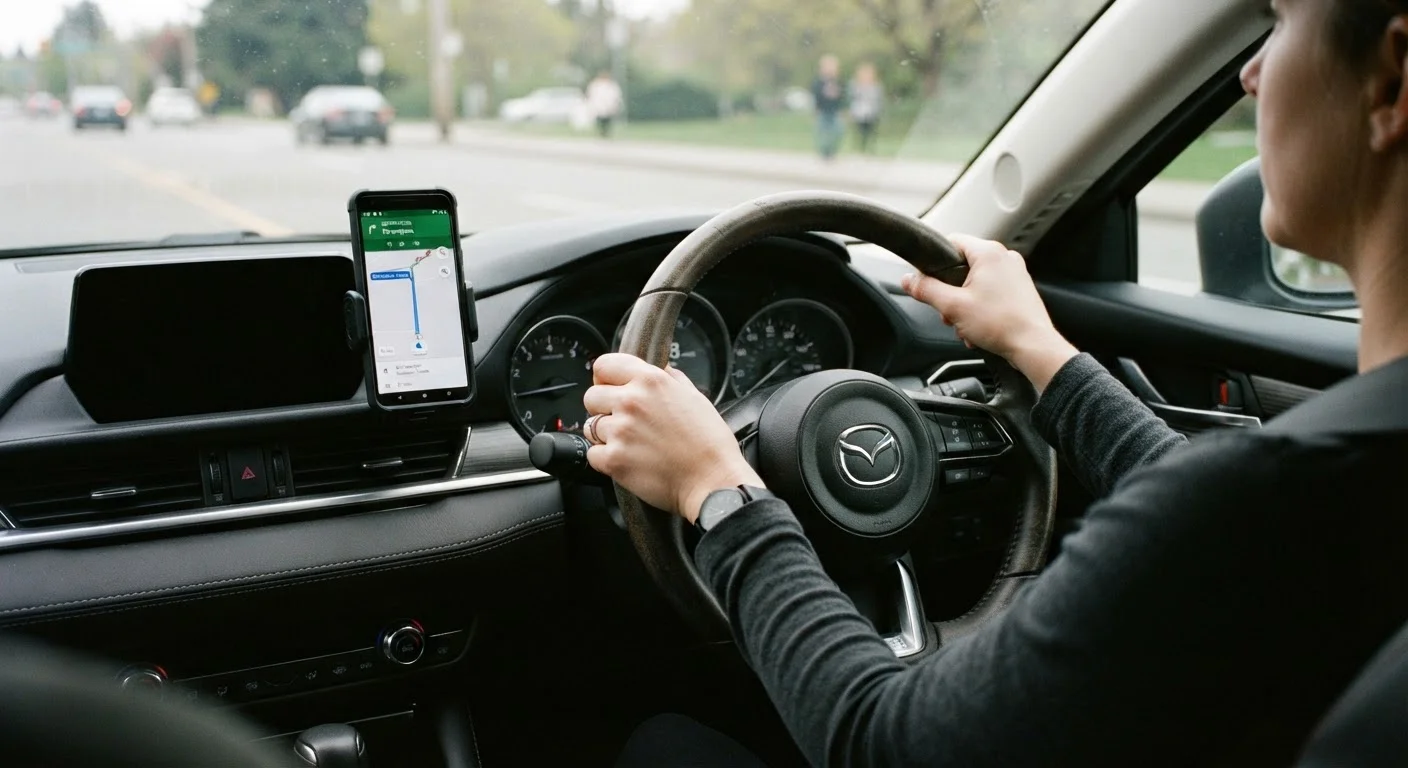
The phrase "hands-free" can be misleading. In legal terms, it typically means a driver may not hold or physically manipulate a mobile device while operating a vehicle. Permitted use usually requires a mount or speakerphone mode activated before driving begins - but the details vary.
Hands-Free Law
A traffic regulation requiring drivers to use a mobile device only through a mounting system, Bluetooth, or voice commands - without physically holding the device.
Primary Offense
A violation for which a law enforcement officer can stop a driver solely on the basis of that infraction, with no other traffic violation required.
Secondary Offense
A violation that can only be cited if the driver was already stopped for a separate, primary traffic infraction.
Cognitive Distraction
Mental inattention caused by a task unrelated to driving - such as a phone conversation - even when the driver's hands remain on the wheel.
Provisional License
A restricted driver's license issued to new drivers, typically teens, that comes with additional conditions such as passenger limits and stricter device bans.
What Most Comprehensive Hands-Free Laws Cover
- Voice calls: Holding a phone to your ear to talk is banned. Calls made through a mounted device or Bluetooth are generally permitted.
- Texting and messaging: Composing, reading, or sending texts is prohibited in virtually every state with a distracted driving law.
- App use and browsing: States with broader laws also ban scrolling social media, using navigation apps manually, or watching video while driving.
- Single-touch activation: Some states allow a single tap or swipe to activate a hands-free function, but nothing beyond that.
Common Exemptions
- Reporting an emergency to law enforcement or emergency services
- Using a device while lawfully parked or stopped off the roadway
- Use by police, firefighters, or other emergency personnel in the course of duty
It's worth noting that even where a call is technically legal via Bluetooth, cognitive distraction - the mental load of a phone conversation - still affects reaction time. Legality and safety are not the same thing.
How State Laws Differ: A Reference Overview
Because state laws change through legislative sessions, always verify current rules with your state's department of motor vehicles or official traffic authority. The following categories reflect the general landscape:
States with Comprehensive Handheld Bans
These states prohibit all handheld phone use while driving - including holding a phone for a call, texting, or any app use. Examples include California, New York, Georgia, Oregon, and Washington. Fines in these states often increase for repeat offenses, and violations may add points to a driver's license.
States with Texting-Only Bans
A number of states still limit their distracted driving laws to texting prohibitions. Holding a phone for a voice call may remain legal for adult drivers in these jurisdictions, though teen drivers are frequently subject to stricter all-device bans regardless of state.
States with No Statewide Handheld Ban
A smaller number of states have not passed a statewide handheld ban, though local ordinances in cities or counties may still apply. Drivers in these states should check local rules, which can carry their own fines.
Commercial drivers - those operating large trucks or buses regulated under federal guidelines - face a separate, stricter federal standard banning handheld mobile device use nationwide, regardless of state law.
For context on other traffic law variations, see our overview of what drivers are legally required to do during a traffic stop.
Laws Change - Always Verify Locally
State distracted driving legislation is actively evolving. Several states have upgraded from texting-only bans to full handheld prohibitions in recent legislative sessions. Before driving in an unfamiliar state, check that state's official DMV or department of transportation website for the most current rules. Local ordinances in cities or counties may impose stricter standards than state law.
Penalties, Enforcement, and What to Expect
Fines for handheld device violations range from around $50 for a first offense in some states to several hundred dollars in states with stricter enforcement regimes. Some jurisdictions add license points, which can affect insurance premiums. Repeat violations in states like California can result in fines that climb with each infraction.
Enforcement is typically a primary offense in states with comprehensive bans - meaning an officer can pull you over solely for holding a phone, without needing another traffic violation as a trigger. In states where it remains a secondary offense, a stop for another violation is required before a phone citation can be issued.
Teen and novice drivers face heightened scrutiny almost universally. Even in states that permit adult handheld calls, learner's permit and provisional license holders are typically barred from any mobile device use while driving.
If you receive a traffic citation related to phone use, the experience and your rights at that stop are worth understanding - our guide on DUI vs. DWI differences by state illustrates how state-level traffic law variations can have real legal consequences.
This article provides general legal information for educational purposes only. Traffic laws change frequently. Always verify current regulations with your state's official motor vehicle authority or a qualified legal professional before relying on this information for legal decisions.