
Sharing the Road: Legal Obligations Toward Cyclists, Pedestrians, and Motorcyclists

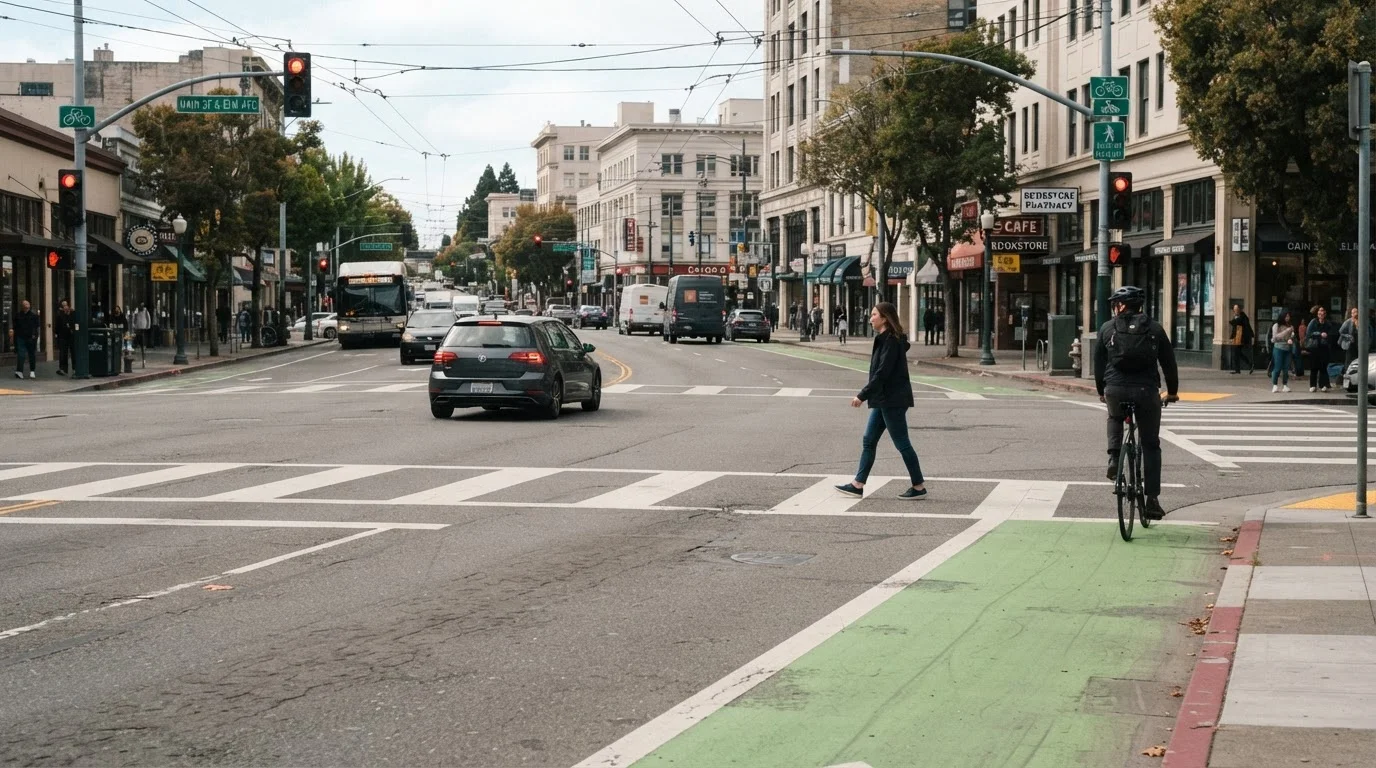
Why Vulnerable Road Users Have Special Legal Protections
Cyclists, pedestrians, and motorcyclists are considered vulnerable road users under traffic law - a classification that acknowledges they face significantly greater injury risk in a collision with a passenger vehicle. Because the consequences of driver error are so much more severe for these road users, federal guidance and state statutes impose specific duties on drivers beyond standard traffic rules.
These obligations aren't optional courtesies. Violating them can result in citations, license points, civil liability, and - in serious cases - criminal charges. Understanding what the law actually requires is one of the most practical things a driver can do to protect others and themselves.
For context on broader right-of-way rules that also affect these interactions, see right-of-way rules that confuse even experienced drivers.
Legal Obligations Toward Pedestrians
In every U.S. state, drivers must yield to pedestrians in marked crosswalks. Many states extend this rule to unmarked crosswalks - the implied crossing point at any intersection where sidewalks would meet, even if no painted lines exist. Failing to yield at a crosswalk is among the most commonly cited moving violations involving pedestrian injuries.
Key legal requirements vary by state but commonly include:
- Yielding before entering a crosswalk - stopping before the stop bar or crosswalk line, not in it
- Not overtaking a stopped vehicle at a crosswalk - if another driver has stopped, a pedestrian is likely crossing; passing that vehicle is illegal in most states
- School zones and residential areas - heightened duties apply near schools, parks, and areas with high pedestrian activity (see school zone and work zone laws)
- Avoiding distracted driving - many states classify distracted driving near pedestrians as an aggravating factor in crashes
Pedestrians also carry legal obligations - jaywalking laws exist in most jurisdictions - but driver liability is not eliminated simply because a pedestrian was partially at fault.
Legal Obligations Toward Cyclists
Cyclists operating on public roads generally have the same rights and responsibilities as motor vehicle drivers under state law. That means drivers must treat cyclists as they would any slow-moving vehicle - not as an obstacle to pass at the earliest opportunity.
Most states have enacted specific minimum passing distance laws for cyclists, typically requiring drivers to maintain at least three feet of clearance when overtaking a bicycle. Some states require four feet or authorize crossing a center line to pass safely when oncoming traffic allows.
Vulnerable road user
A legal classification covering road users at greatest injury risk in collisions - typically pedestrians, cyclists, motorcyclists, and sometimes scooter or e-bike riders. Many states extend enhanced legal protections and impose heightened driver duties around these users.
Unmarked crosswalk
An implied pedestrian crossing at an intersection where sidewalks meet, even without painted lines. Drivers are required to yield to pedestrians in unmarked crosswalks in most U.S. states.
Dooring
The act of opening a vehicle door into the path of a passing cyclist, creating a collision hazard. It is a finable offense in many states and the driver or passenger opening the door typically bears legal liability.
Lane crowding
When a motor vehicle driver moves into a motorcyclist's travel lane or drives side-by-side within the same lane as a motorcycle. This is prohibited under traffic law in all U.S. states.
Inattentional blindness
A cognitive phenomenon where a driver fails to perceive a clearly visible object - such as an oncoming motorcycle - because their attention is focused elsewhere. It is a commonly cited factor in left-turn crashes involving motorcycles.
Minimum passing distance law
A statute specifying the minimum lateral clearance a driver must maintain when overtaking a cyclist. Most states require at least three feet; some require four feet or permit crossing the center line to pass safely.
Additional driver obligations commonly codified in state law include:
- Not cutting off a cyclist when turning right - check for cyclists in the bike lane before initiating a right turn
- Checking mirrors and blind spots before opening a car door into a bike lane (the so-called dooring hazard, which is a finable offense in many states)
- Yielding to cyclists when merging across a designated bike lane
- Not using a horn aggressively near cyclists in a way that could startle and cause a crash
Closely following a cyclist is also dangerous and, in some states, explicitly prohibited. The physics of stopping distance make tailgating a cyclist particularly hazardous - why tailgating is more dangerous than most drivers realize applies equally on two wheels.
Legal Obligations Toward Motorcyclists
Motorcyclists are entitled to the full use of a travel lane under the law. Drivers are prohibited from sharing a lane side-by-side with a motorcycle (lane crowding), and from following motorcyclists too closely. A motorcycle can stop faster than most passenger cars under many conditions, and a rear-end collision at any speed can be fatal.
Left-turn collisions are among the most common and deadly crash types involving motorcycles - occurring when a driver turns left across the path of an oncoming motorcycle. Failing to perceive an oncoming rider before turning is a leading driver error, often cited as inattentional blindness. Legally, the turning driver bears fault in most such scenarios under right-of-way statutes.
Other legally relevant obligations include:
- Checking blind spots carefully before changing lanes - motorcycles are harder to spot in mirrors
- Not assuming a motorcycle's turn signal indicates an actual turn - motorcycle signals are not always self-canceling, so a blinking signal may be unintentional
- Giving motorcycles adequate following distance - at minimum two seconds, and more in adverse conditions
Understanding right-of-way rules as they apply to all vehicle classes is essential context for these interactions.
This article provides general information about U.S. traffic laws and is not legal advice. Traffic laws vary by state; consult your state's motor vehicle code or a licensed attorney for guidance specific to your situation.