

Key Takeaways
Why Bad Weather Exposes the Limits of Normal Driving Habits
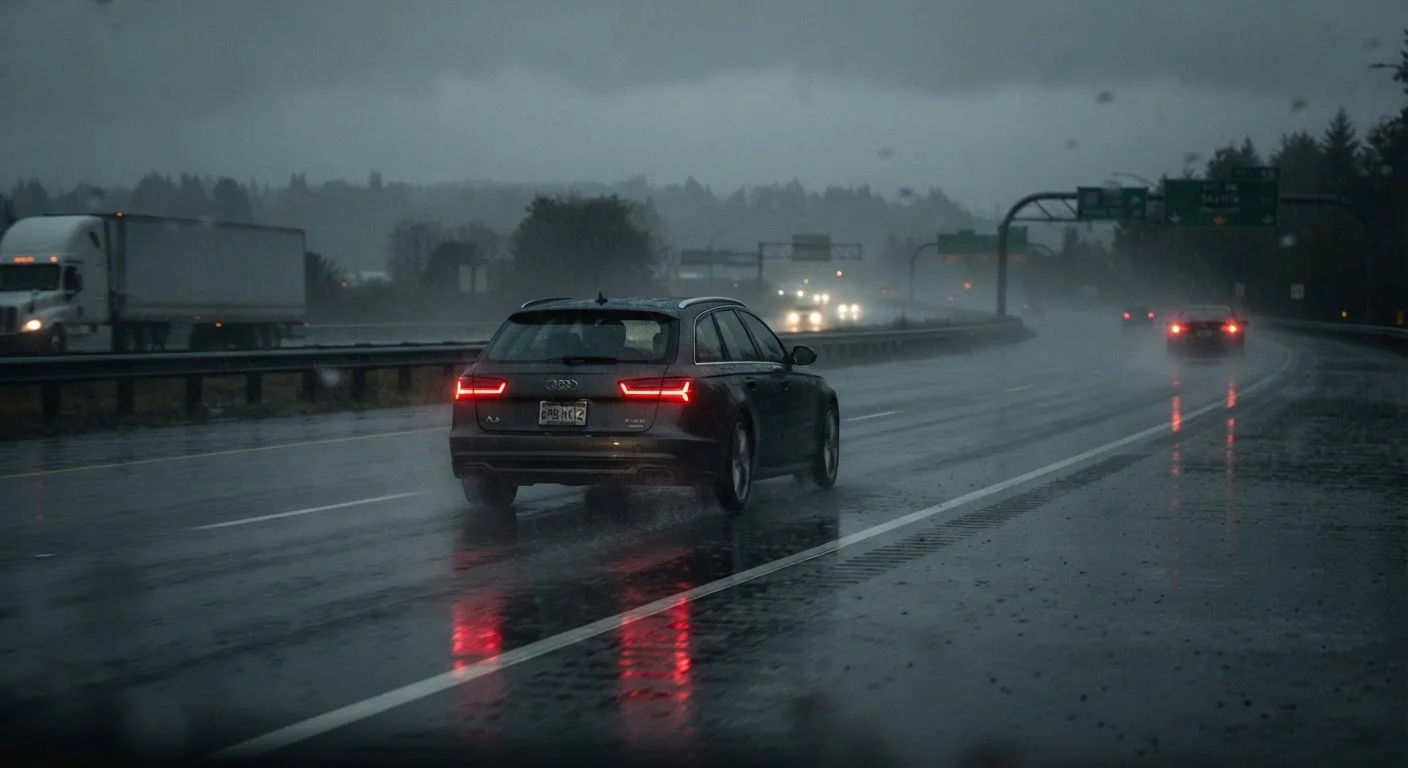
Most driving habits are built around dry, clear conditions. When rain, ice, fog, or snow arrives, those habits don't automatically update - and that gap is where crashes happen. Adverse weather doesn't just affect visibility; it fundamentally changes how a vehicle accelerates, steers, and stops. Tires lose grip, braking distances extend, and the margin for error shrinks sharply.
Defensive driving techniques become especially critical when conditions deteriorate. The goal is to build habits that consciously adapt to what the road is actually doing - not what it normally does. The mistakes below are among the most common and consequential errors drivers make when weather turns.
21%
Crashes linked to adverse weather annually
According to the U.S. Federal Highway Administration, nearly 21% of all vehicle crashes each year are weather-related, resulting in roughly 5,000 fatalities.
3-12x
Stopping distance increase on ice vs. dry pavement
Research from transportation safety organizations indicates that stopping distances can be three to twelve times longer on ice compared to dry conditions, depending on speed and tire type.
The Most Common Adverse-Weather Driving Mistakes
Understanding where drivers go wrong - and why - is the first step toward correcting the behavior before it causes harm.
Driving at posted speed limits regardless of weather conditions.
Why it happens: Drivers treat speed limit signs as targets rather than maximums, and habit overrides situational judgment, especially on familiar routes.
Maintaining a normal following distance in wet or icy conditions.
Why it happens: Most drivers learn the three-second rule for dry roads and never adjust it mentally when conditions change, underestimating how dramatically stopping distances increase.
Using hazard lights while driving in rain or reduced visibility.
Why it happens: Drivers assume hazard lights make them more visible in heavy rain, but this is a common misconception that actually interferes with signaling and confuses other drivers.
Braking hard on ice or in a skid instead of steering through it.
Why it happens: Panic is the primary cause. Hard braking is the instinctive response to a loss of control, but on slippery surfaces it eliminates the last bit of steering ability a driver has.
Failing to clear snow and ice from the entire vehicle before driving.
Why it happens: Time pressure leads drivers to clear only the windshield while leaving snow on the roof, hood, and rear window - creating hazards for themselves and others.
Overconfidence with all-wheel drive or four-wheel drive in winter conditions.
Why it happens: Drivers of AWD and 4WD vehicles frequently believe their drivetrain gives them better braking and cornering in snow - it does not. These systems only improve traction during acceleration.
Black Ice Has No Warning Signs
Black ice is a thin, nearly invisible layer of ice that forms on road surfaces, particularly on bridges, overpasses, and shaded stretches. It looks like a wet road but offers almost no traction. If your car suddenly feels unresponsive to steering inputs on what appears to be a damp surface, assume ice and ease off all controls gradually. Never brake sharply or jerk the wheel.
Preparation Is Part of Safe Weather Driving
Safe driving in adverse conditions begins before you start the engine. Tires, wipers, lights, and brakes all perform differently when pushed by weather stress, and a vehicle in poor mechanical condition dramatically raises risk when conditions deteriorate.
Wiper blades that streak rather than clear, tires worn below the recommended tread depth, and lights that are dim or misaligned all reduce your ability to see and respond. Checking these systems seasonally is practical risk management, not optional housekeeping.
Reduced visibility also interacts with other traffic behaviors - the same fog that limits your sight limits everyone else's. Adjusting your speed and spacing accounts for the fact that other drivers may react slower than expected. For more on nighttime risk factors that share characteristics with heavy fog, see night driving habits that reduce risk.
Never Drive Through Flooded Roads
Just six inches of moving water can knock a person off their feet, and twelve inches can float many small vehicles. Floodwater depths are nearly impossible to judge visually, and road surfaces beneath may be eroded or entirely washed away. Turn around - do not attempt to cross a flooded roadway, regardless of how shallow it appears.
Adverse weather is predictable in a broad sense - seasons change, storms are forecast, and road conditions are often reported before you leave home. Using that information to delay a trip, choose an alternate route, or simply allow more time is itself a safety decision. The drivers who handle bad weather best are those who treat preparation as routine, not reactive.