

Autos & Vehicles

Seasonal Car Maintenance: What to Check Before Winter and Summer

Share
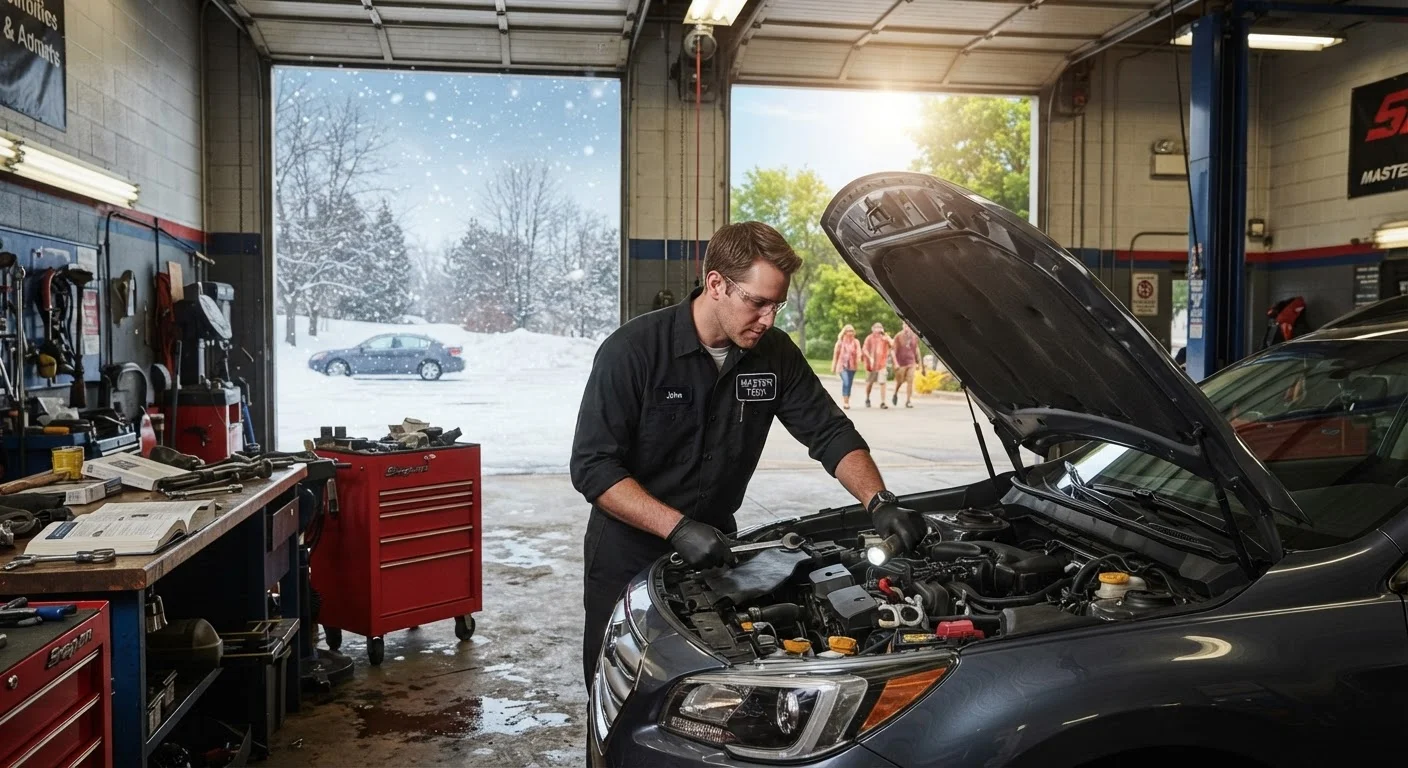
Mechanic inspecting a vehicle engine bay with winter and summer seasonal backdrop

Key Takeaways

Extreme temperatures — hot or cold — stress different vehicle systems in distinct ways.
Batteries, tires, and fluids require attention before both winter and summer seasons.
Many seasonal checks take only minutes but can prevent expensive roadside failures.
Some tasks, like brake inspection or coolant system service, should be done by a qualified mechanic.
Pairing seasonal checks with your factory maintenance schedule keeps nothing overlooked.
30–60 min

Summary

22 items · 30–60 minutes

Why Seasonal Checks Matter

Temperature extremes are hard on vehicles. Cold weather thickens fluids, taxes batteries, and hardens rubber. Summer heat accelerates fluid breakdown, stresses cooling systems, and can push tire pressure into dangerous territory. Most breakdowns are preventable — and seasonal preparation is one of the highest-leverage habits a driver can develop.

This checklist covers two transition windows: the weeks before temperatures drop significantly in fall, and the weeks before summer heat peaks in late spring. Work through both sets each year, and consider pairing them with your vehicle's factory-recommended service intervals. For guidance on reading that schedule, see your vehicle's scheduled maintenance intervals.

If you regularly drive in rain, ice, or fog, good mechanical prep is only part of the picture — driving in adverse weather covers the behavioral side of staying safe when conditions deteriorate.

Don't Skip the Battery Test

A battery that starts your car reliably in September may fail completely when January temperatures drop. Cold weather significantly reduces a battery's effective output. Most auto parts retailers will test your battery at no charge — make this your first stop before winter prep.

What to Check Before Winter

Cold weather is unforgiving. The items below address the systems most likely to fail when temperatures drop below freezing. Complete these checks in early fall, before the first hard frost arrives.

Winter Prep: Battery & Electrical

Test your battery's cold cranking amps (CCA) at an auto parts store or shop — batteries that struggle in warm weather often fail completely once temperatures drop. Must
Inspect battery terminals for corrosion (white or bluish buildup) and have them cleaned if needed. Must
Verify that headlights, taillights, and turn signals are all functioning — daylight hours shrink significantly in winter. Must

Winter Prep: Tires & Brakes

Check tire tread depth using the penny test — insert a penny into the tread; if Lincoln's head is fully visible, tires need replacement. Must
Inflate tires to the manufacturer's recommended pressure (found on the driver's door jamb sticker), since tire pressure drops roughly 1 PSI for every 10°F of temperature decrease. Must
If you live in a region with significant snow or ice, consider switching to dedicated winter tires rather than relying on all-season tires alone. Should
Have brakes inspected by a qualified mechanic — stopping distances increase on wet and icy roads, making worn pads far more dangerous. Must

Winter Prep: Fluids & Visibility

Verify antifreeze (coolant) concentration is sufficient for your climate using an inexpensive coolant tester — typically a 50/50 mix of antifreeze and water protects to around -34°F. Must
Switch to a winter-rated windshield washer fluid that won't freeze in the reservoir or on the glass. Must
Check windshield wiper blades for streaking or cracking and replace them before ice and snow season begins. Should
Top off oil and confirm it meets the viscosity grade your owner's manual specifies for cold weather operation. Should

Winter Prep: Emergency Readiness

Keep an emergency kit in your vehicle containing a ice scraper, jumper cables or a jump-start pack, a blanket, a flashlight, and basic road flares or reflective triangles. Should
Confirm your spare tire is properly inflated and that you have the tools needed to change a flat. Should

Summer Prep: Cooling System

Inspect the coolant level when the engine is cold and top off if low — never open the radiator cap on a hot engine. Must
Check radiator hoses and belts for cracks, soft spots, or swelling; have a mechanic replace anything that looks deteriorated. Must
If your coolant hasn't been flushed within the interval specified in your owner's manual, schedule a cooling system service before summer heat peaks. Should

Summer Prep: Tires & AC

Check and adjust tire pressure in the morning before driving — heat and highway speeds both increase pressure, and overinflated tires are more prone to blowouts. Must
Test your air conditioning system early in the season; if cooling is weak, have the system inspected by a certified technician rather than attempting a DIY refrigerant recharge without proper equipment. Must
Inspect wiper blades again — UV exposure degrades rubber faster than cold does, so blades that survived winter may still need replacement by summer. Nice to have

Summer Prep: Fluids & Filters

Check engine oil level and condition; heat accelerates oxidation, so stay current with your manufacturer's oil change interval. Must
Inspect the cabin air filter — a clogged filter forces the AC system to work harder and reduces airflow into the passenger compartment. Should
Verify brake fluid level and color; dark or murky fluid may need to be flushed, a task best handled by a mechanic. Should

What to Check Before Summer

Heat is a silent stressor. Many drivers overlook summer prep because problems develop gradually — until the engine overheats on the highway or a tire blows out on hot pavement. The cooling system deserves particular attention; for a deeper explanation of how it works and what can go wrong, see your car's cooling system.

If you're planning a long road trip once summer arrives, layer these checks with the full pre-road-trip safety checklist before you leave.

Overheating Can Cause Serious Engine Damage

If your temperature gauge spikes in summer traffic, do not ignore it. Pull over safely, turn the engine off, and allow it to cool completely before inspecting coolant levels. Continuing to drive an overheating engine can cause warped cylinder heads or a blown head gasket — repairs that can cost thousands of dollars. Have a mechanic diagnose the root cause before driving further.

Keeping Up the Habit Year-Round

Seasonal maintenance is a checkpoint, not a substitute for ongoing attention. Drivers who build consistent habits — checking tire pressure monthly, noting any new noises, staying current on oil changes — tend to catch problems early and spend less on repairs over time. High-mileage owners in particular benefit from this discipline; keeping a car running well past 150,000 miles outlines the habits that extend vehicle life significantly.

Finally, seasonal vehicle care shares a logic with seasonal home care: small, timely tasks prevent large, expensive problems. The same principle applies whether you're prepping your car for January or working through your home's seasonal maintenance calendar.

This article is for general informational purposes only. Always consult a qualified mechanic before performing or authorizing repair work, particularly for tasks involving brakes, fuel systems, or structural components.

Autos & Vehicles Editorial Team is the collective byline for our editorial team and contributor network. Articles published under this byline or an editorial pen name are researched, written, and reviewed according to our editorial standards for clarity, consistency, and independence before publication.

View all articles by Autos & Vehicles Editorial Team →
Disclaimer: The content on this site is provided for informational purposes only and should not be considered a substitute for professional advice. While we strive to provide accurate and up-to-date information, we make no guarantees regarding its completeness or accuracy. Always consult a qualified professional for advice specific to your circumstances before making any decisions.