

Key Takeaways
How the Cooling System Works
An internal combustion engine generates enormous heat as a byproduct of burning fuel - temperatures inside the combustion chamber can exceed 4,500°F. Left unchecked, that heat would warp metal, seize moving parts, and destroy an engine within minutes. The cooling system exists to regulate that heat, keeping the engine operating within a safe temperature window, typically between 195°F and 220°F.
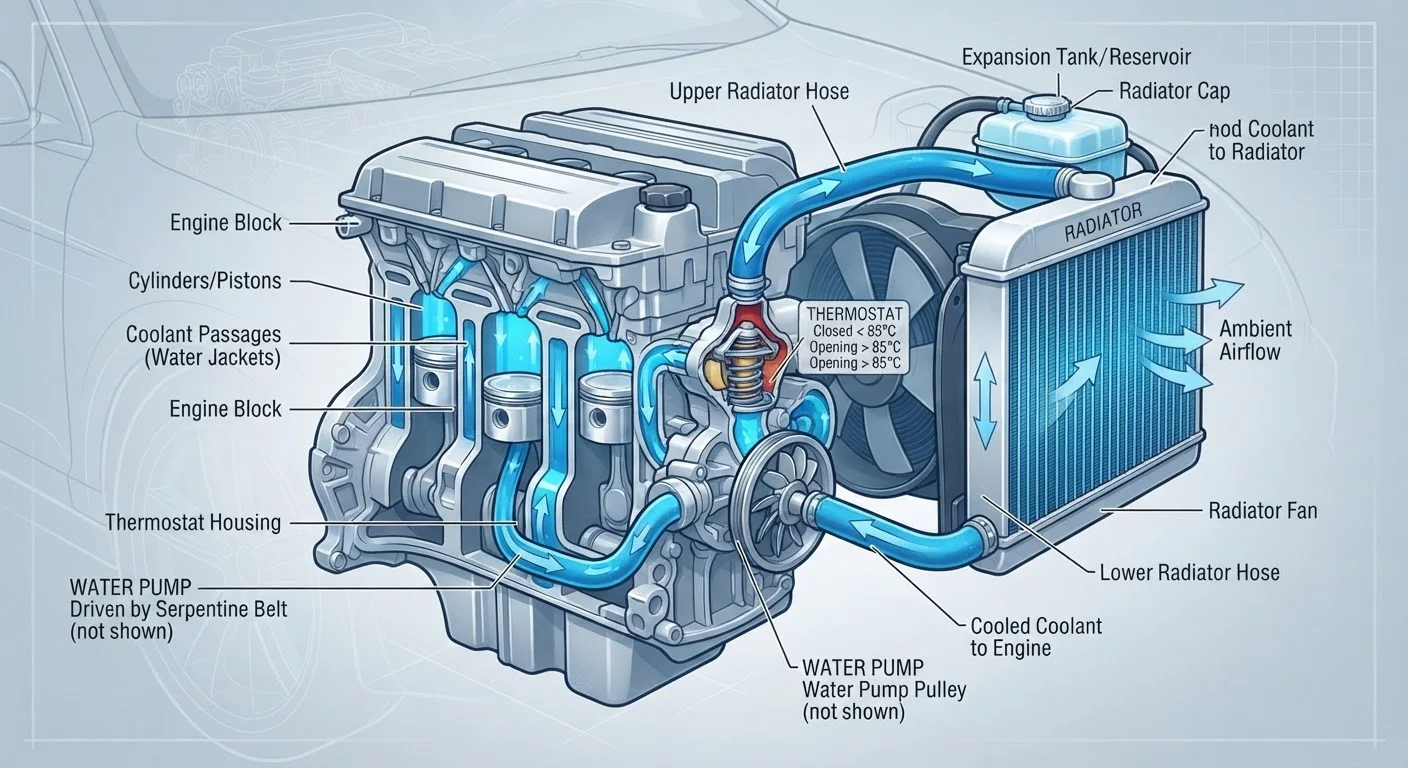
The process works as a continuous loop. Liquid coolant - a mixture of antifreeze and water - absorbs heat from the engine block and cylinder head, then travels to the radiator at the front of the vehicle. There, airflow (from driving or from a cooling fan) draws heat out of the coolant before it circulates back to absorb more. A thermostat governs when coolant begins flowing, holding it back until the engine reaches operating temperature for maximum efficiency.
This closed-loop system is also pressurized, which raises the boiling point of the coolant and increases its effectiveness. That pressurization is why caution around a hot radiator cap is non-negotiable.
If Your Temperature Gauge Spikes: Stop Driving
An overheating engine can sustain catastrophic damage within minutes. If the gauge enters the red zone, pull over to a safe location, turn off the engine, and do not attempt to drive further. Call for roadside assistance rather than risk destroying the engine or causing a fire. Do not open the hood immediately - give the vehicle time to cool.
Key Components and What They Do
Understanding the major parts helps you recognize what's failing when something goes wrong.
- Radiator: The heat exchanger at the front of the vehicle. Coolant passes through thin tubes surrounded by fins that dissipate heat into the air.
- Water pump: A mechanically driven pump that keeps coolant moving through the system. A failed water pump means no circulation - and rapid overheating.
- Thermostat: A valve that stays closed while the engine warms up, then opens to allow coolant flow once operating temperature is reached. A stuck-closed thermostat is a common cause of overheating.
- Coolant hoses: Rubber hoses connecting the engine, radiator, and heater core. They harden and crack with age.
- Coolant reservoir: A plastic tank where excess coolant is held as the system expands and contracts with temperature changes.
- Radiator cap: Maintains system pressure. A failing cap that can't hold pressure lowers the coolant's boiling point, making overheating more likely.
- Cooling fan: Pulls air through the radiator when the vehicle is stationary or moving slowly. Can be mechanical (belt-driven) or electric.
If you ever notice fluid pooling under your vehicle, our guide on identifying fluid leaks by color and location can help you determine whether coolant is the culprit.
When topping off coolant, always use distilled water rather than tap water. Tap water contains minerals that accelerate corrosion inside the cooling system over time.
Mineral deposits from tap water can accumulate in radiator channels and around the thermostat, restricting flow and reducing cooling efficiency.
If your temperature gauge climbs unexpectedly in slow traffic but returns to normal on the highway, suspect a failing electric cooling fan rather than a coolant leak - the fan only matters at low speeds when ram airflow through the radiator is minimal.
This symptom pattern is a classic indicator that separates fan failure from other cooling issues, helping mechanics diagnose faster and saving on unnecessary part replacements.
Warning Signs You Shouldn't Ignore
The cooling system rarely fails without warning. Catching early signs can mean the difference between a minor repair and a destroyed engine.
~40%
Engine failures linked to overheating
Industry estimates suggest overheating-related damage accounts for a significant share of major engine failures, most of which stem from deferred cooling system maintenance.
$2,000-$4,000+
Average cost of head gasket repair
A head gasket failure - often a consequence of repeated overheating - is one of the most expensive engine repairs a driver can face, according to automotive repair data.
- Rising temperature gauge: If the needle climbs toward the red zone, pull over safely as soon as possible and turn off the engine. Continuing to drive risks severe damage.
- Sweet or syrupy smell: Coolant has a distinctively sweet odor. Smelling it inside or outside the car often indicates a leak.
- Steam from under the hood: Visible steam means the coolant is boiling - a serious condition requiring immediate attention.
- Low coolant warning light: Modern vehicles alert you when coolant level drops. Don't dismiss this as a sensor glitch.
- White exhaust smoke: A persistent white plume from the tailpipe - especially with a sweet smell - can indicate coolant entering the combustion chamber, often from a failed head gasket.
- Heater blowing cold air: The cabin heater uses coolant heat. Weak heat output can signal low coolant levels or a circulation problem.
Routine Maintenance Every Driver Should Know
Most cooling system problems are preventable with consistent, straightforward maintenance.
Check Coolant Level Regularly
The coolant reservoir is a translucent plastic tank, usually marked with MIN and MAX lines. Check it when the engine is cold. If it's consistently low, that points to a leak - not just evaporation. Coolant does not get consumed by a healthy system.
Inspect Hoses and Belts
Squeeze the coolant hoses when the engine is cold. They should feel firm and pliable, not brittle or mushy. Look for cracks, swelling near the clamps, or discoloration. On belt-driven water pumps, a worn serpentine belt affects pump performance.
Flush and Replace Coolant on Schedule
Coolant degrades over time. Its corrosion inhibitors break down, allowing rust and scale to accumulate inside the system. Most manufacturers recommend a coolant flush every 30,000 miles or every two to five years, though this varies - always check your owner's manual. Using the correct coolant type for your vehicle matters; mixing incompatible types can cause gel-like deposits.
Prepare for Temperature Extremes
Both summer heat and winter cold stress the cooling system differently. A proper 50/50 mix of antifreeze and distilled water protects against freezing down to about -34°F and raises the boiling point to around 265°F. Before seasons change, it's worth reviewing a seasonal maintenance checklist to ensure your cooling system is prepared.
Use the Right Coolant for Your Vehicle
Coolant formulations vary - OAT, HOAT, and IAT types are not universally interchangeable. Using the wrong type can cause chemical reactions that produce gel-like deposits, clogging passages. Always check your owner's manual or the label on the coolant reservoir cap before adding fluid.
When to Call a Mechanic
Some cooling system tasks are within reach for mechanically inclined owners - checking fluid levels, inspecting hoses, topping off coolant. But certain jobs carry enough risk or complexity that a qualified mechanic should handle them.
Leave the following to a professional:
- Water pump replacement (often requires significant disassembly)
- Thermostat replacement if access is difficult or gaskets are involved
- Radiator replacement or repair
- Head gasket diagnosis or repair - this is among the more serious and expensive repairs a car can need
- Any repair involving a suspected internal coolant leak
Deferred cooling system maintenance is one of the more reliable paths to premature engine failure. Vehicles that reach high mileage reliably almost always have consistent fluid maintenance histories. For a broader look at what separates long-lived vehicles from those that wear out early, see our guide on keeping a car running well past 150,000 miles.