

Key Takeaways
Why a Puddle Under Your Car Doesn't Always Mean Trouble
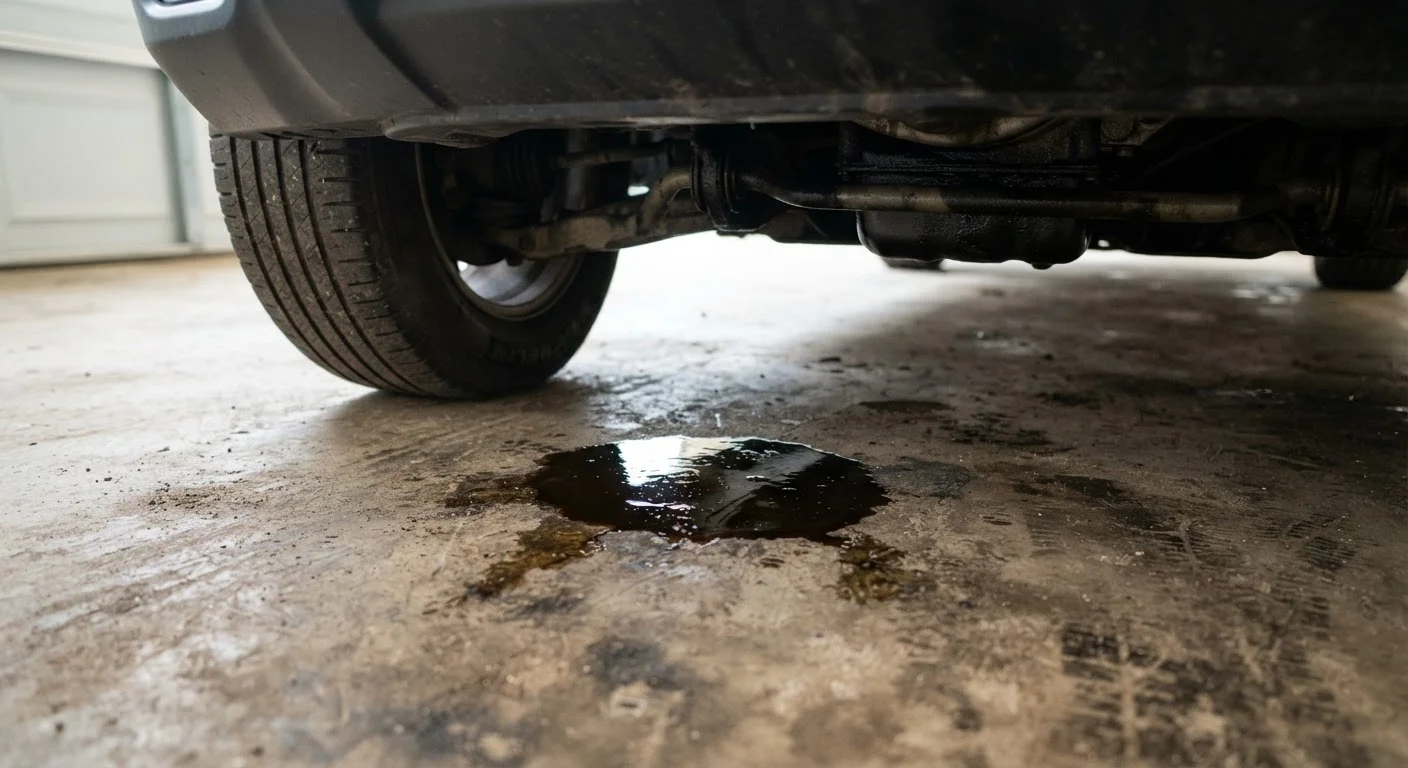
Finding a puddle where your car was parked is one of those moments that can send a driver straight to worst-case thinking. But not every drip signals an expensive repair - and knowing how to read what you see can help you respond appropriately rather than reactively.
The two most common non-emergency discoveries are plain water from the air conditioning system's condensate drain and water vapor from the exhaust on a cold morning. Both are entirely normal. The A/C system removes humidity from cabin air and that moisture has to go somewhere - it drips from a drain tube, typically under the passenger-side dashboard area. On cool or humid days you may see a small, clear puddle every time you park. Exhaust condensation produces water at the tailpipe and disappears once the engine warms up.
The key is learning to distinguish these harmless sources from fluids your car actually needs. That assessment comes down to three quick observations: color, location, and consistency. Check all three before drawing any conclusions. For broader guidance on when your car is trying to tell you something, see our guide to warning signs drivers commonly brush off.
A Quick-Reference Guide to Common Vehicle Fluids
Before walking through the identification steps, it helps to know what each fluid looks like at a glance.
- Engine oil: Amber when new, darkening to brown or black with age. Oily and slick to the touch. Found under the front or center of the engine bay.
- Coolant (antifreeze): Typically bright green, orange, pink, or yellow depending on the formulation. Watery but slightly slippery. Has a distinctively sweet smell. Appears under the front of the car near the radiator. Our cooling system overview explains why even a small coolant leak warrants attention.
- Transmission fluid: Red or reddish-brown, thin and slick. Drips from the middle of the undercarriage, between the front and rear axles.
- Brake fluid: Clear to light yellow, slightly oily, and very thin. Appears near the wheels or under the master cylinder at the firewall. This is one fluid you should never ignore - even a minor loss can compromise braking performance.
- Power steering fluid: Similar to transmission fluid in color (red or light brown), found near the front of the car, often passenger side.
- Water / condensation: Completely clear, no odor, no slickness. Typically under the passenger compartment or at the tailpipe.
Keep a Clean Cardboard Trick in Mind
Slipping a piece of white cardboard or an old cookie sheet under your car overnight gives you a clean, easy-to-read sample of any drip. Morning light makes color identification much more accurate than squinting at a puddle on dark asphalt. Store a few pieces in your trunk for exactly this purpose.
How to Identify the Fluid Step by Step
Note where the puddle sits relative to the car
Position yourself so you can see how the puddle aligns with your parked vehicle. A drip at the very front suggests a radiator or coolant hose issue. Underneath the engine points to oil. Center of the car often means transmission fluid. Near a wheel or at the very rear can indicate brake fluid or differential fluid. This location alone narrows your list considerably.
Examine the color of the fluid
Crouch down and look at the puddle in good lighting. If you used cardboard, bring it into daylight for the clearest read. Match what you see against the color reference above. Keep in mind that old engine oil can be nearly black, which sometimes gets confused with grease rather than a leak - touch a small amount with your fingertip to check.
Check the consistency and smell
Rub a small amount of the fluid between your fingers (gloved is better). Engine oil and transmission fluid feel distinctly slippery and greasy. Coolant has a slightly slimy feel and a sweet, slightly chemical smell that is hard to miss. Brake fluid is thin and nearly odorless. Plain water, of course, leaves no residue. If you detect a sweet smell near the front of the car, treat it as a coolant issue until proven otherwise.
Check your fluid levels under the hood
With the engine off and the car on level ground, open the hood and check the relevant reservoir. Most modern vehicles have clearly labeled translucent reservoirs for coolant, brake fluid, and power steering fluid, with min/max markings. Check the oil dipstick as well. A fluid that is noticeably low confirms an active loss and helps you confirm your identification.
Decide on next steps based on what you found
Clear water with no odor and no drop in any fluid level? Almost certainly condensation - no action needed. A confirmed loss of any mechanical fluid calls for a professional inspection. Brake fluid loss in particular should be treated as urgent and the vehicle should not be driven until inspected. Oil and coolant leaks can range from a minor gasket seep to something more serious - volume and rate of loss matter. A slow seep that leaves a dime-sized spot is very different from a spreading puddle.
If any leak is accompanied by a dashboard warning light, do not wait - consult our dashboard warning light guide and consider whether the vehicle is safe to drive before continuing.
Brake Fluid Loss Is Never Minor
If the fluid you identify is brake fluid - clear to pale yellow, thin, near a wheel or under the firewall - do not drive the vehicle until a qualified mechanic has inspected the brake system. Brake fluid loss can compromise stopping power quickly, and the risk is not proportional to how small the puddle looks.