

Key Takeaways
The Real Reason Your Bag Is Too Heavy
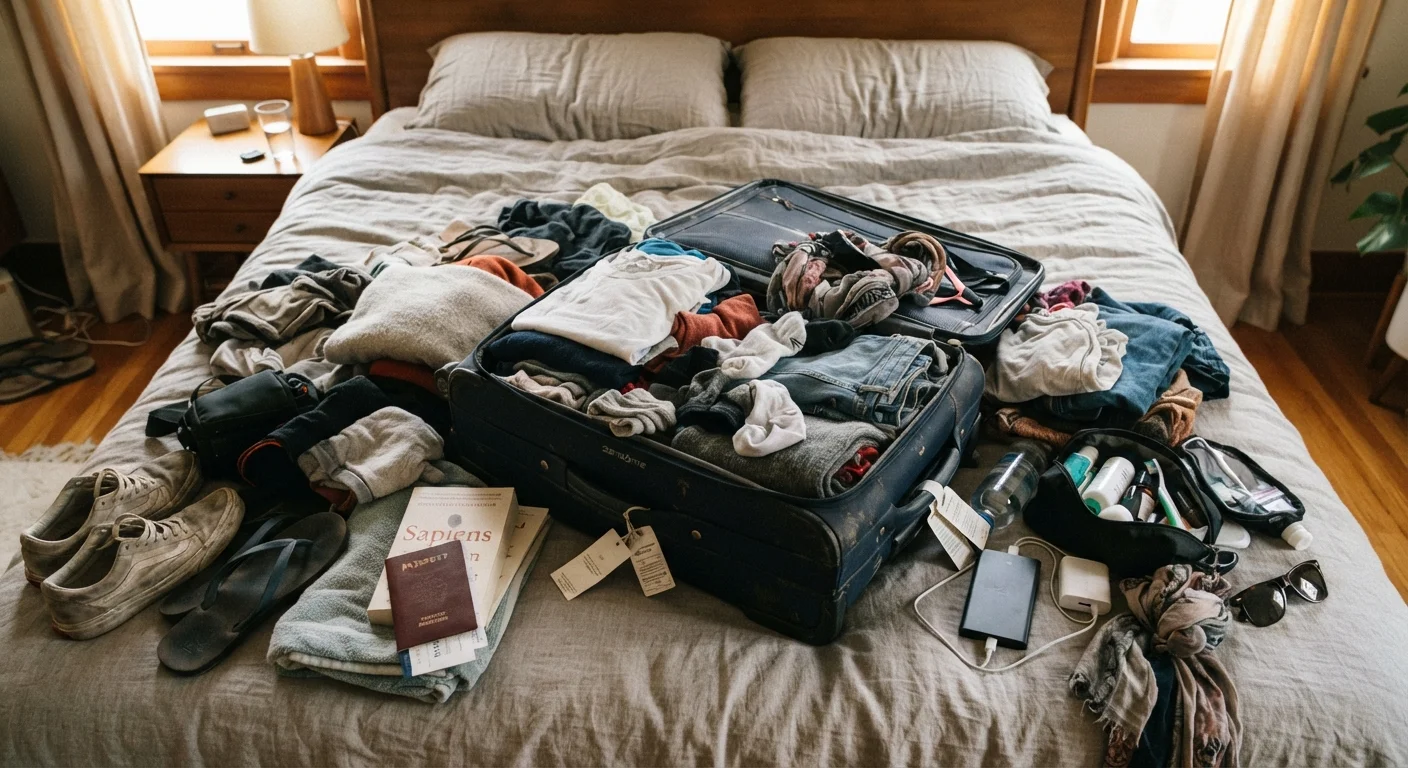
When travelers complain about overpacking, the conversation almost always pivots to technique - rolling versus folding, compression cubes, the merits of packing light. But those conversations skip the actual problem. By the time you're staring at a mountain of clothes on your bed, the planning decisions that caused the overload have already been made - or more accurately, not made.
Overpacking is overwhelmingly a planning failure. Vague itineraries, skipped destination research, and unexamined anxiety all funnel directly into an overstuffed bag. The good news is that fixing the root causes is far more effective than any packing hack. Smart travel tips start well before the suitcase opens.
The Bag Is the Last Step
Most packing mistakes are locked in before you touch a single item of clothing. If you haven't confirmed your itinerary, researched your destination's weather, or thought through laundry access, you'll default to packing for every scenario - and that's where bags blow up. Fix the plan first; the packing will follow.
Common Mistakes That Fill Your Bag Before You Pack
Each of the mistakes below happens in the planning phase - not at the suitcase. Recognize them early and your bag almost sorts itself.
Packing without a confirmed daily itinerary.
Why it happens: Many travelers start packing days before they've solidified their plans, filling the bag with 'just in case' items to cover every possible scenario.
Failing to research the destination's actual climate and culture.
Why it happens: Travelers rely on vague seasonal assumptions ('it's summer, so it'll be warm') instead of checking specific forecasts or understanding local norms around dress.
Not accounting for laundry access during the trip.
Why it happens: Packing as if laundry is impossible leads to bringing one outfit per day - a near-guaranteed path to an overweight bag.
Treating the suitcase as emotional insurance against uncertainty.
Why it happens: Travel anxiety is real. Packing extra items - backup shoes, 'emergency' outfits, redundant chargers - feels like control, but it's really just displaced planning anxiety.
Ignoring the carry-on versus checked bag decision until after packing.
Why it happens: Many travelers pack first and then try to figure out which bag to use - ending up with a volume that forces a checked bag they didn't plan or budget for.
If you're heading abroad for the first time, planning an international trip involves a broader set of prep steps that directly shape what you'll need to carry.
How to Plan Your Way to a Lighter Bag
The antidote to overpacking is specificity. A vague plan produces a packed-for-everything bag; a detailed plan produces a precise, manageable one.
Airline Weight Limits Are Unforgiving
Overpacking doesn't just create physical strain - it creates financial risk. Airlines can charge significant fees for overweight or oversized bags, and those charges often aren't predictable until you're standing at the check-in counter. Knowing your airline's specific baggage policy before you pack is as essential as knowing your destination's weather.
Start with a pre-trip planning checklist that covers logistics, weather, and daily activities before you think about clothing at all. Once those pieces are confirmed, build a simple packing list tied directly to your itinerary - not to a generic 'what if.' For ambitious packers, fitting two weeks into a carry-on is genuinely achievable when the itinerary drives the decisions. Plan the trip first. Pack second. In that order, every time.
~50%
Travelers who report overpacking regularly
Travel industry surveys consistently find roughly half of leisure travelers say they bring more than they actually use on a typical trip.
2-3 days
Average clothing worn out of items packed
Experienced travel bloggers and packing researchers commonly note that most travelers rewear only two or three outfit combinations regardless of how much they bring.