

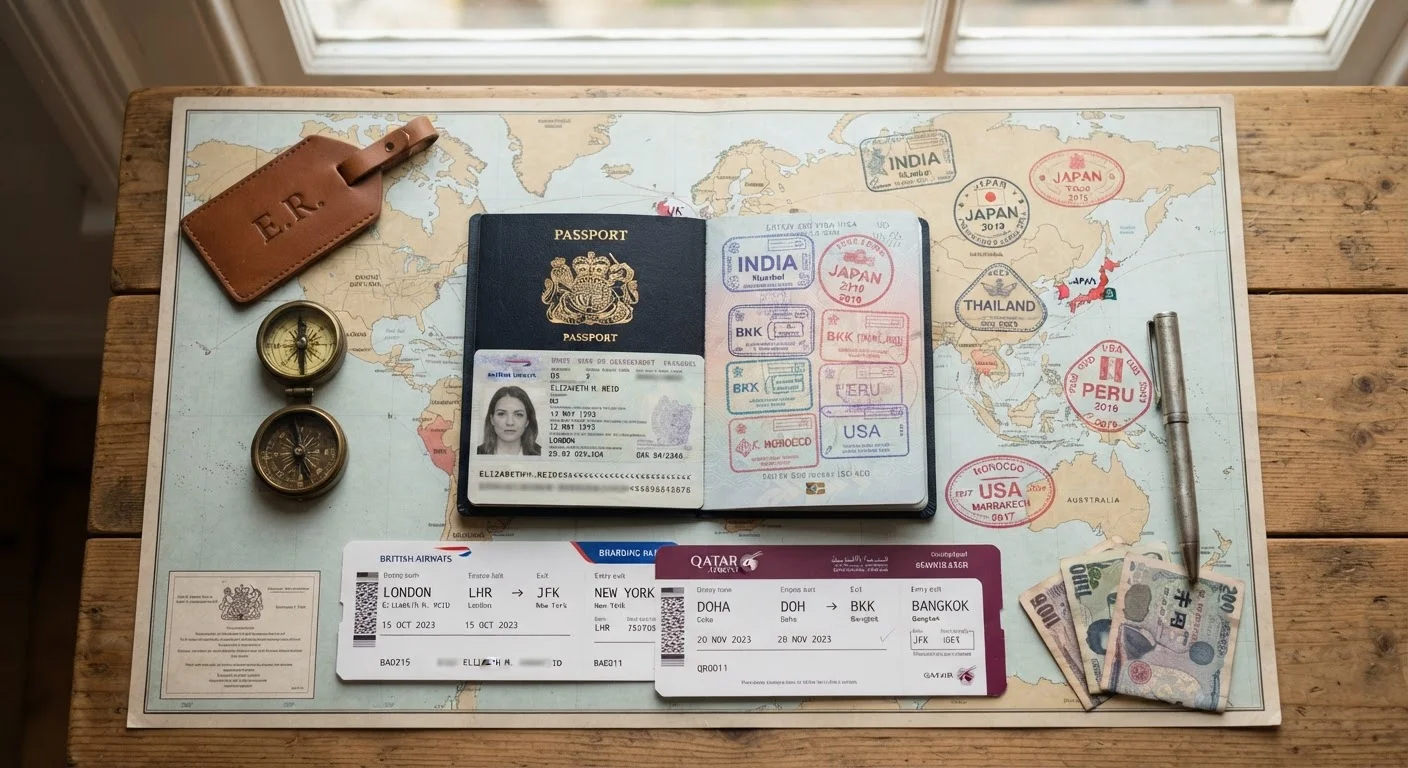
| US Passport Global Ranking | Visa-free or visa-on-arrival access to roughly 186 destinations (Henley Passport Index, 2024) |
| Typical Visa-Free Stay (Europe) | Up to 90 days within any 180-day period (Schengen Area) (European Union Schengen regulations) |
| E-Visa Processing Time | Minutes to several weeks, depending on country (Varies by destination) |
| Passport Blank Pages Required | Most consulates require at least 1-2 blank pages (US Department of State guidance) |
| Official US Travel Info Source | travel.state.gov (US Department of State) |
The Three-Tier System: Passport, Visa, and Visa-Free Entry
Entry requirements for US travelers generally fall into three categories: destinations that need only a valid US passport, those requiring a visa obtained in advance, and a small set of places where Americans can enter with less documentation - sometimes just a government-issued ID. Knowing which bucket your destination falls into is the single most important planning step you can take.
| US Passport Global Ranking | Visa-free or visa-on-arrival access to roughly 186 destinations (Henley Passport Index, 2024) |
| Typical Visa-Free Stay (Europe) | Up to 90 days within any 180-day period (Schengen Area) (European Union Schengen regulations) |
| E-Visa Processing Time | Minutes to several weeks, depending on country (Varies by destination) |
| Passport Blank Pages Required | Most consulates require at least 1-2 blank pages (US Department of State guidance) |
| Official US Travel Info Source | travel.state.gov (US Department of State) |
Passport-only destinations make up the majority of places Americans visit. Most of Western Europe, Southeast Asia, and Latin America allow US passport holders to enter for tourism without a separate visa, typically for stays of 30 to 90 days. You still need a passport that's valid - and often one with several months of validity to spare beyond your return date. See our guide on passport expiration rules for details on why the "six-month rule" can catch travelers off guard.
Visa-required destinations include countries in parts of Africa, Central Asia, and the Middle East, plus a few others that simply require advance authorization regardless of your nationality. These visas can be tourist visas, e-visas (applied for online), or visas on arrival - and the process, cost, and lead time vary considerably.
Limited-documentation entry applies mainly to US territories like Puerto Rico and the US Virgin Islands, which require no passport at all for American citizens traveling domestically. A handful of cruise-specific ports also accept an enhanced driver's license or NEXUS card in place of a passport - though this is narrow and route-dependent.
Visas Explained: Types, Timing, and Common Pitfalls
Not all visas work the same way, and confusing one type for another is a surprisingly common mistake.
Visa on Arrival
A visa granted at the port of entry upon landing, without a prior application. Travelers typically pay a fee and present required documents at a designated counter in the airport or border crossing.
Electronic Travel Authorization (ETA)
A pre-travel digital authorization - distinct from a traditional visa - that links to your passport electronically. Required by countries like Canada and Australia even when no visa stamp is needed.
Six-Month Passport Validity Rule
A common requirement that a traveler's passport must be valid for at least six months beyond their planned departure date. Many countries enforce this rule even when the stay itself is much shorter.
Visa-Free Access
Permission for citizens of one country to enter another without obtaining a visa in advance. The allowable length of stay and activities permitted (tourism vs. work) vary by country and bilateral agreement.
Port of Entry
An official location - airport, land border crossing, or seaport - where travelers are inspected and admitted into a country. Customs and immigration checks occur here.
Consular Visa
A visa issued by a country's embassy or consulate in the traveler's home country, typically requiring a formal application, supporting documents, and sometimes an in-person interview.
- Visa on Arrival (VOA): Issued at the port of entry after you land. You don't apply in advance, but you typically need to pay a fee and show proof of onward travel and sufficient funds. Countries like Egypt and Nepal offer this for US citizens.
- Electronic Travel Authorization (ETA) / e-Visa: Applied for online before departure - sometimes in minutes, sometimes days in advance. Canada's eTA, Australia's Electronic Travel Authority, and India's e-Visa are well-known examples. These are not the same as a full visa; they're pre-clearance checks.
- Embassy or Consulate Visa: Requires submitting an application - sometimes with an in-person interview - well ahead of travel. Processing can take weeks to months. China, Russia, and several Gulf states require this route for many travelers.
Timing is where travelers most often stumble. If a country requires an embassy visa, applying two weeks before departure may not be enough. Build in extra time, and check whether your passport needs blank pages for visa stamps - some consulates require two or more blank pages.
Before you go, use your pre-departure checklist to confirm all documents are in order: our pre-arrival checklist for international travel walks through the full sequence.
Where to Verify Requirements (And Why You Should Always Double-Check)
Travel blogs and booking sites are useful for inspiration, but they are not authoritative sources for entry requirements. Requirements change - sometimes with little notice - due to diplomatic shifts, public health events, or new bilateral agreements.
Always Verify With Official Sources
Entry requirements can change quickly due to diplomatic relations, public health situations, or new bilateral agreements. Travel blogs and third-party booking platforms are not authoritative. Before every international trip, check travel.state.gov and the official embassy or consulate website for your destination country. These are the sources airlines and border officers rely on.
The two authoritative sources US travelers should consult are:
- US Department of State (travel.state.gov): Provides country-specific entry and visa information, travel advisories, and safety ratings. Updated regularly by embassy staff on the ground.
- The destination country's official embassy or consulate website: The host government has the final word on who it admits and under what conditions.
Airlines also enforce entry rules at check-in, because carriers can be fined for transporting passengers who are denied entry on arrival. If your documents don't meet requirements, you may not board - regardless of what a third-party site told you.
One practical tip: search the destination country's official embassy in Washington, D.C. for the most current visa requirements and fee schedules. Cross-reference with the State Department advisory for any travel alerts that might affect your plans.
Getting your documents right is just the beginning. Once entry is secured, other logistics - like managing money abroad - matter just as much. Our article on foreign currency and card fees explains the charges that catch many US travelers off guard.
This article provides general travel information for educational purposes only. Entry requirements, visa rules, and travel advisories change frequently. Always verify current requirements directly with the US Department of State and the official embassy or consulate of your destination country before traveling.