

Key Takeaways
Why Currency Mistakes Are So Easy to Make
International travel is full of small financial decisions that happen fast - at a busy ATM, at a restaurant checkout, at a currency booth when you're jet-lagged and just off the plane. That's exactly the environment where hidden fees thrive. The systems that power foreign transactions are designed for efficiency, not transparency, and even savvy travelers can find themselves paying more than necessary simply because the default options favor the merchant or the ATM operator.
The good news is that most of these costs are avoidable once you know what to look for. Whether you're stretching a travel budget or spending freely, understanding how currency conversion and card fees actually work puts you in control. The mistakes below are the ones our editorial team hears about most consistently from American travelers - and they're all preventable.
Accepting dynamic currency conversion (DCC) at the point of sale.
Why it happens: Merchants and ATMs often present DCC as a helpful service - 'Would you like to pay in dollars?' - which sounds reassuring when you're abroad and unfamiliar with local currency.
Using a credit or debit card that charges foreign transaction fees without realizing it.
Why it happens: Many travelers assume all cards work the same way overseas and never check the fine print before departure.
Withdrawing cash from ATMs that are outside your bank's network without checking the fee structure.
Why it happens: It feels natural to use any ATM you find, especially when you need cash quickly in an unfamiliar city.
Exchanging large amounts of currency at the airport or hotel because it feels 'safer.'
Why it happens: Travelers worry about having no cash on arrival and overestimate how much local currency they need upfront.
Assuming the 'no foreign transaction fee' claim means all costs are covered.
Why it happens: Even fee-free cards still pass along the card network's own currency conversion rate, which may differ slightly from the mid-market rate travelers see on comparison sites.
Not keeping a small backup of local cash for emergencies.
Why it happens: Travelers who rely entirely on cards sometimes get caught when a card is blocked, a terminal is down, or a local vendor is cash-only.
Building a Smarter Payment Strategy Before You Go
The most effective time to sort out your currency and card plan is before you board, not after you land. Start by checking every card in your wallet for foreign transaction fees - your card issuer's website or the back of your statement will list this. If all your cards charge the fee, consider whether a fee-free option makes sense for your travel frequency. This is general information to help you ask the right questions; for advice tailored to your finances, consult a qualified financial professional.
Always Pay in Local Currency Abroad
When a foreign card terminal or merchant offers to charge you in U.S. dollars instead of local currency, that is dynamic currency conversion (DCC). It sounds convenient, but the exchange rate applied is typically set by the merchant or terminal provider - not your bank - and it almost always includes a significant markup. Declining DCC and paying in local currency lets your card issuer handle the conversion, which is nearly always cheaper.
At the ATM, your strategy matters as much as your card choice. Withdraw local currency from bank-affiliated ATMs when possible, as standalone kiosks in tourist areas sometimes apply their own conversion rates on top of your bank's fees. And always decline the ATM's offer to handle the conversion for you - that's DCC in another form.
Thinking through these details in advance pays off throughout your trip. Just as guidebooks can gloss over the real costs of a destination, generic travel advice often skips the financial fine print. Pair a fee-free card with a disciplined ATM habit, and the savings across even a two-week trip can be meaningful.
Airport Exchange Booths: Convenient but Costly
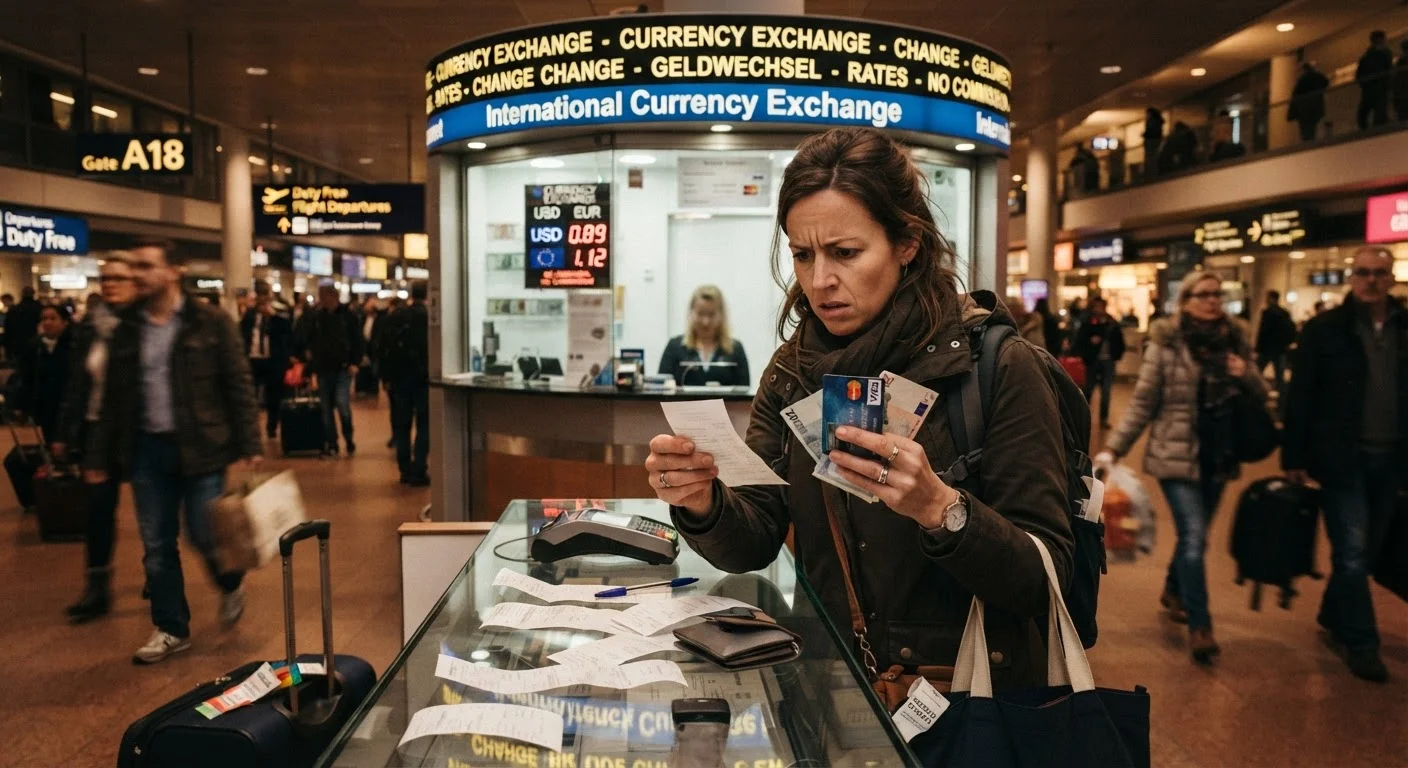
Currency exchange kiosks in airports and hotel lobbies are among the least favorable places to convert money. Their rates can carry markups of 10-15% or more above the interbank (mid-market) rate. If you need local cash on arrival, withdraw a modest amount from an in-network ATM at your destination instead. Plan ahead so you are not forced into a bad exchange out of urgency.
This article is for general informational purposes only and does not constitute financial or legal advice. Card terms, fees, and exchange rate policies vary by issuer and are subject to change. Always verify current terms directly with your card issuer before traveling.