

Key Takeaways
The Packing List Everyone Forgets to Write
You have the passport. You have the charger. You probably have more shoes than you need. But year after year, travelers arrive at their destination and immediately wish they had packed something they never thought twice about at home. These are not exotic gadgets - they are small, practical, low-cost items that solve real problems experienced travelers have already encountered the hard way.
This list is built around that gap: the stuff that never makes the obvious checklist but earns its place in your bag every single trip. Whether you are heading abroad for two weeks or road-tripping across a few states, these additions take up almost no room and deliver outsized peace of mind. For a broader foundation, the trip planning hub covers the full planning picture from start to finish.
A physical copy of key documents
Digital backups are useful, but a printed copy of your passport photo page, travel insurance confirmation, hotel addresses, and emergency contacts costs nothing and works without a battery or signal. If your phone is lost or stolen - a more common scenario than most travelers expect - that folded piece of paper becomes essential. Store it separately from your wallet and passport, ideally in a zipped interior pocket of your bag.
A printed backup works when your phone does not - keep it separate from your wallet.
A doorstop alarm
This small wedge-shaped device slides under any door and emits a loud alarm if the door is pushed open. It adds a layer of security in hotels, hostels, guesthouses, or Airbnbs where you cannot control the lock quality. It is especially useful for solo travelers who want low-effort, portable peace of mind. Most weigh under two ounces and cost only a few dollars.
A doorstop alarm adds real security in rooms where you cannot control the lock quality.
Safety pins in multiple sizes
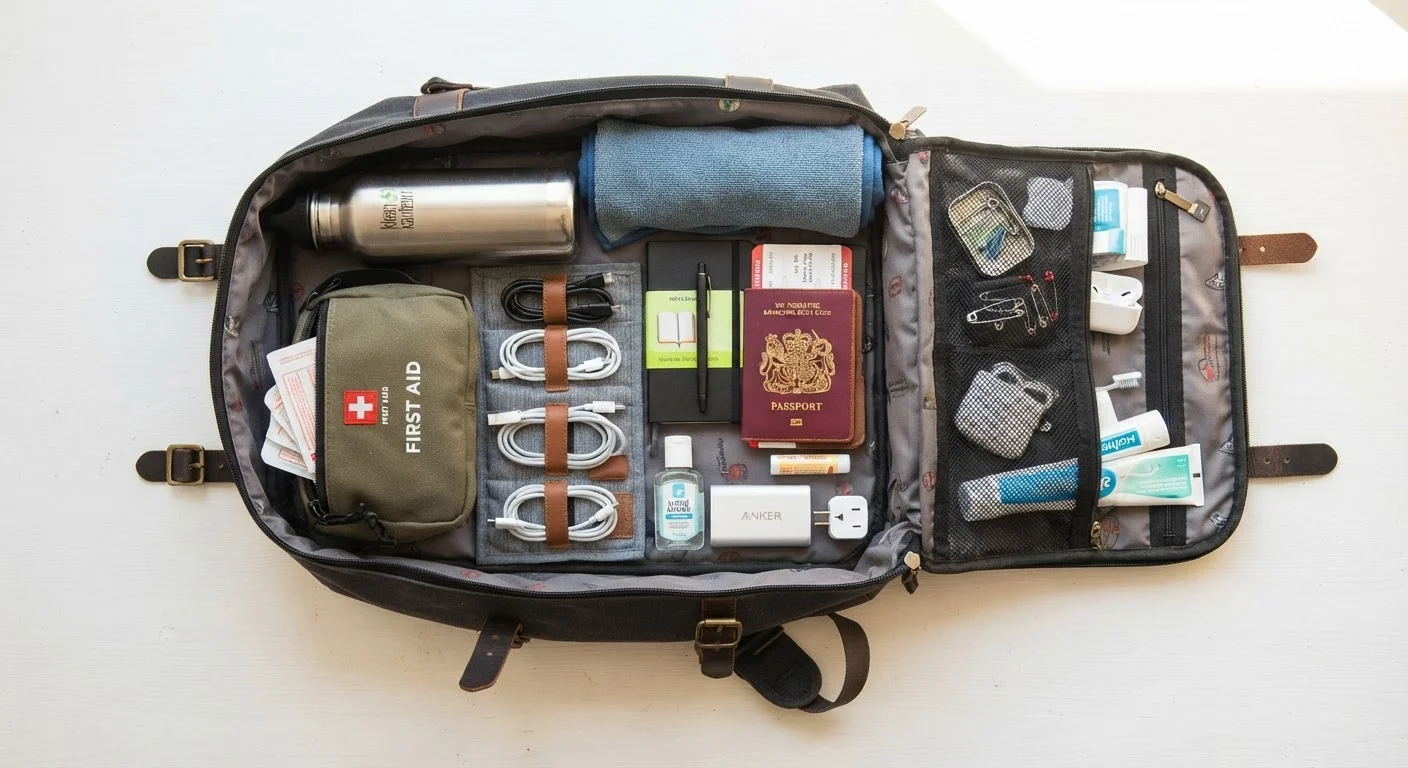
Safety pins are one of the most versatile and consistently underrated items in any travel bag. They can close a broken zipper pull, temporarily repair a torn strap, keep a sarong or scarf in place, secure a bag zipper against opportunistic pickpockets, and even patch a fabric tear long enough to get home. A handful of assorted sizes weighs almost nothing and takes up virtually no space in a toiletry bag.
Safety pins fix broken zippers, torn straps, and loose clothing - all things that happen on trips.
A small cable organizer or pouch
Chargers, adapters, earbuds, and cables multiply quickly and tangle just as fast. A slim fabric organizer with elastic loops or zip pockets keeps everything in one retrievable place - no more digging through your entire bag at the airport. It also speeds up the security screening process, since you can pull all electronics out at once in an organized bundle rather than scattering items across a bin.
A cable organizer saves minutes every day and prevents the chaos of tangled gear at the worst moments.
Rehydration sachets
Oral rehydration salts (sometimes sold as electrolyte powders) are compact, lightweight, and extraordinarily useful when travel fatigue, heat, food issues, or a long flight leaves you feeling depleted. They work faster than water alone at restoring electrolyte balance. Many travelers discover their value only after a rough day - packing a few sachets before you need them is the kind of quiet preparation that pays off without fanfare. This is general wellness information; consult a healthcare professional about any medical concerns during travel.
Rehydration sachets work faster than water alone and take up almost no space in your bag.
A lightweight dry bag or two
Even travelers who never plan to go near water benefit from a dry bag. Rain happens. Boats have unexpected spray. A beach visit turns into a swim. A small roll-top dry bag protects your phone, passport, and cash from moisture without adding meaningful weight to your pack. They also serve as an organizational layer inside larger bags - useful context when figuring out whether to carry on or check your bag.
A dry bag protects what matters most from rain, spray, and unexpected moments near water.
A pen
This sounds absurdly simple, but it matters more than you would think. Customs and immigration forms are still paper in many countries. Hotel check-in sometimes requires a signature. A fellow traveler needs to write something down. Most people discover mid-flight that they do not have one and spend ten minutes tracking one down from a flight attendant. Tuck a ballpoint pen into your carry-on pocket and quietly feel smarter than everyone around you at passport control.
Paper customs forms and hotel check-ins still exist - a pen is one of the most useful items you can carry.
Pack Smart, Travel Easier
None of these items will transform your trip on their own, but together they form a quiet infrastructure of preparedness that lets you focus on actually enjoying the journey. The travelers who move through the world with the least friction are rarely the ones who pack the most - they are the ones who have packed thoughtfully.
Review your list after every trip
The best time to update your packing list is the day you return home, while the inconveniences of the trip are still fresh. Make a note of anything you wished you had brought, and anything you carried but never touched. Refining your list over time is how experienced travelers build a bag that genuinely works for them.
If you are still working out the bigger packing picture, packing a two-week trip into a single carry-on is more achievable than most people assume. And once the bag is sorted, make sure your airport experience is just as smooth - small oversights are what slow most travelers down at security.