
Tokyo for First-Time Visitors: Navigating One of the World's Most Layered Cities

Key Takeaways
Start here
Why Tokyo Feels Overwhelming at First
Next
Mastering the Transit System
Then
Getting to Know the Neighborhoods
Don't skip
Practical Logistics Every First-Timer Needs
Before you go
Cultural Customs Worth Knowing
Why Tokyo Feels Overwhelming at First
Tokyo is the world's most populous metropolitan area, home to roughly 14 million people within the city limits and more than 37 million in the wider region. That scale is part of what makes it exhilarating - and initially disorienting. Streets don't follow a grid. Addresses reference city blocks rather than street names. And the train map, with its overlapping private, metro, and national lines, looks like a circuit board at first glance.
The reassuring reality is that Tokyo rewards preparation. Visitors who understand the basic layout and invest a little time in logistics before arrival consistently report a smoother experience than those who wing it. If you're new to international travel altogether, our guide to planning a first international trip covers the foundational steps that apply here too.
Verify Entry Requirements Before You Travel
Visa requirements, vaccination rules, and entry conditions for Japan can change. Always check current requirements with official sources such as the Japan Tourism Agency and the U.S. Embassy in Tokyo before booking or departing. Do not rely solely on travel blogs or third-party aggregators for this information.
Mastering the Transit System
Tokyo's train and subway network is extraordinarily efficient - but it involves multiple operators running on overlapping lines. The two you'll use most are JR East (which runs the famous Yamanote Line loop connecting Shinjuku, Shibuya, Harajuku, Akihabara, and Ueno) and Tokyo Metro, whose nine subway lines reach neighborhoods the JR system doesn't serve directly.
Set Up Your IC Card Before You Leave the Airport
Ticket machines at both Haneda and Narita have English-language options and sell Suica and Pasmo cards. Loading ¥2,000-¥3,000 immediately means you can board any train or bus without fumbling for exact change. It also works at konbini and many vending machines throughout the city.
Fares are distance-based, so the IC card automatically calculates and deducts the correct amount every time you tap in and out. Never exit a fare gate without tapping out - you'll be charged the maximum fare. Most platforms display signage in English, and train announcements at major stations are bilingual.
Taxis exist but are expensive relative to trains. Ride-share apps operate with significant restrictions in Japan compared to the U.S. For most in-city movement, the rail network is faster and far more economical.
Getting to Know the Neighborhoods
Tokyo has no single center - it operates more like a collection of distinct cities stitched together. Understanding a few of the key areas helps you choose where to stay and how to plan your days.
IC Card
A rechargeable contactless payment card used for train, subway, and bus fares across Tokyo and much of Japan. Suica and Pasmo are the two main varieties visitors encounter.
JR (Japan Railways)
Japan's national rail operator, which runs multiple lines through Tokyo including the heavily used Yamanote Line loop that circles central neighborhoods.
Tokyo Metro
A separate subway network with nine lines covering areas the JR system doesn't reach. Both JR and Tokyo Metro accept IC cards.
Konbini
Short for 'convenience store' - places like 7-Eleven, FamilyMart, and Lawson. In Tokyo they serve hot food, ATMs, event tickets, and much more, making them genuinely essential for travelers.
Izakaya
A casual Japanese gastropub where food and drinks are ordered in small portions and shared. They're affordable, lively, and a great way to eat like a local.
Shinkansen
Japan's high-speed bullet train network, useful for day trips from Tokyo to cities like Kyoto, Osaka, or Nikko. Separate from standard city transit and requires its own ticket or rail pass.
- Shinjuku - A dense commercial and entertainment hub with a vast train station (the world's busiest by some measures), a famous nightlife district in Kabukicho, and a calmer west side dominated by skyscrapers and the Tokyo Metropolitan Government Building.
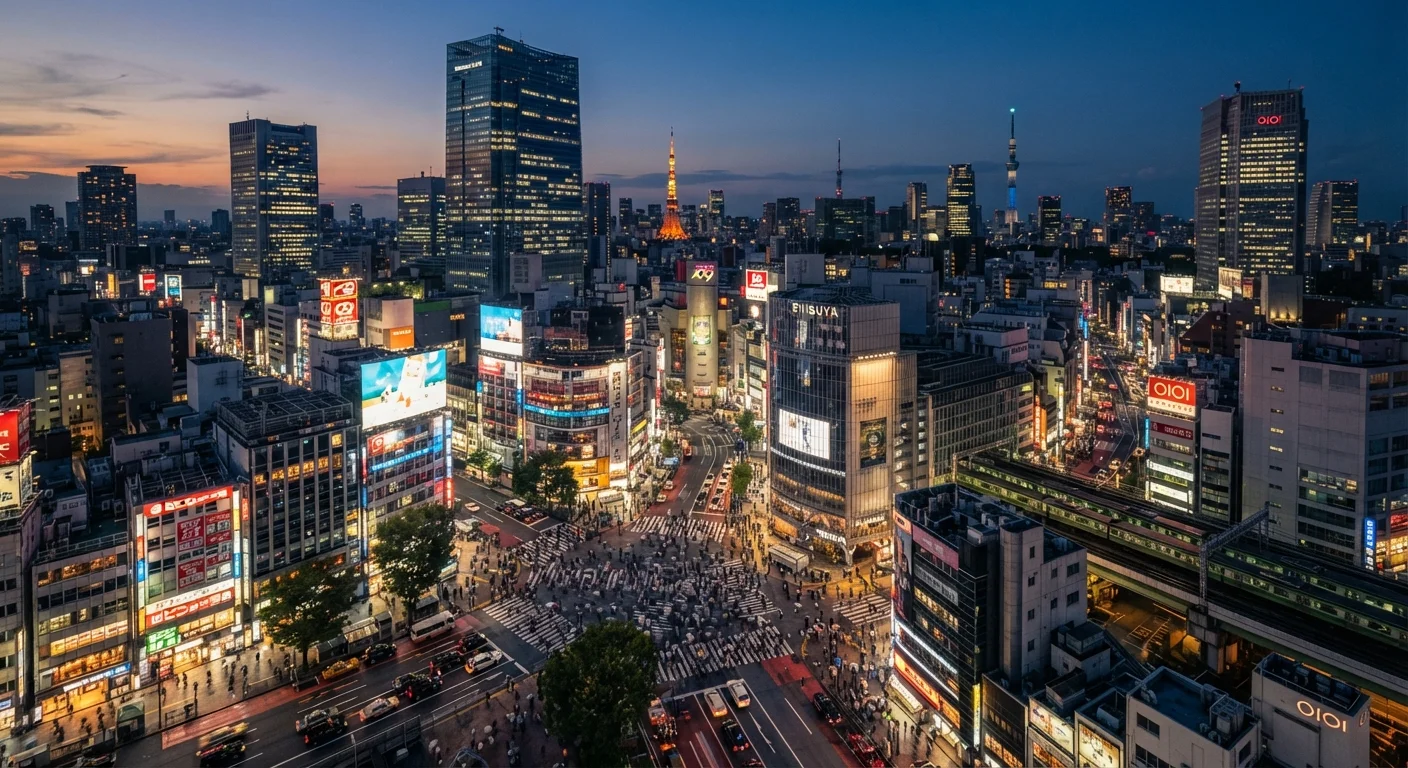
- Shibuya - Home to the iconic scramble crossing and a younger, fashion-forward energy. Proximity to Harajuku makes this a natural pairing for a single day.
- Asakusa - The most historically intact neighborhood in central Tokyo, centered on Senso-ji temple. It feels noticeably different from the rest of the city - slower, older, and easier to walk.
- Akihabara - The electronics and anime district. Overwhelming in the best possible way if that's your scene; easy to skip briefly if not.
- Yanaka - A quieter, older residential area that escaped wartime bombing. Narrow lanes, independent shops, and a genuine neighborhood feel without the tourist density.
For comparison with a destination that tends to disappoint when expectations don't match reality, our look at first-timer experiences in Paris explores how mindset shapes the visit.
Practical Logistics Every First-Timer Needs
Cash: Japan is incrementally moving toward card acceptance, but cash remains essential. Many ramen shops, small izakayas, shrines, and local market stalls are cash-only. Keep ¥5,000-¥10,000 accessible. 7-Eleven ATMs accept most foreign bank cards reliably.
Pocket Wi-Fi or SIM: A local data SIM or pocket Wi-Fi rental gives you navigation, translation apps, and Google Maps offline - all critical. These can be ordered online before departure and picked up at the airport on arrival.
Luggage forwarding (takuhaibin): This is one of Tokyo's most underused travel conveniences. For a modest fee, courier services (available from most convenience stores and hotels) will forward your bags to your next destination by the following morning. It makes moving between cities dramatically easier.
If you're extending your Japan trip beyond Tokyo, the neighborhood guide to Kyoto's temple districts is a useful companion read for planning your rail journey south.
Rush Hour Is No Joke
Tokyo's morning rush (roughly 7:30-9:30 a.m.) packs trains to degrees that genuinely surprise first-timers. If your itinerary is flexible, shift sightseeing starts to mid-morning and avoid major hub stations during peak hours. Some lines offer women-only cars during rush hours - look for pink markings on the platform.
Cultural Customs Worth Knowing
Tokyo is genuinely welcoming to international visitors, and most locals extend considerable patience. Still, a few customs matter more here than in many Western cities.
- Quiet in transit: Phone calls on trains are considered rude. Keep conversations low, and switch to silent mode.
- No eating while walking: Street food purchased at festivals or markets is typically eaten near where you bought it, not carried down the street.
- Shoes off: Many traditional restaurants, ryokan, and some temples require removing shoes at the entrance. Wear socks.
- Tipping is not customary - and can occasionally cause confusion or embarrassment. Service is simply excellent by default.
- Trash cans are rare: Carry a small bag for wrappers and disposables. Public bins were largely removed for security reasons; konbini have small bins for their own containers.
For more on navigating international destinations smartly and safely, the Travel Tips hub covers packing, budgeting, and safety essentials that apply across every destination.