

Key Takeaways
New Orleans Beyond Bourbon Street
New Orleans is a city of distinct neighborhoods, each with its own culinary identity, architectural character, and cultural rhythm. Beyond the tourist-heavy French Quarter strip, the city unfolds into places like the Marigny, Bywater, Tremé, and Garden District - each offering a more textured, lived-in picture of what locals actually call home. Understanding this broader geography is the difference between a surface-level visit and a genuinely memorable trip.
The French Quarter itself is larger than most visitors realize and contains quieter, residential pockets away from Bourbon Street's commercial core.
The Neighborhoods That Actually Define the City
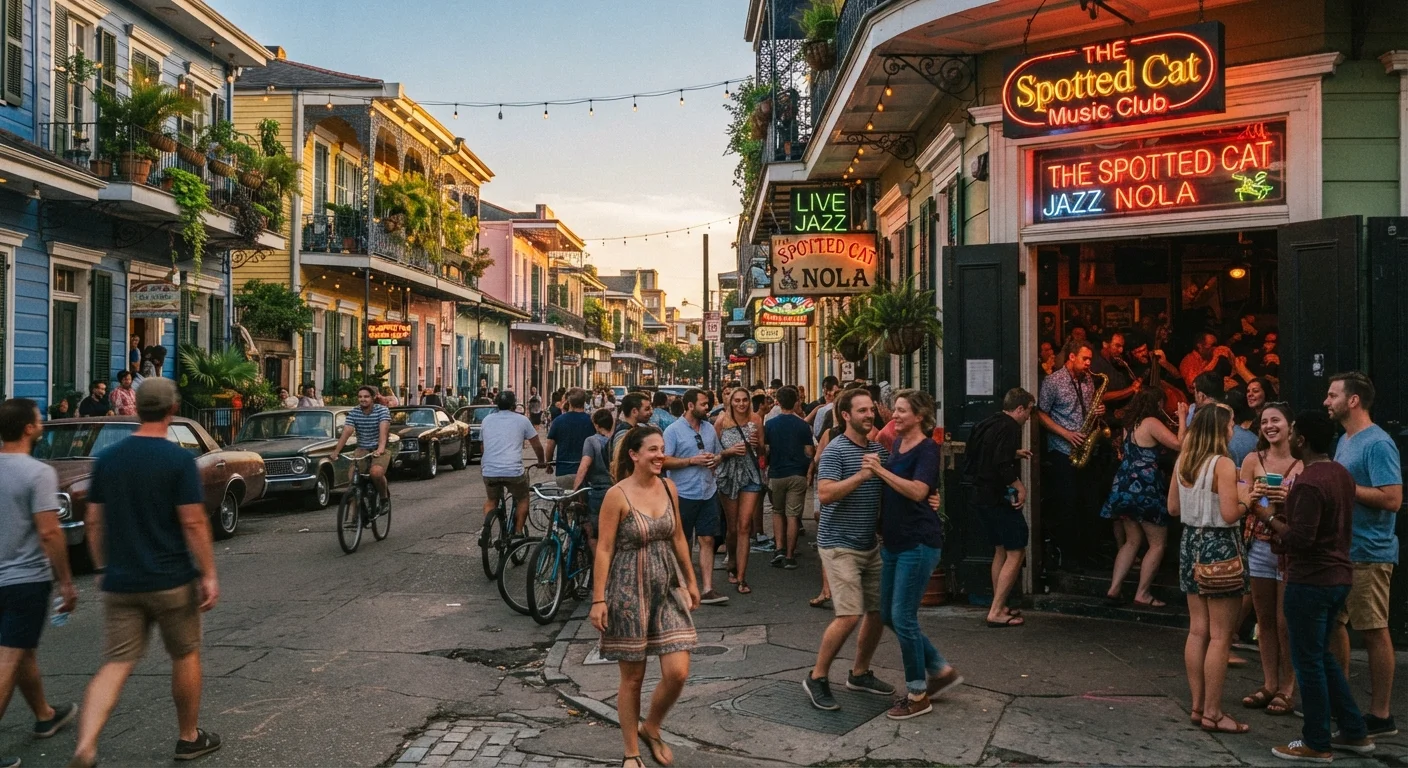
Bourbon Street is loud, lit, and genuinely fun for an hour - but it tells you almost nothing about New Orleans. The city's soul lives in places like the Faubourg Marigny, directly downriver from the French Quarter, where colorful shotgun houses crowd together and Frenchmen Street offers nightly live music in venues small enough that you can watch a trumpet player sweat. It's the kind of street-level experience Bourbon Street used to be before it became a theme park version of itself.
Upriver, the Garden District is all shaded sidewalks, wrought-iron fences, and sprawling Greek Revival mansions - a visual argument that New Orleans architecture rivals anything in the American South. It's walkable, unhurried, and a complete contrast to the Quarter's pace.
Then there's the Tremé, one of the most historically significant neighborhoods in the country. Widely recognized as the oldest African American neighborhood in the United States, it's where much of what the world calls jazz was born, practiced, and carried forward. St. Augustine Church and Congo Square are not tourist attractions in the typical sense - they're living chapters of American history.
The French Quarter Is More Than Bourbon Street
Many visitors don't realize that Bourbon Street is just one block within the larger French Quarter. The streets on either side - Royal Street, Chartres Street, Decatur Street - offer antique shops, historic architecture, quieter bars, and the French Market. Exploring just two blocks off Bourbon dramatically changes the experience of the Quarter itself.
Food That Goes Way Beyond Beignets
The food story in New Orleans is genuinely one of the most layered in any American city. Creole cooking - shaped by French, West African, Spanish, and Caribbean traditions - produced dishes that don't exist anywhere else in quite the same form. A bowl of red beans and rice on a Monday (a tradition rooted in the old practice of slow-cooking beans while doing laundry) carries more cultural weight than most cities' entire culinary histories.
Neighborhood lunch counters and corner restaurants often do more interesting work than the celebrated dining rooms in the Quarter. Seek out po'boy shops in Mid-City, Vietnamese-Creole fusion in the East, and the kind of gumbo that takes all day to develop its flavor. The city's food geography is as rich as its musical one - and both reward the visitor who gets off the main drag.
72+
Officially recognized neighborhoods in New Orleans
The City of New Orleans formally recognizes more than 70 distinct neighborhoods, each with its own character and community identity.
~130
Years of continuous jazz tradition in New Orleans
New Orleans is broadly recognized as the birthplace of jazz, with roots tracing to the late 19th and early 20th centuries in neighborhoods like the Tremé and Storyville.
400,000+
Annual Jazz Fest attendance (typical year)
The New Orleans Jazz and Heritage Festival regularly draws hundreds of thousands of visitors over two weekends in late April and early May.
Music, Culture, and What to Expect Day-to-Day
Brass band parades - called second lines - move through New Orleans neighborhoods on most Sundays from fall through spring, organized by the city's Social Aid and Pleasure Clubs. They're free, participatory, and completely unlike anything you'll find in the rest of the country. Following one through a residential neighborhood, watching neighbors lean out their porches, is as authentic as New Orleans gets.
Jazz Fest (officially the New Orleans Jazz and Heritage Festival) draws massive crowds in late April and early May, but the city hosts music events virtually year-round. The real discovery, though, is that the music doesn't wait for a festival - it happens in bars, on corners, at funerals, and at neighborhood parties with regularity that still surprises first-time visitors.
For travelers weighing big American cities, it's worth noting that New Orleans and cities like New York offer genuinely different propositions. New York City brings its own trade-offs - scale, pace, and infrastructure that New Orleans simply doesn't try to replicate. New Orleans wins on intimacy, distinctiveness, and the sense that its culture is still being made in real time by the people who live there.
Walk Early, Explore Late
In warmer months, plan outdoor neighborhood walks for before 10 a.m. or after 6 p.m. to avoid the worst of the heat and humidity. The payoff is significant - early mornings in the Marigny or Garden District have a quiet magic that the midday tourist rush completely obscures. Evening is when the city genuinely comes alive.
Practical Realities Worth Knowing Before You Go
New Orleans sits below sea level in many areas, which means flooding after heavy rain is a real and frequent occurrence - not a remote risk. Summers are brutally humid, with heat indices that can make afternoon walking genuinely taxing. Early mornings and evenings are far more comfortable for outdoor exploration in warm months.
The city's infrastructure, particularly in some residential areas, reflects decades of uneven investment and the lasting effects of Hurricane Katrina in 2005. Visitors should check current entry requirements, health advisories, and local conditions through official government and tourism sources before traveling, as conditions can shift. With clear expectations and a willingness to engage with the city on its own terms - rather than as a backdrop for a party - New Orleans consistently delivers one of the most distinctive travel experiences available anywhere in the United States.