

Key Takeaways
Data Cap
A data cap is a monthly limit on how much internet data your household can send and receive under a given plan. Once you hit that ceiling, your provider may charge you extra, slow down your connection, or cut it off entirely until the next billing cycle. Caps are measured in gigabytes (GB) or terabytes (TB) and apply to both downloads and uploads.
ISPs measure data usage at the network level, not the device level, so all traffic passing through your modem counts toward the same cap regardless of which device generates it.
What a Data Cap Actually Measures
Every time you stream a show, join a video call, or download a software update, your router sends and receives data packets. Your ISP's network equipment tallies those packets continuously. A data cap sets the maximum number of gigabytes that tally can reach before your provider's enforcement policy kicks in.
One gigabyte equals roughly 1,000 megabytes. To put that in everyday terms: streaming video at standard definition uses around 1 GB per hour, while 4K video can consume 7 GB or more in the same time. A 1 TB (terabyte) cap - common among major cable providers - equals 1,000 GB, which sounds generous until a household has multiple streamers, remote workers, and active gaming consoles running simultaneously.
It's worth noting that usage is measured at your modem, not per device. Every phone, laptop, smart TV, and security camera in your home pulls from the same shared monthly allowance. Misconceptions about internet speed and household capacity often lead people to underestimate how quickly a family of four can burn through a fixed data budget.
1.2 TB
Monthly cap used by some major U.S. cable ISPs
Several large cable providers have historically applied a 1.229 TB monthly threshold before overage charges apply, a figure that has been publicly documented in their service terms.
~7 GB/hr
Data used streaming 4K video
Streaming services have publicly noted that 4K HDR content can consume approximately 7 gigabytes per hour, making video the single largest driver of household data consumption.
$10-$15
Typical cost per overage data block
Common overage pricing structures among U.S. broadband providers charge roughly $10-$15 per additional 50 GB block, as documented in publicly available service agreements.
How ISPs Enforce Caps - and What Happens Next
Enforcement varies significantly by provider. Three models are most common:
- Overage fees: You're charged a set amount per additional block of data - often around $10 per 50 GB - up to a monthly ceiling on those charges.
- Speed throttling: Your connection continues but at a drastically reduced speed (sometimes 1-3 Mbps) for the remainder of the billing cycle. Streaming, video calls, and downloads become noticeably painful at these speeds.
- Hard cutoff: Less common for home broadband, but some fixed wireless and satellite plans cut service entirely until you purchase a data add-on or the new billing cycle begins.
Some providers combine approaches: they'll charge overage fees up to a cap, then throttle rather than bill further. Why your connection slows before the month ends breaks down the mechanics of throttling and deprioritization in more detail.
Set Up Usage Alerts Before You Need Them
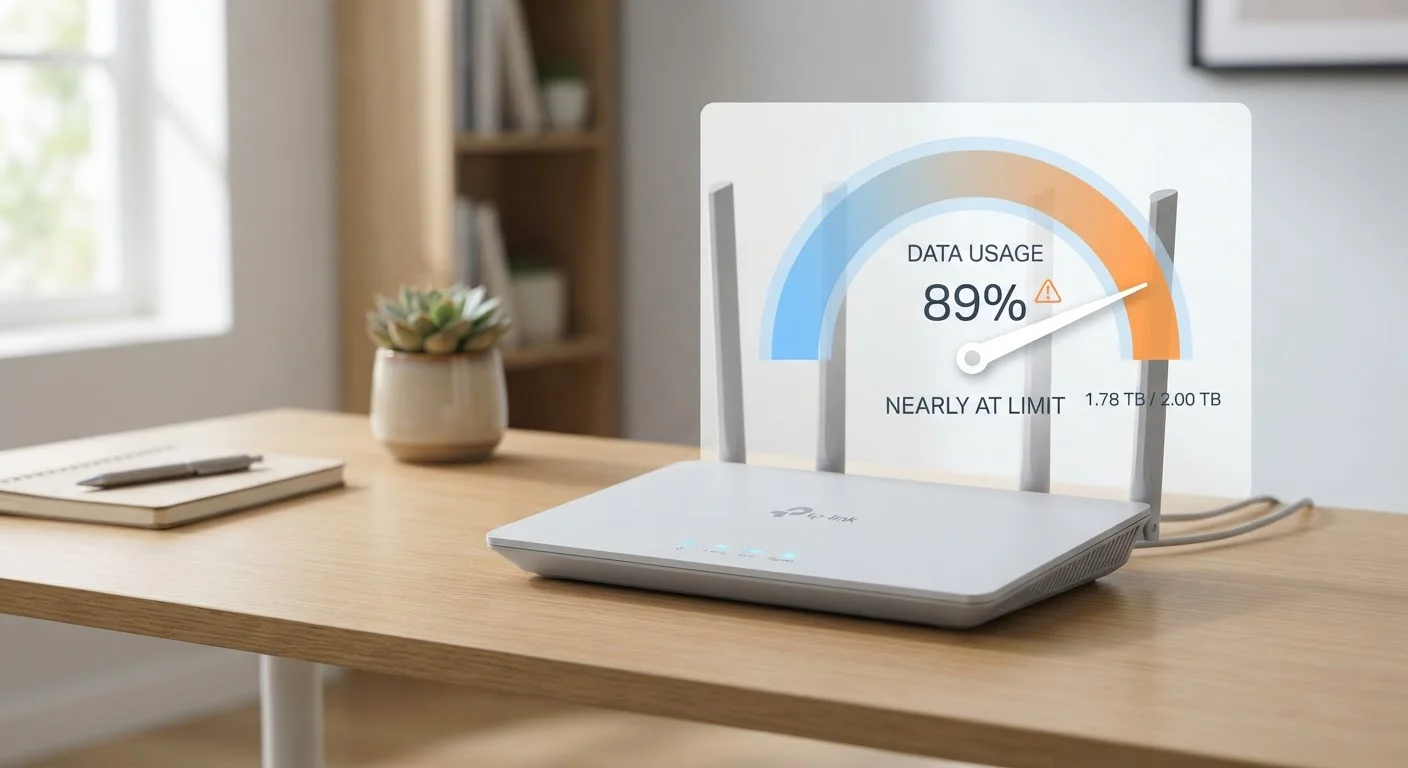
Most ISPs let you configure email or text alerts when your household reaches 75% or 90% of its monthly data cap. Setting these up during initial account configuration - not after your first overage notice - gives you time to adjust usage before charges or throttling kick in. Look for the option under 'Data Usage' or 'Notifications' in your provider's account portal.
Plans Without Caps - and What 'Unlimited' Really Means
Fiber-optic home internet plans frequently carry no data cap at all, and some cable providers have removed caps in certain markets. However, the word 'unlimited' in plan marketing doesn't automatically guarantee uncapped data. Providers can - and do - include network management clauses that reduce speeds after a household hits a high usage threshold, particularly during peak congestion hours.
Before assuming a plan is truly unlimited, look for language like 'network management,' 'data deprioritization,' or 'excessive use policy' in the service agreement. What separates unlimited plans from each other covers the specific variables that distinguish genuinely open plans from those with hidden soft limits.
If a hard cap or overage policy is in play, that detail should be confirmed in writing before you sign. What to verify before signing an internet service contract includes data cap terms on its checklist of must-confirm items. Common assumptions that lead to overspending on connected plans also covers how treating 'unlimited' as a blanket guarantee can create unexpected costs.
Practical Ways to Stay Within Your Cap
If your plan has a fixed cap, a few straightforward habits can reduce the risk of hitting it mid-cycle:
Most ISPs provide a usage dashboard through their mobile app or online account portal. Checking it weekly - not just when a warning arrives - gives you time to adjust before you're deep into overage territory. Some providers also allow you to set up email or text alerts at 75% and 90% of your cap, which is worth enabling immediately after setting up service.
If you consistently hit your cap despite managing usage carefully, the practical fix is usually upgrading to a higher-cap or unlimited plan, rather than paying repeated overage fees. Overage charges can sometimes exceed the cost difference between plan tiers, making the upgrade the more economical path over time - though individual circumstances vary.