

Key Takeaways
Move-in ready with no furniture purchase needed
Furnished units let renters settle in immediately, which is valuable during relocations, short work assignments, or sudden housing transitions. There's no need to source, transport, or assemble a single piece of furniture.
Shorter lease terms more commonly available
Many furnished rentals are offered on flexible terms - month-to-month or under six months - giving renters options that standard unfurnished leases rarely provide.
Lower upfront out-of-pocket for short stays
For stays under a year, avoiding furniture purchases can offset the rent premium, particularly if the renter would otherwise need to buy and later resell or discard items.
Practical for international or cross-country moves
Renters arriving from another country or moving across the US without shipping household goods benefit significantly from a turnkey setup, eliminating a major logistical burden.
Higher monthly rent cuts into long-term savings
The 15-30% premium on furnished units adds up quickly over a 12-month lease. Renters who stay longer typically pay more in total than they would have spent furnishing an unfurnished unit themselves.
Limited ability to personalize the space
Living with a landlord's furniture choices means accepting styles, sizes, and conditions that may not suit you. Most landlords prohibit tenants from removing or replacing provided items without explicit permission.
Greater deposit and move-out liability exposure
Security deposits on furnished units are typically larger, and disputes over furniture condition at move-out are more common. Careful documentation at move-in is essential but time-consuming.
Furniture quality and condition vary widely
What's advertised as 'furnished' can range from a well-appointed space to aging, mismatched pieces. Renters have limited recourse if the furniture is worn or uncomfortable beyond what was disclosed.
Our Verdict
Furnished rentals solve a real problem for renters who move frequently, relocate for work, or need a turnkey living situation fast. But that convenience comes at a measurable cost - both financially and in terms of personalization. Unfurnished units reward tenants who plan to stay longer and have the means to outfit a space on their own terms.
Furnished rentals suit short-stay renters, relocating professionals, and those in transitional life stages; unfurnished units are the stronger choice for renters settling in for a year or more who want control over their space.
What Sets These Two Rental Types Apart
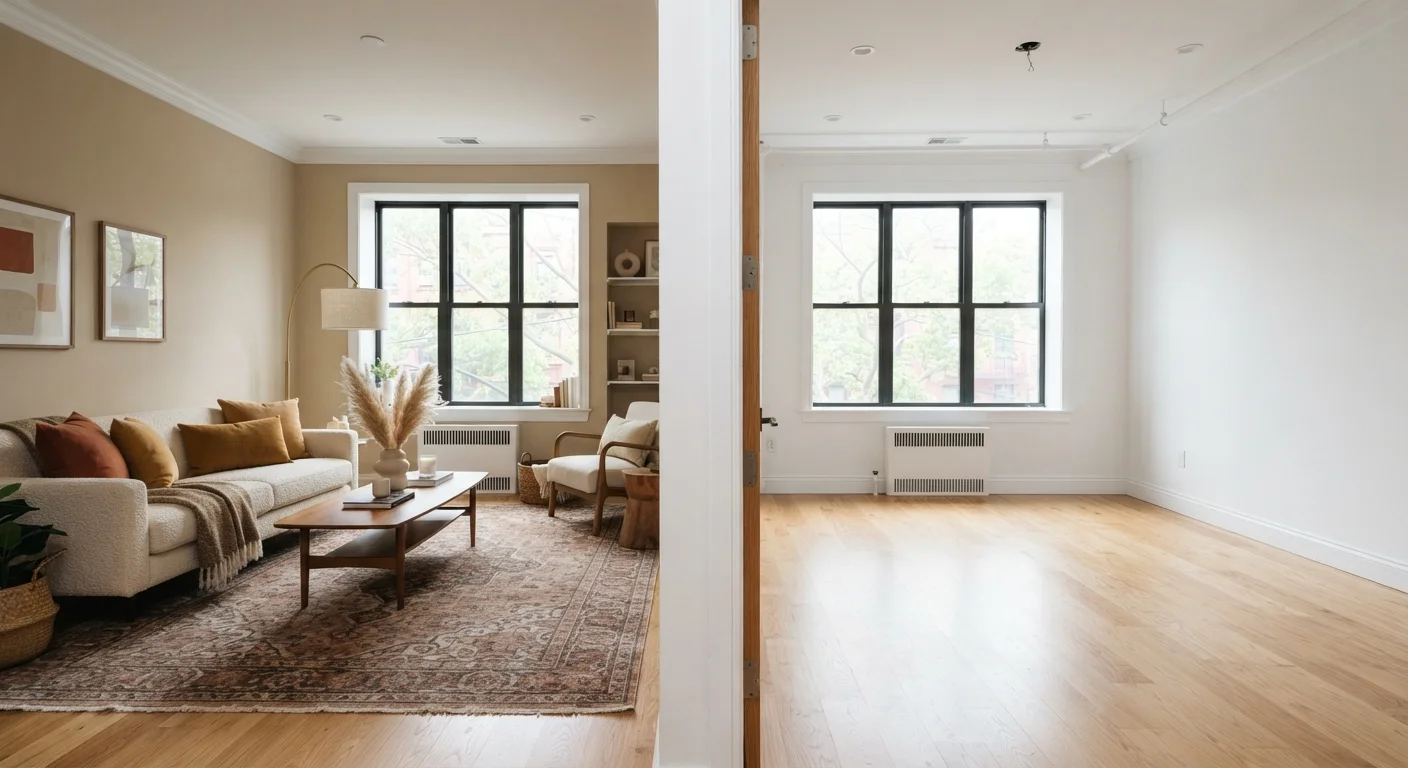
A furnished rental comes equipped with the core items needed to live in a space right away - typically a bed frame and mattress, sofa, dining table and chairs, and often basic kitchen appliances and cookware. An unfurnished rental, by contrast, is delivered as an empty shell: four walls, flooring, and built-in fixtures like a stove or refrigerator, but nothing more.
The distinction matters because it shapes everything downstream: monthly rent, lease length, deposit size, and your rights as a tenant if something gets damaged. Before signing anything, it's worth knowing how to read a rental listing carefully - furnished units especially are prone to vague descriptions of what's actually included.
Move-in ready with no furniture purchase needed
Furnished units let renters settle in immediately, which is valuable during relocations, short work assignments, or sudden housing transitions. There's no need to source, transport, or assemble a single piece of furniture.
Shorter lease terms more commonly available
Many furnished rentals are offered on flexible terms - month-to-month or under six months - giving renters options that standard unfurnished leases rarely provide.
Lower upfront out-of-pocket for short stays
For stays under a year, avoiding furniture purchases can offset the rent premium, particularly if the renter would otherwise need to buy and later resell or discard items.
Practical for international or cross-country moves
Renters arriving from another country or moving across the US without shipping household goods benefit significantly from a turnkey setup, eliminating a major logistical burden.
The Real Cost Difference
Furnished units generally command a premium of 15-30% above market rate for comparable unfurnished spaces in the same area. That gap reflects the landlord's investment in furniture, the accelerated wear those items absorb, and the added administrative burden of tracking an inventory.
But the math isn't always straightforward. A renter moving into an unfurnished unit from scratch may spend several thousand dollars furnishing even a modest one-bedroom - costs that don't disappear just because the monthly rent is lower. Short-stay renters who would need to resell or store those items at the end of a lease may find the furnished premium justifies itself.
15-30%
Typical furnished rental premium over unfurnished
Industry estimates and rental market analyses consistently place furnished unit pricing above comparable unfurnished units in the same building or neighborhood.
~$3,000-$5,000
Average cost to furnish a one-bedroom from scratch
Estimates from home furnishing surveys suggest a basic but livable one-bedroom setup - bed, sofa, dining set, and essentials - runs between $3,000 and $5,000 depending on market and quality tier.
For longer tenancies, the calculus shifts. A renter staying 18 months or more in an unfurnished unit typically recovers upfront furniture costs through the monthly savings. Those planning to weigh renting against buying over a longer horizon should factor furniture amortization into that comparison as well.
Lease Terms, Flexibility, and Control
Furnished rentals skew toward shorter lease commitments - month-to-month or three- to six-month terms are common, particularly in urban cores and near universities. Unfurnished units are more often tied to standard 12-month leases that offer landlords more predictable income.
This matters depending on your situation. Renters navigating relocation, contract work, or uncertain timelines benefit from the flexibility that furnished units can provide. Those who value price stability and don't anticipate moving should explore the trade-offs explained in this comparison of month-to-month vs. fixed-term leases.
Higher monthly rent cuts into long-term savings
The 15-30% premium on furnished units adds up quickly over a 12-month lease. Renters who stay longer typically pay more in total than they would have spent furnishing an unfurnished unit themselves.
Limited ability to personalize the space
Living with a landlord's furniture choices means accepting styles, sizes, and conditions that may not suit you. Most landlords prohibit tenants from removing or replacing provided items without explicit permission.
Greater deposit and move-out liability exposure
Security deposits on furnished units are typically larger, and disputes over furniture condition at move-out are more common. Careful documentation at move-in is essential but time-consuming.
Furniture quality and condition vary widely
What's advertised as 'furnished' can range from a well-appointed space to aging, mismatched pieces. Renters have limited recourse if the furniture is worn or uncomfortable beyond what was disclosed.
Control over your living environment is also a factor. In an unfurnished unit, you choose every piece of furniture - its style, size, and quality. In a furnished rental, you live with what the landlord has provided, which may not match your taste or needs. Requests to swap or remove items are at the landlord's discretion and often declined.
Deposits, Liability, and Move-Out Risk
Furnished rentals almost always carry higher security deposits. Landlords need to protect their inventory from damage, and because furnished units change hands more frequently, wear accumulates faster. Move-in condition reports - sometimes called inventory checklists - are standard practice and legally important: document every nick, stain, and broken drawer before your first night in the unit.
Liability extends to everyday use. If a sofa cushion tears or a coffee table scratches, disputes over who caused the damage are common. Unlike unfurnished units where the tenant's own property is the only asset at risk, furnished rentals create overlapping claims between tenant belongings and landlord inventory.
What 'Furnished' Legally Means Varies by State
There is no universal legal definition of a 'furnished' rental in the United States - what must be included is not standardized across states or municipalities. Some landlords use the term loosely to mean a bed frame and little else. Before signing a lease, request a written inventory list specifying every included item. This list should be attached to the lease as an exhibit and signed by both parties.
On the negotiation front, furnished units offer fewer obvious levers - the landlord's price typically reflects their furniture investment. Unfurnished units, where the landlord has fewer sunk costs in the space itself, can be more receptive to the strategies outlined in this guide on negotiating rent effectively.