

| Typical lease term | 12 months (fixed-term) |
| Common security deposit maximum | 1-2 months' rent (varies by state) |
| Landlord entry notice required | 24-48 hours (most states) |
| Security deposit return window | 14-30 days after move-out (state-dependent) |
| Non-renewal notice period | 30-60 days advance written notice |
| Late fee cap | Set by state law; often a % of monthly rent |
The Core Terms Every Lease Must Include
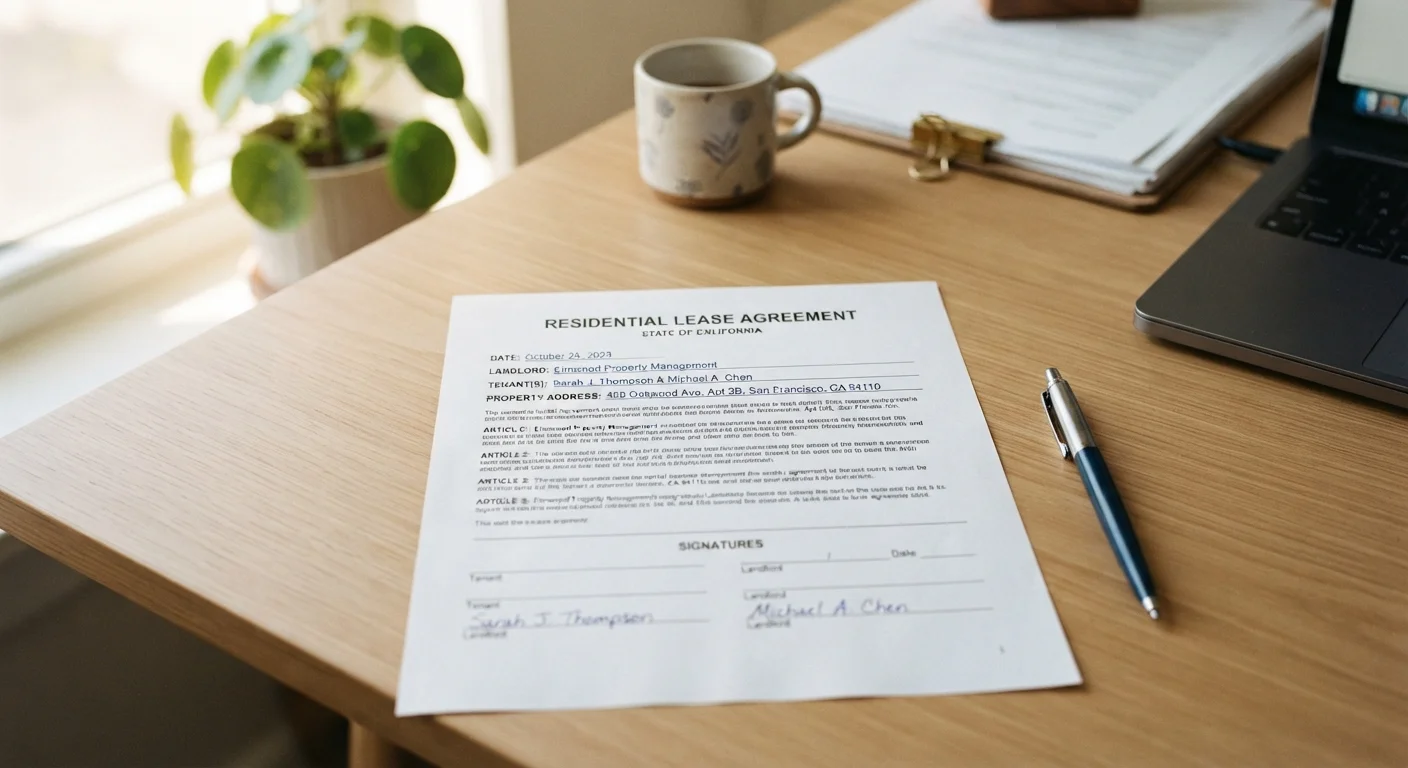
A standard residential lease is a legally binding contract - and the language in it matters far more than most renters realize. Before you sign, here's what the key clauses actually mean.
| Typical lease term | 12 months (fixed-term) |
| Common security deposit maximum | 1-2 months' rent (varies by state) |
| Landlord entry notice required | 24-48 hours (most states) |
| Security deposit return window | 14-30 days after move-out (state-dependent) |
| Non-renewal notice period | 30-60 days advance written notice |
| Late fee cap | Set by state law; often a % of monthly rent |
Parties to the agreement: This clause identifies the landlord (or property management company) and every adult tenant who will live in the unit. Anyone listed is legally responsible for fulfilling the lease terms, including paying rent. If a roommate isn't listed, the landlord may not be obligated to address their conduct.
Lease term: Specifies the start and end date of your tenancy. A fixed-term lease (commonly 12 months) locks in your rent and tenancy length. If you haven't signed a new lease by the end date, many agreements automatically convert to a month-to-month arrangement - often at a higher rate. Learn more about the trade-offs between lease types before deciding what works for you.
Rent amount and due date: States the monthly rent, what day it's due, and acceptable payment methods. Check for a grace period - typically 3-5 days - after which a late fee kicks in. Late fees must comply with state law, which often caps them as a percentage of monthly rent.
Security deposit: A refundable sum (usually one to two months' rent, depending on the state) held by the landlord to cover unpaid rent or damage beyond normal wear and tear. Most states require landlords to return the deposit - with an itemized deduction list - within 14 to 30 days of move-out. Failure to comply can entitle you to double or triple the deposit amount in some jurisdictions.
Occupancy, Maintenance, and Use of the Property
Occupancy limits: Defines who is permitted to live in the unit. Adding an unauthorized occupant can be grounds for lease termination. If someone will be staying long-term - a partner, family member, or roommate - address it with your landlord in writing before they move in. See our guide on roommate lease arrangements for how to structure shared tenancies fairly.
Pet policy: Outlines whether pets are allowed, which types or breeds, and whether a non-refundable pet fee or additional pet deposit is required. Note that pet deposits are subject to the same state laws as security deposits - not all fees are legally enforceable in every state.
Maintenance responsibilities: Separates what the landlord is obligated to repair (heating, plumbing, structural issues) from what the tenant is responsible for (replacing light bulbs, minor upkeep). Landlords in all states must maintain habitable conditions under the implied warranty of habitability. If your lease tries to waive this obligation, that clause is generally unenforceable.
Alterations clause: Prohibits modifications - painting walls, installing shelves, changing locks - without written landlord approval. Unauthorized alterations can result in deductions from your security deposit or even eviction.
Security Deposit
A refundable payment made at the start of a tenancy, held by the landlord to cover unpaid rent or damage beyond normal wear and tear. State law governs how much can be charged and how quickly it must be returned after move-out.
Implied Warranty of Habitability
A legal doctrine requiring landlords to maintain rental units in a livable condition, covering essentials like heat, running water, and structural safety. This obligation exists in all U.S. states and generally cannot be waived by lease language.
Sublease
An arrangement where a tenant rents their unit to a third party (the subtenant) while the original tenant remains legally responsible to the landlord. Most leases require written landlord approval before subletting.
Lease Assignment
The transfer of a tenant's full rights and obligations under a lease to a new tenant. Unlike a sublease, the original tenant typically exits the agreement entirely once the landlord approves the assignment.
Grace Period
A short window - usually 3 to 5 days after the rent due date - during which a late fee is not charged. Not all leases include a grace period, and where it exists, the length is governed by state law.
Early Termination Clause
A lease provision that outlines the conditions and costs for ending a tenancy before the agreed end date, including required notice periods and any applicable fees or penalties.
Exit Clauses, Subletting, and What Happens If Things Go Wrong
Early termination: Explains your options if you need to leave before the lease ends. Many leases require advance written notice (30-60 days) and a fee equal to one or two months' rent. Some states allow early termination without penalty in specific circumstances - domestic violence, military deployment, or a landlord's failure to maintain habitable conditions. Know your state's rules before signing.
Subletting and assignment: A sublease means you rent your unit to a third party while remaining on the lease. An assignment transfers your full lease obligations to someone else. Most leases prohibit both without landlord consent. Subletting without permission is one of the most common grounds for eviction.
Renewal and notice requirements: Specifies how far in advance either party must notify the other about non-renewal - typically 30 to 60 days. Missing this window can automatically renew the lease or trigger month-to-month terms. Set a calendar reminder well before your lease end date.
Entry by landlord: Landlords are generally required by law to give advance notice - usually 24 to 48 hours - before entering your unit except in genuine emergencies. Your lease should reflect this. If it doesn't, your state's landlord-tenant law still applies. For a full picture of protections you may already have, see renter rights most tenants overlook.
This article provides general information about lease agreements and is not legal advice. Lease laws vary significantly by state and locality. Consult a licensed attorney or tenant advocacy organization if you have questions about a specific lease or dispute.