

Key Takeaways
Why Pruning Mistakes Are So Costly
Pruning looks simple enough - you're cutting things back. But the margin between a cut that strengthens a plant and one that weakens it for an entire season is surprisingly narrow. Unlike overwatering or poor fertilization, a bad pruning decision is often irreversible until the following year. You can't un-remove a branch, and you can't speed up a flowering cycle that's been disrupted.
The good news is that most pruning errors come down to a handful of repeatable habits. Recognizing them makes it easy to adjust your approach before the damage is done. Our spring yard prep checklist covers when to schedule pruning within your broader seasonal routine.
Pruning spring-blooming shrubs in fall or early spring.
Why it happens: Gardeners assume dormancy is a safe, universal window for all pruning. Spring-blooming plants like rhododendrons and lilacs actually set buds the previous summer, so cutting before bloom removes an entire year's flowers.
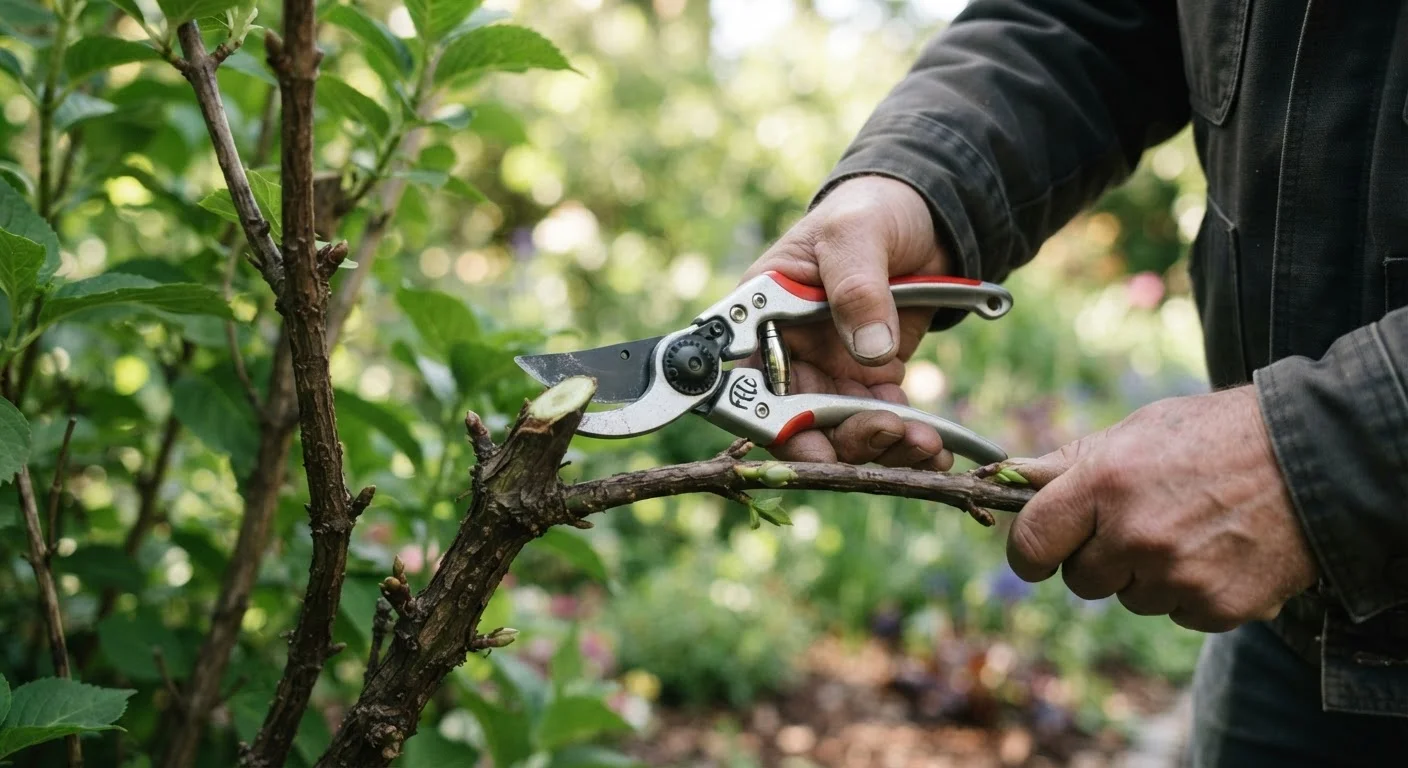
Making cuts too far from or too flush against the bud or branch collar.
Why it happens: Without a clear visual reference, most people guess at cut placement. A stub left too far from the bud dies back and becomes a disease entry point; cutting too flush removes the protective collar tissue.
Using dull or unsterilized pruning tools.
Why it happens: Sharpening and cleaning tools feels like extra work and often gets skipped. Dull blades crush and tear tissue rather than making a clean cut, leaving ragged wounds that heal slowly and invite pathogens.
Removing more than one-third of a plant's total foliage at once.
Why it happens: When a plant looks overgrown, the instinct is to cut it back hard and start fresh. But foliage is how a plant captures energy - removing too much at once leaves it without the resources to recover and produce new growth.
Topping trees by cutting the central leader or main branches back to stubs.
Why it happens: Topping is often marketed as a way to control tree height or reduce storm risk, but it does the opposite - it triggers a flush of weak, fast-growing sprouts and leaves large wounds that rarely heal properly.
Pruning during or immediately after a plant is stressed by drought, disease, or transplant shock.
Why it happens: Gardeners sometimes assume that pruning a struggling plant will help it direct energy more efficiently. In reality, pruning adds another stress layer to a plant that is already depleted.
Getting the Timing and Technique Right
Beyond avoiding individual mistakes, successful pruning requires understanding two fundamentals: plant biology and tool hygiene.
Match the cut to the plant's growth cycle. Spring-blooming shrubs like lilacs and forsythia set their flower buds in late summer on the previous season's wood. Pruning them in fall or early spring removes those buds entirely. Summer-blooming shrubs, by contrast, bloom on new growth and can be cut back in late winter or early spring without sacrificing flowers. If you're unsure which category a plant falls into, a quick check of the species name with your local cooperative extension service will give you a reliable regional answer.
Sanitize tools between plants. A simple wipe with a diluted isopropyl alcohol solution between cuts - especially when moving from a diseased plant to a healthy one - significantly reduces the chance of spreading fungal spores or bacterial infections. This step takes seconds and is one of the highest-return habits in the garden.
Pruning During Heat Waves or Drought Increases Stress
Cutting back plants when temperatures are extreme or soil moisture is very low adds stress at exactly the wrong moment. Open wounds are harder for water-stressed plants to seal, leaving them more vulnerable to pests and disease. In most regions, the safest windows for major pruning are during mild temperatures in early spring or after the summer heat breaks. Always water thoroughly before and after pruning sessions during dry spells.
Healthy pruning also pairs directly with soil conditions. A plant stressed by poor nutrient availability will struggle to recover from even a correct cut. Our article on soil pH and plant health explains how pH affects a plant's ability to take up the nutrients needed for vigorous regrowth.
Finally, keep in mind that some plants - particularly certain perennials - benefit more from deadheading or division than from structural pruning. Understanding what you're growing is the starting point for every good pruning decision. See our guide to perennials vs. annuals for a broader look at how plant type shapes your care calendar.