

Key Takeaways
Start here
Choosing the Right Spot
Next
Preparing Your Soil
Then
Deciding What to Grow
Almost ready
Planting and Spacing Basics
Keep it going
Watering and Ongoing Care
Choosing the Right Spot
The single most consequential decision you'll make is where to put your garden. Sunlight is non-negotiable: most vegetables need at least six hours of direct sun each day, and eight is better for crops like tomatoes, peppers, and cucumbers. Walk your yard on a clear day and honestly observe which areas are sunny versus shaded, and at what times.
Beyond light, look for a spot with reasonably level ground to prevent water from pooling or running off before it can soak in. Proximity to a water source matters more than most beginners expect - dragging a hose across a large yard becomes a chore that discourages consistent watering. Also consider proximity to trees: their roots compete aggressively for water and nutrients, and their canopy casts shifting shade.
Start Small to Build Confidence
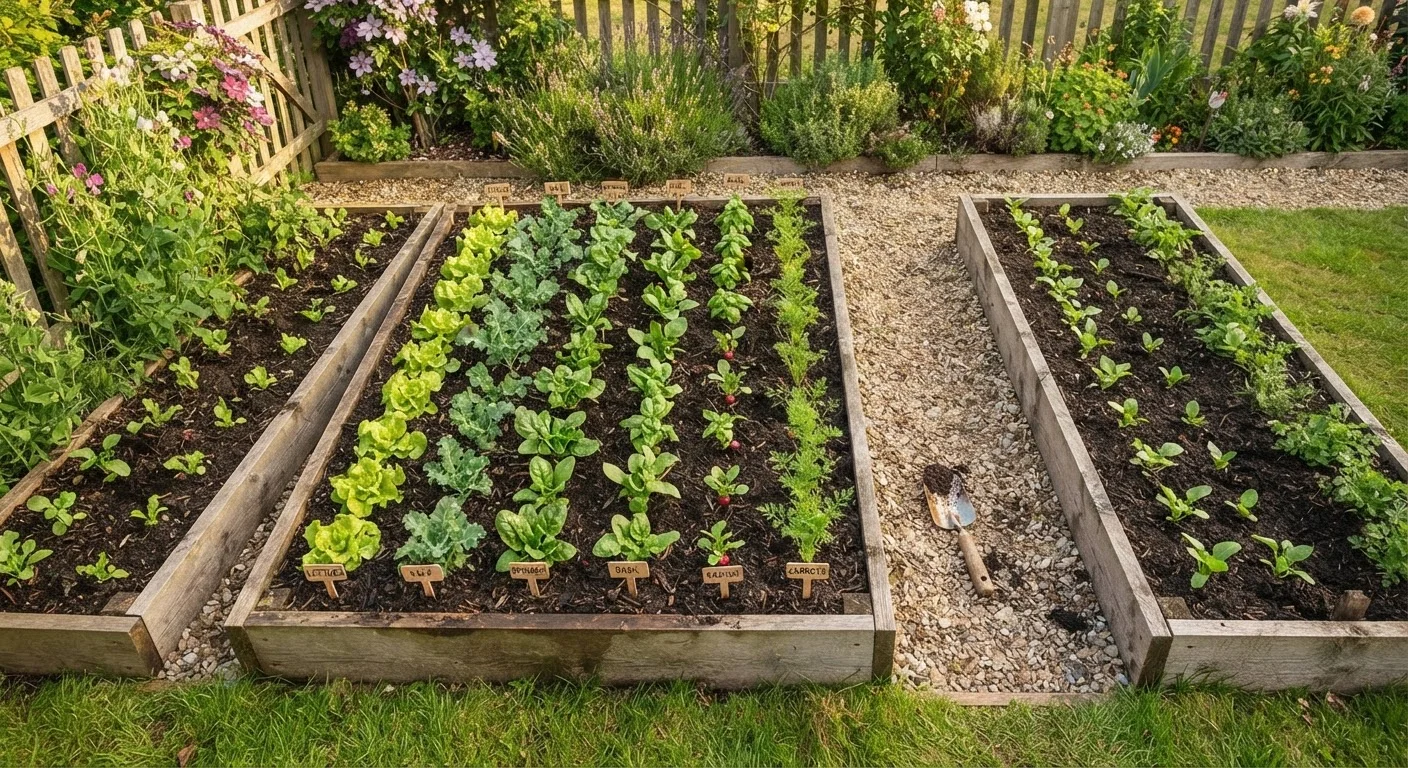
First-time gardeners often overestimate how much space they can manage. A 4-by-8-foot plot is enough to grow lettuce, beans, tomatoes, and herbs all at once. A smaller, well-tended garden will always outperform a larger, neglected one - and you can always expand next season once you've learned what your site and schedule can handle.
Preparing Your Soil
Vegetables are heavy feeders that demand loose, nutrient-rich, well-draining soil. Native soil - especially clay-heavy or compacted ground - often needs amendment before it will support a productive garden. Start by loosening the top 10 to 12 inches with a garden fork or tiller, then work in two to three inches of finished compost. Compost improves drainage in clay soils, helps sandy soils retain moisture, and feeds soil microbes that plants depend on.
A basic soil test (available through many local cooperative extension offices) tells you your soil's pH and nutrient profile. Most vegetables thrive in slightly acidic to neutral soil, roughly pH 6.0 to 7.0. If your soil tests outside that range, lime raises pH and sulfur lowers it. You can take your composting further by making your own - our guide to composting at home explains exactly how to turn kitchen scraps into garden-ready material.
Soil amendment
Any material mixed into garden soil to improve its structure, drainage, or nutrient content - compost, aged manure, and perlite are common examples.
pH
A measure of how acidic or alkaline your soil is, on a scale from 0 to 14. Most vegetables prefer a slightly acidic to neutral range of 6.0 to 7.0.
Frost date
The average date of the last spring frost or first fall frost in your area - used to time planting so crops aren't damaged by cold temperatures.
Direct sow
Planting seeds directly into the garden soil outdoors, rather than starting them indoors in containers first.
Compost
Decomposed organic material - like food scraps and yard waste - that enriches soil with nutrients and improves its texture.
Drip irrigation
A watering method that delivers water slowly and directly to the base of each plant through tubes or emitters, reducing evaporation and keeping foliage dry.
Deciding What to Grow
Resist the temptation to grow everything at once. In your first season, focus on three to five crops that are forgiving, productive, and suited to your climate. Lettuce and salad greens are fast-maturing and tolerant of beginner mistakes. Green beans are low-maintenance and prolific. Zucchini is nearly impossible to fail with - if anything, it tends to overproduce.
Match crops to your climate and the season. Check your local last frost date (available through the USDA plant hardiness zone map or your county extension office) to know when warm-season crops like tomatoes and squash can safely go in the ground. Cool-season crops like peas, spinach, and broccoli actually prefer the cooler temperatures of early spring or fall.
Planting and Spacing Basics
Overcrowding is one of the most common first-timer mistakes. Plants crammed too close together compete for light, water, and nutrients - and poor airflow between them invites disease. Seed packets and transplant tags list recommended spacing for a reason: follow them.
As a general rule, bush beans need about six inches between plants, tomatoes need 18 to 24 inches, and sprawling crops like zucchini need two to three feet. If you're working with a small plot, look for compact or container varieties specifically bred for tight spaces. Planting in slightly staggered rows rather than straight lines also helps you fit more plants without crowding.
Whether you start from seed or transplant seedlings depends on the crop and your setup. Direct-sow crops like carrots, beets, and beans do best planted straight into garden soil. Others - tomatoes, peppers, eggplant - benefit from a head start indoors or can be purchased as young transplants from a nursery.
Watering and Ongoing Care
Most vegetable gardens need roughly one inch of water per week. Deep, infrequent watering - two to three times a week - is more effective than light daily sprinkling. Deep watering encourages roots to grow down into the soil, where moisture is more stable, rather than staying near the surface where they're vulnerable to heat and drought.
Water at the base of plants rather than overhead. Wet foliage, especially in the evening, creates conditions favorable to fungal disease. A soaker hose or drip irrigation system delivers water efficiently right where it's needed and keeps leaves dry.
Mulch is underutilized by beginners but highly effective. A two- to three-inch layer of straw, shredded leaves, or untreated wood chips around your plants slows evaporation, suppresses weeds, and moderates soil temperature. When your garden is established and thriving, our spring yard prep checklist will help you get each new season off to a strong start.