

Key Takeaways
What Is Low-Water Landscaping?
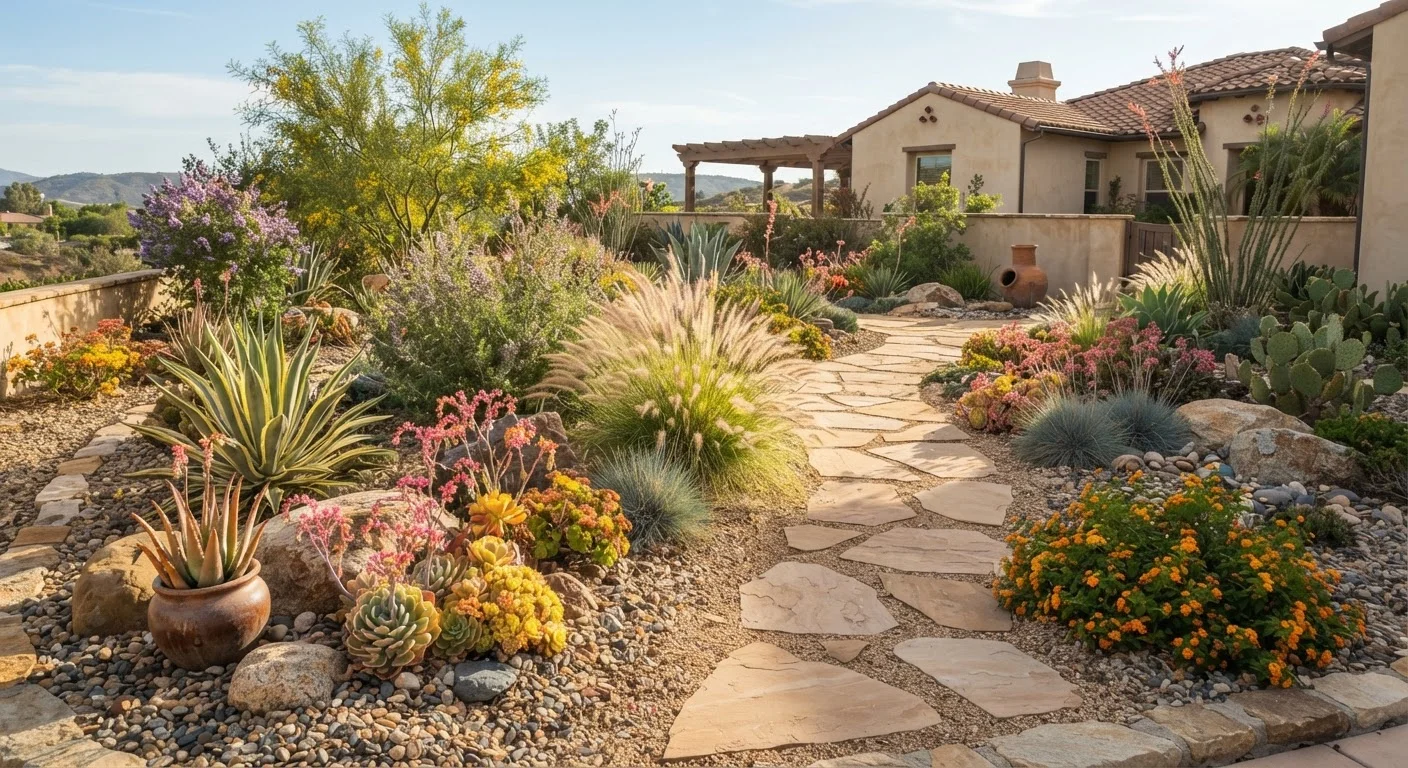
Low-water landscaping - often called xeriscaping (from the Greek xeros, meaning dry) - is an approach to yard design that dramatically reduces the need for supplemental irrigation. The goal isn't a barren gravel lot; it's a thoughtfully planted, visually appealing outdoor space that works with your local climate rather than against it.
This approach is relevant well beyond the Southwest. Water restrictions, drought cycles, and rising utility costs affect homeowners across the country - from the Great Plains to the Southeast. The strategies below apply broadly, though you should always consider what's native and appropriate to your specific region.
For more context on plant selection, see our guide on native plants vs. ornamental exotics to understand the trade-offs between regionally adapted and decorative species.
Core Practices for a Water-Smart Yard
These proven strategies form the foundation of any successful low-water landscape. Applying even a few of them can meaningfully reduce irrigation demands.
Apply a 3-to-4-inch layer of organic mulch around all planted areas
Mulch slows moisture evaporation from soil, suppresses weeds that compete for water, and gradually improves soil health as it breaks down. This single step can reduce watering frequency substantially in established beds.
Group plants with similar water needs together (hydrozoning)
Mixing drought-tolerant plants with thirsty ones means you either overwater the drought-tolerant ones or underwater the rest. Hydrozoning lets you irrigate each zone precisely, reducing waste and improving plant health.
Replace traditional turf with drought-tolerant ground covers or gravel in low-traffic areas
Conventional lawn grasses are among the thirstiest elements of any landscape. Swapping out even a portion of turf - especially in decorative strips or side yards - can reduce outdoor water use significantly without sacrificing visual appeal.
Install drip irrigation instead of overhead sprinklers for garden beds
Sprinklers lose a significant portion of water to evaporation and wind drift before it ever reaches plant roots. Drip systems deliver water slowly and directly at the root zone, improving efficiency and reducing fungal issues caused by wet foliage.
Choose plants native to your region or proven drought-tolerant varieties for your climate zone
Regionally native plants evolved alongside local rainfall patterns and soil conditions, meaning they typically need little or no irrigation once established. They also tend to support local pollinators and wildlife more effectively.
Smart Irrigation and Soil Prep
No matter which plants you choose, how and when you water matters enormously. Watering deeply but infrequently - rather than a little every day - encourages roots to grow deeper into cooler, moister soil layers, making plants far more drought-resilient over time.
30-60%
Outdoor water use that goes to landscaping
According to the U.S. Environmental Protection Agency, a significant portion of residential water use is dedicated to lawn and garden irrigation, much of which is inefficient.
50%
Water savings possible with drip vs. sprinkler irrigation
The EPA's WaterSense program estimates that drip irrigation can use up to 50% less water than conventional in-ground sprinkler systems for the same planted area.
Improving your soil before planting pays long-term dividends. Amending clay-heavy soil with compost increases drainage, while sandy soil benefits from organic matter that retains moisture longer. Either way, better soil structure reduces how often plants need water to stay healthy.
If you're planning your yard's watering schedule around the seasons, our spring yard prep checklist includes practical steps for inspecting and tuning irrigation lines before the growing season begins.
Water in the Morning for Best Results
Watering early in the day - ideally between 5 and 9 a.m. - minimizes evaporation losses and gives foliage time to dry before evening, reducing the risk of fungal disease. Avoid watering in the heat of midday or late at night.
Start Small and Build on Success
Transforming an entire yard at once can feel overwhelming and expensive. A more practical approach is to start with one bed or zone - perhaps replacing a high-water lawn strip with gravel, native ground cover, or drought-tolerant perennials - and observe how it performs through a full season before expanding.
Choosing perennials over annuals for your drought-tolerant plantings also stretches your effort further. Perennials come back each year, reducing replanting labor and cost. Our guide on perennial vs. annual flowers can help you plan a garden that keeps delivering color with minimal yearly investment.
Low-water landscaping is ultimately a long-term investment in a yard that's easier to maintain, less costly to water, and more resilient through dry spells. Progress doesn't have to happen all at once.
This article is for general informational purposes. Plant performance, water savings, and local requirements vary. Consult your local cooperative extension service or a licensed landscape professional for advice specific to your region and property.