

Key Takeaways
Why Gutters Fail Quietly - and Expensively
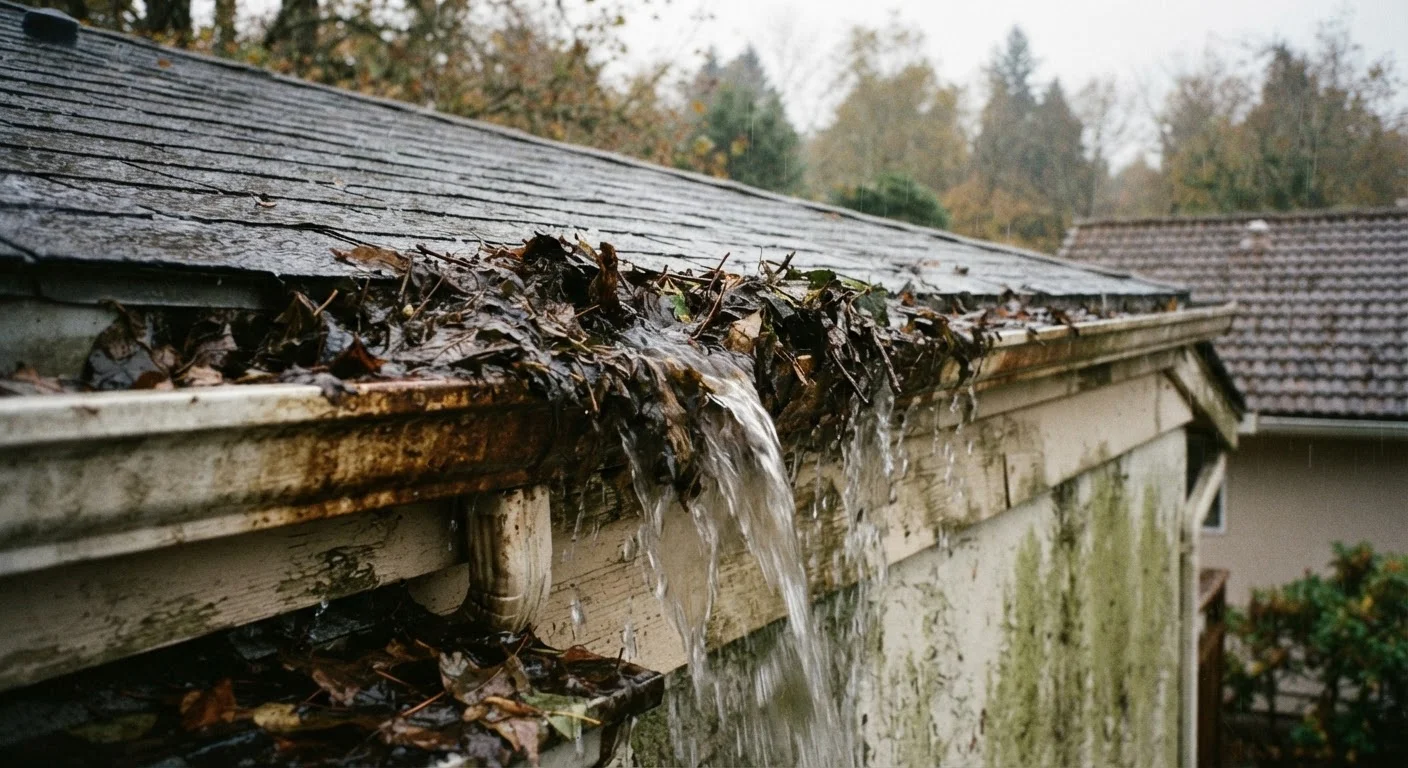
Gutters occupy a strange position in home maintenance: they're highly functional, constantly exposed to the elements, and almost completely ignored until something goes wrong. By the time a homeowner notices water stains on the siding, a damp basement corner, or a sagging trough pulling away from the roofline, the damage has typically been building for months - sometimes years.
The core job of a gutter system is simple: collect roof runoff and carry it away from the structure. When that system is maintained correctly, it protects your foundation, siding, fascia, landscaping, and basement from water intrusion. When it fails - usually through neglect or well-intentioned but incorrect care - the repair bills extend far beyond the gutters themselves. Foundation repairs, for instance, can run into the tens of thousands of dollars. Understanding where maintenance goes wrong is the first step toward avoiding those outcomes.
$4,000-$10,000+
Average cost of foundation repairs from water intrusion
According to estimates from home repair cost aggregators, foundation damage caused by poor drainage and unmanaged roof runoff is among the most expensive residential repairs homeowners face.
2x per year
Minimum recommended gutter cleaning frequency
Most home maintenance authorities recommend cleaning gutters at least twice annually, with additional cleanings for homes surrounded by heavy tree cover.
¼ inch per 10 ft
Correct gutter slope toward downspout
This slope standard is widely cited by gutter installation professionals to ensure proper drainage and prevent standing water from pooling in the trough.
The Most Common Gutter Maintenance Mistakes
Most gutter problems aren't the result of bad luck or cheap materials - they're the result of predictable, correctable habits. The mistakes below are the ones our editorial team sees repeated most often, along with the damage each one tends to produce over time.
Cleaning gutters only once a year, typically in the fall.
Why it happens: Autumn leaf drop is the most visible trigger, so homeowners associate gutter cleaning with that one season and skip the spring pass entirely.
Ignoring gutter slope, allowing water to pool in low spots.
Why it happens: Gutters can shift over time as hangers loosen or fascia boards swell and contract with temperature changes, and the problem isn't obvious from the ground.
Letting downspouts discharge water directly against the foundation.
Why it happens: Many downspouts are installed at ground level without extensions, and extensions that were added often get removed or lost during landscaping work.
Assuming gutter guards mean gutters no longer need maintenance.
Why it happens: Guard manufacturers often market their products as low-maintenance solutions, and homeowners take that to mean no maintenance.
Overlooking the fascia and soffit boards behind the gutter.
Why it happens: The gutter itself blocks the view of the fascia, so wood rot can advance significantly before it becomes visible from a ladder.
Using the wrong tools or technique when cleaning, damaging gutters in the process.
Why it happens: Pressure washers are popular because they're fast, but directing high-pressure water into seams and end caps can force open joints that were sealed with caulk.
For context on how similar slow-developing problems play out in other parts of the home, the home maintenance myths that cost homeowners money article covers several parallel situations worth reviewing.
Never Ignore Water Pooling Near Your Foundation
If your downspouts are discharging close to the home's base, or if you notice water pooling against the foundation after rain, address it promptly. Persistent moisture at the foundation can lead to cracks, mold growth, and in severe cases, structural compromise. Our guide on grading and foundation drainage explains what proper correction involves.
Building a Gutter Maintenance Routine That Actually Works
The most effective gutter maintenance isn't complicated - it's consistent. A twice-yearly inspection and cleaning schedule, combined with a quick visual check after major storms, catches the vast majority of problems before they escalate.
During each cleaning session, work through this sequence: clear debris by hand or scoop, flush with a hose from the end farthest from the downspout, confirm water exits smoothly at the downspout, check slope visually, inspect fascia for softness or discoloration, and verify that all hangers are snug. Budget around 30 to 60 minutes per side of a standard single-story home.
If you're uncomfortable working from a ladder or your home has multiple stories, this is a task where hiring a professional is a reasonable and safe choice. Many exterior cleaning services include gutters as part of a seasonal package. The same principle applies to any gutter repair involving resealing joints or re-pitching sections - if the work requires extended time on an unstable ladder, a professional can complete it more safely and often more precisely.
Good gutter care also reinforces the rest of your drainage strategy. Water that exits the downspout still needs somewhere to go - pairing solid gutter habits with proper yard grading creates a complete system. Overwatering patterns in your lawn can compound drainage issues too; see our piece on lawn watering habits that cause problems for related guidance.