

Home & Garden

Before Any Renovation Begins: A Pre-Project Homeowner Checklist

Share
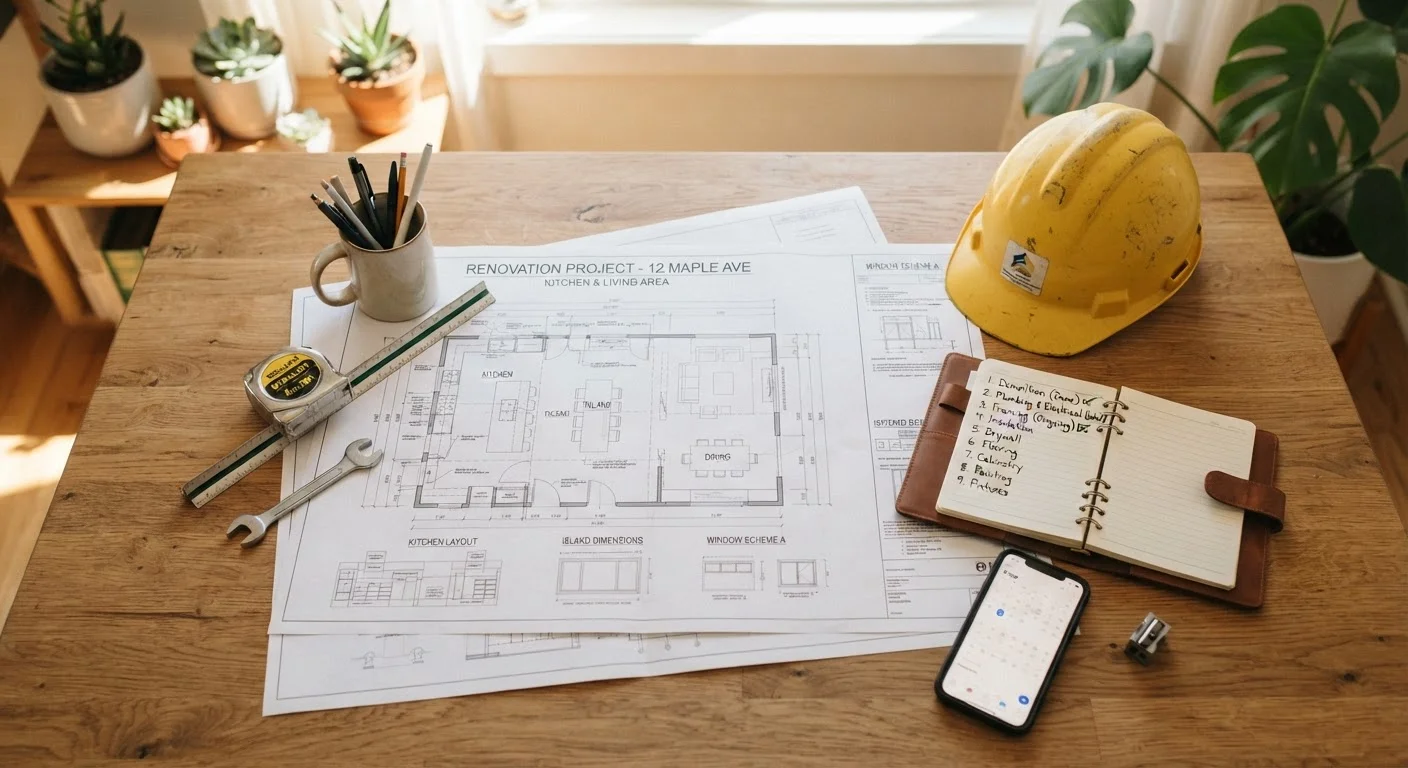
Renovation blueprints, hard hat, and checklist notepad arranged on a wooden table before a home project begins

Key Takeaways

Permits are legally required for most structural, electrical, plumbing, and HVAC work — skipping them can void home insurance and complicate future sales.
Always verify a contractor's license, insurance, and references before signing any contract.
A 15–20% contingency buffer above your estimated budget is a widely recommended starting point for unexpected costs.
Establishing a clear project scope and written timeline protects both you and the contractor.
Knowing which utilities need to be shut off before work begins prevents dangerous and costly accidents.
45–120 min

Summary

22 items · 45 minutes to 2 hours

Why Pre-Project Preparation Matters

Starting a renovation without preparation is one of the most common — and costly — mistakes homeowners make. According to industry estimates, a significant share of renovation projects run over budget or over schedule, and many of those overruns trace back to decisions (or oversights) made before the first nail was driven.

This checklist walks you through every major base to cover before any work begins, whether you're managing a contractor or taking a DIY approach. If you're newer to home improvement in general, the Weekend Warrior's Introduction to Home Improvement is a solid starting point for understanding project scope and knowing when to call in a professional.

Use the groups below to audit your readiness. Mark off each item before anyone picks up a tool.

Permits and Legal Requirements

Contact your local building or planning department to determine which permits are required for your specific project type and scope. Must
Submit permit applications well in advance — processing times vary widely by municipality and can take days to several weeks. Must
Confirm whether your project falls under a homeowner's association (HOA) review process and obtain any required approvals in writing. Must
Identify which local building codes apply, including setback rules, height limits, and energy efficiency requirements. Must
Post the issued permit on-site as required by local law before work begins. Must

Contractor Vetting

Verify the contractor's license with your state licensing board — look up the license number directly, don't rely solely on a business card. Must
Confirm the contractor carries both general liability insurance and workers' compensation coverage, and request certificates naming you as an additional insured. Must
Obtain at least three written bids from separate, licensed contractors to establish a realistic market-rate baseline. Should
Check references by calling previous clients and, where possible, visiting completed projects of similar scope. Must
Search the contractor's name and business with your state attorney general's consumer protection office and the Better Business Bureau for complaint history. Should

Contract and Scope of Work

Ensure the signed contract includes a detailed scope of work, materials list with specifications, start and projected completion dates, and payment schedule. Must
Confirm that the contract specifies who is responsible for pulling permits and scheduling inspections. Must
Include a written change-order clause — any scope additions or material substitutions must be approved and priced in writing before the work is done. Must
Agree on a lien waiver process so subcontractors and suppliers cannot place liens on your property for unpaid invoices from the general contractor. Should

Budget and Contingency

Establish your total budget including materials, labor, permit fees, design fees, and a contingency reserve of at least 15–20% of the total estimated cost. Must
Confirm your financing source — whether savings, a home equity line of credit, or other means — is in place before work starts, not mid-project. Must
Never pay more than 10–30% upfront as a deposit; structure remaining payments around project milestones, not calendar dates. Should

Site and Safety Preparation

Call 811 (the national dig-safe hotline) to have underground utilities marked before any excavation, even minor landscaping or fence-post work. Must
Identify the location of your main water shutoff, electrical panel, and gas shutoff valve and confirm they are accessible and operable. Must
Test for lead paint (pre-1978 homes) and asbestos-containing materials if the project involves demolition or disturbance of existing surfaces; hire a certified inspector if in doubt. Must
Establish a clear work zone: protect furniture, flooring, and HVAC vents from dust and debris, and set expectations with your household about restricted areas. Should
Confirm your homeowner's insurance policy covers renovation-related incidents and ask your insurer whether a builder's risk policy is advisable for larger projects. Nice to have

Tools and Resources You'll Need

Before diving into the checklist, gather the documents and resources listed below. Having these ready will save you repeated trips to city offices or frustrating gaps mid-process.

Required

Local Building Department Contact

Use to verify permit requirements, submit applications, and schedule required inspections throughout the project.

Required

State Contractor Licensing Portal

Allows you to confirm a contractor's license status, expiration date, and any disciplinary history.

Required

Certificate of Insurance (from contractor)

Proof that the contractor carries active liability and workers' comp coverage — request this before signing any contract.

Required

811 Dig-Safe Service

Free national hotline that dispatches utility locators to mark underground lines before any digging begins.

Required

Lead and Asbestos Test Kits or Certified Inspector

Required when disturbing painted surfaces in pre-1978 homes or any suspected asbestos-containing materials.

Required

Project Budget Spreadsheet

Track estimated versus actual costs across materials, labor, permits, and contingency so you can spot overruns early.

Optional

Signed Lien Waiver Template

A legal document confirming subcontractors and suppliers have been paid, protecting your property from mechanics' liens.

Optional

Builder's Risk Insurance Policy

Optional supplemental coverage that protects the structure, materials, and equipment on-site during a large renovation.

Critical Risks to Understand Before You Start

Two categories of mistakes stand out as especially serious in pre-renovation planning: permit evasion and contractor vetting shortcuts. Both can have consequences that outlast the renovation itself.

Skipping Permits Has Serious Consequences

Unpermitted work can void your homeowner's insurance coverage for related claims, result in stop-work orders and fines, and require you to tear out completed work for inspection. When you sell, unpermitted improvements must typically be disclosed and can derail a transaction or require costly remediation. Always pull the required permits — there is no shortcut worth the risk.

Never Pay a Contractor in Full Upfront

Large upfront payments are a leading factor in contractor fraud complaints filed with state consumer protection offices. Legitimate contractors do not require full payment before work begins. Structure your payment schedule around clear, verifiable milestones, and withhold a final payment until the work passes inspection and you are satisfied with the result.

Beyond permits and contractors, make sure your household is prepared for the disruption. Renovation dust, noise, and utility shutoffs affect daily life significantly. For major projects, consider temporary relocation plans, food preparation alternatives if a kitchen is affected, and data backups if HVAC or electrical systems will be cut. Good planning on the home maintenance front — keeping documentation of your home's existing systems — also makes the contractor's job faster and cheaper.

Lead Paint and Asbestos Are Serious Health Hazards

Disturbing lead paint or asbestos-containing materials without proper containment and protective equipment creates significant health risks. If your home was built before 1978, assume lead paint may be present until tested otherwise. Federal law requires contractors to follow EPA RRP (Renovation, Repair, and Painting) rules in older homes — verify your contractor is certified before any demolition begins.

Home & Garden Editorial Team is the collective byline for our editorial team and contributor network. Articles published under this byline or an editorial pen name are researched, written, and reviewed according to our editorial standards for clarity, consistency, and independence before publication.

View all articles by Home & Garden Editorial Team →
Disclaimer: The content on this site is provided for informational purposes only and should not be considered a substitute for professional advice. While we strive to provide accurate and up-to-date information, we make no guarantees regarding its completeness or accuracy. Always consult a qualified professional for advice specific to your circumstances before making any decisions.