

Key Takeaways
Brake Service
Brake service refers to the inspection, adjustment, or replacement of the components that slow and stop your vehicle - most commonly the brake pads, rotors, and calipers. When a mechanic says you need new brakes, they typically mean the friction material on your brake pads has worn down to a point where safe stopping performance is at risk. This is one of the most routine and important maintenance tasks in vehicle ownership.
Most passenger vehicles use disc brakes on the front axle and either disc or drum brakes on the rear. Each system uses different components, though the underlying principle - friction converting kinetic energy to heat - is the same.
What Brake Wear Actually Means
Brake pads are designed to wear down over time - that's by design. They contain a layer of friction material that gradually depletes each time you apply the brakes. Most pads start with around 10-12mm of usable material. When that wears to approximately 2-3mm, replacement is typically necessary to maintain safe stopping performance.
Rotors - the large metal discs that pads clamp against - also wear over time and can develop grooves, warping, or rust that affects braking. A mechanic will assess both pad thickness and rotor condition to give you a complete picture. These aren't separate problems; they work as a system.
Subtle warning signs like vibration or intermittent squealing often appear well before a brake job becomes urgent - paying attention early can prevent more expensive repairs later.
Front vs. Rear Brakes Wear Differently
On most passenger vehicles, front brakes handle a larger share of stopping force - often 60-70% - due to weight transfer during braking. As a result, front brake pads typically wear faster than rear pads. It's common to need front brake service more frequently, even if the rear brakes are still within spec.
What the Repair Process Looks Like
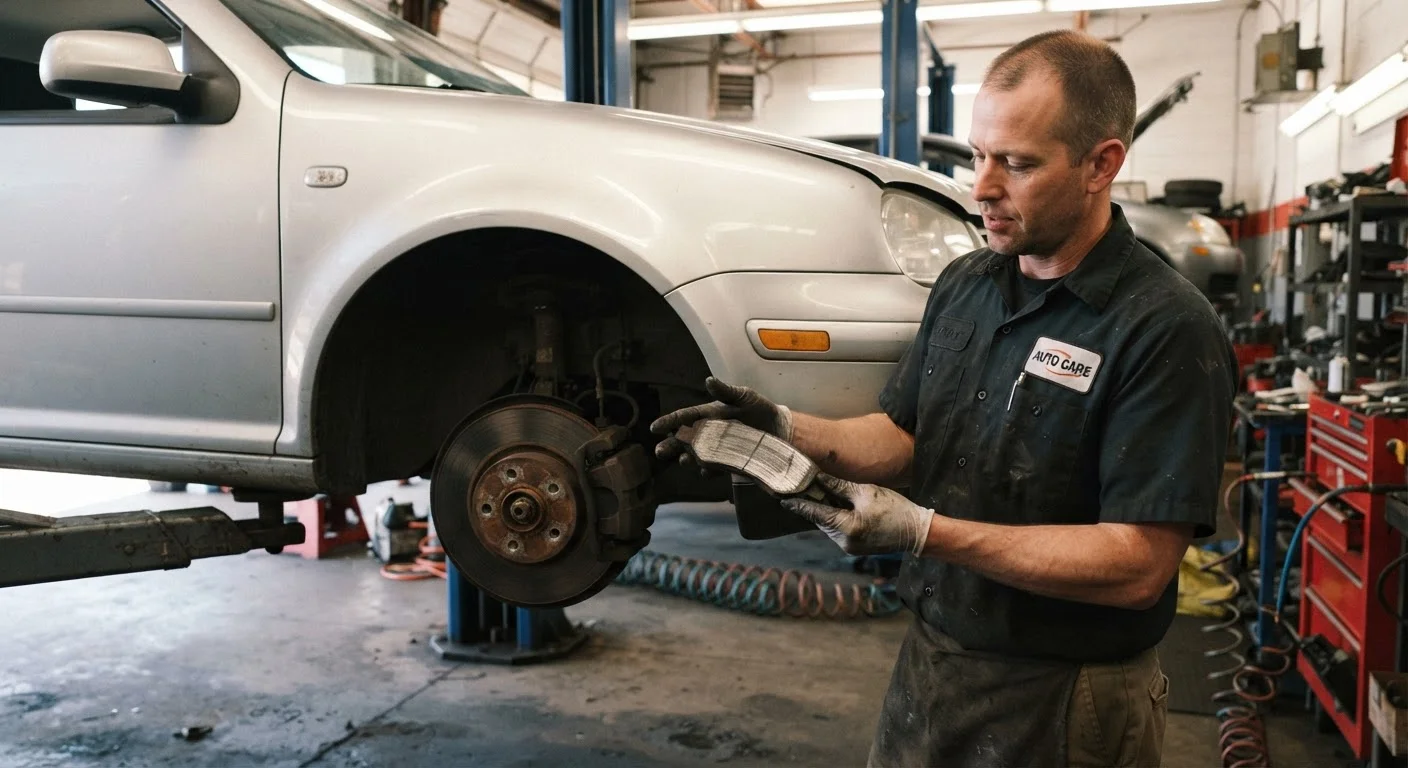
A standard brake service begins with the mechanic removing the wheel to access the brake components. They'll measure pad thickness using a gauge and inspect the rotor surface for scoring, minimum thickness compliance, and warping. If pads are below the safe threshold, replacement is straightforward: the old pads are removed, the caliper piston is compressed, and new pads are installed.
If rotors are also due for service, they're either resurfaced on a brake lathe or replaced entirely, depending on remaining material. The mechanic will also check the caliper - the hydraulic clamp that holds the pads - for proper function and inspect brake fluid condition, since degraded fluid affects pedal feel and braking consistency.
Brake work on both wheels of the same axle (front or rear) is done together, since uneven braking across an axle affects vehicle handling and stopping balance.
Get the Numbers Before You Approve Work
Always ask for the actual measured pad thickness and rotor depth before authorizing brake service. Most vehicles have manufacturer-specified minimums - knowing where your vehicle stands gives you an objective basis for the decision. A shop that can't or won't provide these measurements is worth questioning.
How to Ask the Right Questions at the Shop
You don't need to be a mechanic to advocate for yourself at a repair shop. Start by asking the service advisor or technician to show you the worn components - a reputable shop will walk you through what they found. Request the specific measurements: pad thickness remaining and rotor thickness versus the manufacturer's minimum. These are objective numbers, not opinions.
Before authorizing any work, ask for a written estimate that itemizes parts and labor. Ask whether the recommendation covers one axle or both, and whether brake fluid service is included or separate. Understanding your vehicle's scheduled maintenance intervals can also help you gauge whether a recommendation aligns with your car's documented service needs.
If you're unsure whether to handle any aspect of this yourself, reviewing the realities of DIY car maintenance versus professional service can help clarify where brake work typically falls on that spectrum - for most drivers, it's a task best left to a qualified mechanic.
25,000-70,000 mi
Typical brake pad replacement interval
The wide range reflects differences in driving style, vehicle weight, and pad material - city driving with frequent stops wears pads much faster than highway driving.
~$150-$300
Approximate cost per axle for brake pad replacement
According to general industry estimates, costs vary significantly by vehicle type, region, and whether rotors are also replaced - always get a written estimate specific to your vehicle.