

Key Takeaways
Saves money on routine labor costs
Labor rates at independent shops commonly range from $75 to $150 per hour, and dealerships often charge more. Simple jobs like air filter swaps that take minutes at home can carry a significant labor markup at a shop.
Builds working knowledge of your vehicle
Performing basic maintenance yourself familiarizes you with your car's layout and condition, making it easier to notice unusual wear, leaks, or damage before they become costly problems.
Convenient scheduling on your own timeline
You're not waiting for an appointment or leaving a car at a shop for a day. Routine tasks can be done on a weekend morning without any coordination required.
Control over parts quality
Sourcing your own parts lets you verify specifications and choose between OEM (original equipment manufacturer) and quality aftermarket options based on your priorities.
Satisfying and educational
Understanding how your vehicle works tends to make owners more attentive drivers and better-informed consumers when they do interact with a mechanic.
Mistakes on safety-critical systems can be dangerous
Errors in brake, steering, or suspension work can compromise vehicle control. Unlike a cosmetic mistake, these failures can manifest suddenly at highway speeds.
Modern vehicles require specialized diagnostic tools
Many repairs on vehicles built after 2010 trigger warning lights or require computer resets that a basic OBD-II scanner can't resolve. Professional shops have manufacturer-level equipment that most home mechanics don't.
DIY errors can void warranties or complicate insurance claims
Improperly performed repairs - particularly those that deviate from manufacturer specifications - can complicate warranty claims and may affect how an insurer views a related damage event.
Upfront tool investment can offset savings
Some jobs require specialty tools - torque wrenches, jack stands, filter wrenches, or TPMS reset tools - that add cost. A single job may not recoup the investment.
Improper disposal of fluids is an environmental and legal issue
Used motor oil, coolant, and transmission fluid are regulated waste. Home mechanics must properly transport and dispose of these fluids at approved collection sites.
Underestimating job complexity is common
A task that looks simple in a tutorial video may involve seized bolts, unexpected corrosion, or access challenges specific to your vehicle's trim level or model year.
Our Verdict
DIY car maintenance makes genuine sense for straightforward, low-stakes tasks - fluid top-offs, cabin air filters, wiper blades, and basic light bulb replacements. For anything touching brakes, steering, suspension, or modern electronic systems, the risk-to-reward ratio typically favors a qualified mechanic. The key is honest self-assessment of your tools, skills, and the specific job at hand.
Best for drivers who want to handle routine upkeep themselves while building enough knowledge to communicate confidently with a shop when professional work is needed.
Why This Decision Matters More Than It Used To
Modern vehicles are significantly more complex than those built even two decades ago. Integrated electronics, advanced driver-assistance systems (ADAS), and tightly engineered engine bays have raised the skill floor for many tasks that once required little more than a wrench. At the same time, a handful of maintenance jobs remain straightforward and well within reach for any careful, patient driver.
Understanding where the line falls - and why - protects both your safety and your wallet. It also helps you have more productive conversations at the shop. For a broader look at how factory maintenance schedules work, see understanding your vehicle's scheduled maintenance intervals.
Saves money on routine labor costs
Labor rates at independent shops commonly range from $75 to $150 per hour, and dealerships often charge more. Simple jobs like air filter swaps that take minutes at home can carry a significant labor markup at a shop.
Builds working knowledge of your vehicle
Performing basic maintenance yourself familiarizes you with your car's layout and condition, making it easier to notice unusual wear, leaks, or damage before they become costly problems.
Convenient scheduling on your own timeline
You're not waiting for an appointment or leaving a car at a shop for a day. Routine tasks can be done on a weekend morning without any coordination required.
Control over parts quality
Sourcing your own parts lets you verify specifications and choose between OEM (original equipment manufacturer) and quality aftermarket options based on your priorities.
Satisfying and educational
Understanding how your vehicle works tends to make owners more attentive drivers and better-informed consumers when they do interact with a mechanic.
The Real Advantages of Doing It Yourself
When the task fits your skill level and tools, DIY maintenance has tangible benefits beyond just saving money. It also puts you in closer contact with your vehicle, which means you're more likely to notice developing problems early.
$100-$300+
Typical labor cost saved on a basic oil change service
Shop labor rates vary widely by region and vehicle type; the savings on simple tasks accumulate meaningfully over a vehicle's ownership period.
~80%
Share of vehicle owners who report never opening the hood
Industry surveys consistently find that most drivers have little hands-on familiarity with their vehicle, underscoring the value of even basic mechanical knowledge.
Tasks that consistently fall into the DIY-friendly category include engine air filter replacement, cabin air filter swaps, windshield wiper blades, tire pressure checks, battery terminal cleaning, and topping off fluids like windshield washer fluid and coolant (when the engine is cold). These jobs typically require minimal tools, carry low consequence if done imperfectly, and have clear instructions in the owner's manual.
It's worth noting that some widely held beliefs about maintenance frequency don't hold up - car maintenance myths that cost drivers real money covers several assumptions worth revisiting before you schedule your next service.
Where DIY Carries Genuine Risk
Not every job belongs in the driveway. Certain maintenance and repair tasks involve safety-critical systems where an error doesn't just damage the vehicle - it can create serious hazards on the road.
Mistakes on safety-critical systems can be dangerous
Errors in brake, steering, or suspension work can compromise vehicle control. Unlike a cosmetic mistake, these failures can manifest suddenly at highway speeds.
Modern vehicles require specialized diagnostic tools
Many repairs on vehicles built after 2010 trigger warning lights or require computer resets that a basic OBD-II scanner can't resolve. Professional shops have manufacturer-level equipment that most home mechanics don't.
DIY errors can void warranties or complicate insurance claims
Improperly performed repairs - particularly those that deviate from manufacturer specifications - can complicate warranty claims and may affect how an insurer views a related damage event.
Upfront tool investment can offset savings
Some jobs require specialty tools - torque wrenches, jack stands, filter wrenches, or TPMS reset tools - that add cost. A single job may not recoup the investment.
Improper disposal of fluids is an environmental and legal issue
Used motor oil, coolant, and transmission fluid are regulated waste. Home mechanics must properly transport and dispose of these fluids at approved collection sites.
Underestimating job complexity is common
A task that looks simple in a tutorial video may involve seized bolts, unexpected corrosion, or access challenges specific to your vehicle's trim level or model year.
Brake service is the most commonly cited example. While some experienced home mechanics do change brake pads, improper installation - incorrect torque, contaminated rotors, or a compressed caliper piston that wasn't seated correctly - can lead to brake failure. If you're curious what professional brake work involves, what to expect when a mechanic recommends new brakes provides useful context.
Suspension and steering components, fuel system work, and anything involving ADAS calibration (such as recalibrating a forward-collision sensor after a windshield replacement) all carry similar cautions. Modern safety systems often require dealer-level diagnostic tools to verify correct operation after service.
A Note on Oil Changes
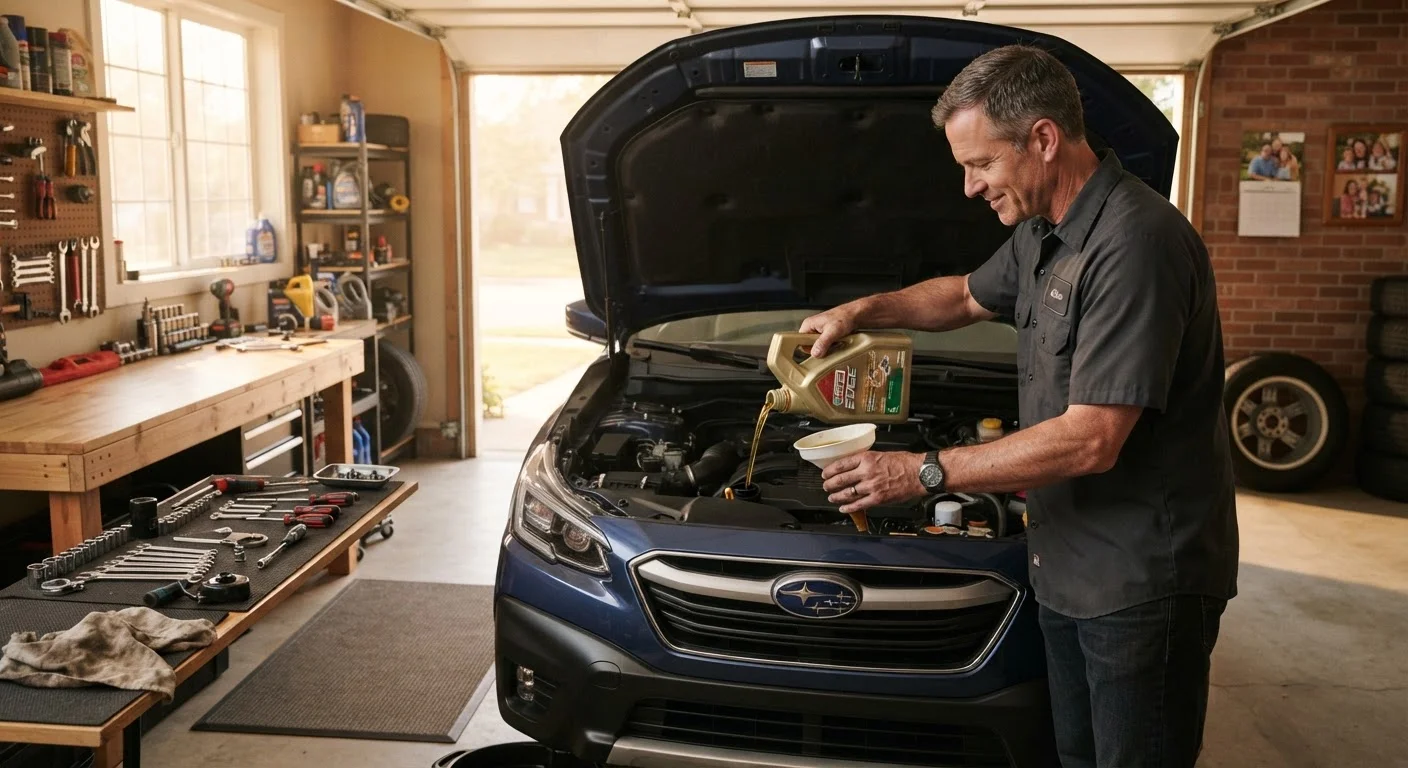
Oil changes are often cited as the classic starter DIY task - and for mechanically comfortable drivers, they can be. However, they do involve safely lifting and supporting the vehicle, draining hot oil, and disposing of used oil correctly. For drivers without proper jack stands or a level surface, a shop oil change may be the safer and more practical choice. See synthetic vs. conventional motor oil for guidance on choosing the right fluid before you start.
Making the Call: A Practical Framework
Before starting any job, ask three honest questions: Do I have the right tools? Do I understand what can go wrong, and can I recognize it if it does? And is this system safety-critical?
If the answer to any of those is uncertain, that's a signal to consult a qualified mechanic - not a failure. Even experienced home mechanics draw a line somewhere. The framework for deciding between DIY and hiring a pro applies just as usefully to vehicles as it does to home repair.
For those who want to build their maintenance confidence over time, starting with the simplest tasks and working up gradually is the soundest approach. Keeping your vehicle running well long-term - regardless of who does the work - comes down to consistency. Keeping a car running well past 150,000 miles outlines the habits that matter most across a vehicle's life.