
Synthetic vs. Conventional Motor Oil: What the Difference Means for Your Engine

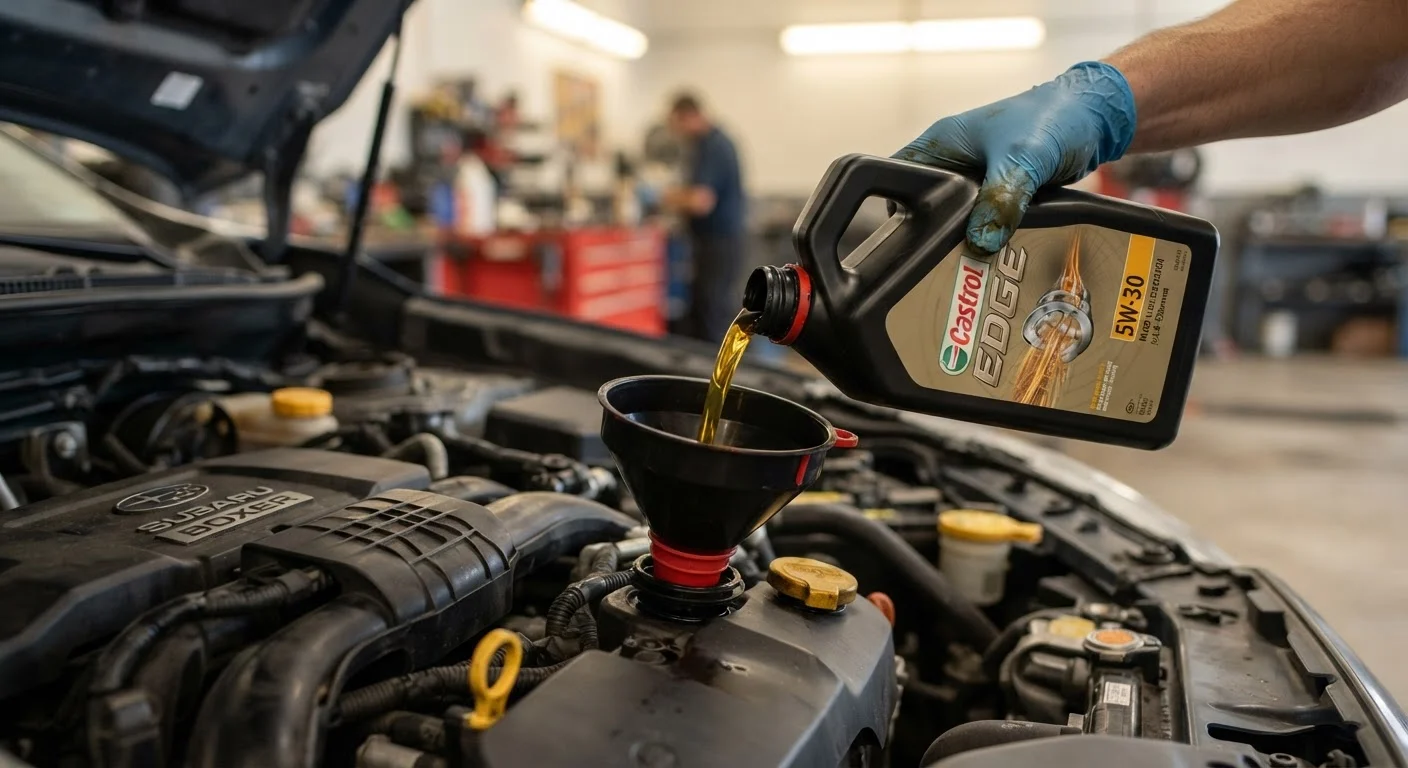
Key Takeaways
Option A
Synthetic Motor Oil
The engineered, high-performance formulation.
Best for: Best for modern engines, high-performance vehicles, extreme temperature climates, and drivers seeking longer oil-change intervals.
Option B
Conventional Motor Oil
The time-tested, petroleum-based standard.
Best for: Best for older vehicles with simple engines, low-mileage drivers, and those following a frequent oil-change schedule.
If you drive a newer vehicle or one with a turbocharged engine
Synthetic Motor Oil
Modern engines and turbos operate under tighter tolerances and higher heat. Synthetic oil's engineered molecular structure handles these stresses more reliably than conventional oil.
If you drive an older, high-mileage vehicle on a tight budget
Conventional Motor Oil
Older engines with more wear may actually benefit from conventional oil's viscosity characteristics, and the lower upfront cost suits drivers changing oil on a frequent schedule.
If you live in a region with extreme cold winters or hot summers
Synthetic Motor Oil
Synthetic oil flows more readily at low temperatures and resists breakdown at high temperatures, giving it a clear advantage in climatic extremes.
If your manufacturer explicitly specifies a particular oil type
Follow manufacturer specification
Regardless of general guidance, your owner's manual takes precedence. Using the wrong oil type can affect engine performance and may impact warranty terms.
How Each Oil Type Is Made
The most fundamental difference between synthetic and conventional motor oil lies in how each is produced. Conventional motor oil is refined from crude petroleum extracted from the ground. The refining process removes many impurities, but the resulting molecules are still irregular in size and shape - which affects how the oil behaves under stress.
Synthetic motor oil, by contrast, is built in a laboratory. Chemists construct uniform, precisely sized molecules designed to perform specific functions - flow smoothly at low temperatures, resist breakdown at high temperatures, and reduce friction across a wide range of operating conditions. Some synthetic oils begin with a refined petroleum base and are then heavily modified (these are called synthetic blends or full synthetics depending on the degree of modification).
This molecular uniformity is why synthetics consistently outperform conventional oils in controlled testing - not because of marketing, but because of fundamental chemistry. For more context on how oil-related myths have shaped driver behavior, see our guide to common car maintenance myths.
Performance Differences That Matter Day to Day
For most drivers, the practical differences show up in three areas: cold starts, heat resistance, and change intervals.
| Criterion | Synthetic Motor Oil | Conventional Motor Oil |
|---|---|---|
| Source | Chemically engineered molecules | Refined from crude petroleum |
| Cold-weather performance | Flows faster at low temps | Can thicken briefly at startup |
| Heat resistance | Higher resistance to breakdown | Degrades faster under sustained heat |
| Typical change interval | 7,500-15,000 miles | 3,000-5,000 miles |
| Cost per quart | Higher upfront cost | Lower upfront cost |
| Best engine match | Modern, turbocharged, or high-performance | Older or simpler engine designs |
At cold startup - especially in winter - conventional oil can temporarily thicken, leaving engine components momentarily under-lubricated until the oil warms. Synthetic oil flows faster in cold conditions, reducing that vulnerable window. At the other extreme, conventional oil degrades more quickly under sustained high heat, which is why turbocharged engines and performance vehicles almost universally require synthetic.
Oil-change intervals are where the cost conversation gets interesting. Synthetic oil typically maintains its protective properties for 7,500 to 15,000 miles depending on driving conditions and the manufacturer's guidance. Conventional oil generally calls for changes every 3,000 to 5,000 miles. Fewer changes over time can partially offset synthetic oil's higher per-quart price - though the exact math depends on your vehicle and driving habits.
~15,000 mi
Max interval for some full synthetic oils
Many full synthetic formulations are rated for up to 15,000 miles between changes under normal driving conditions, per manufacturer data.
3x
Approximate frequency difference in oil changes
Drivers using conventional oil on a 5,000-mile schedule may change oil roughly three times as often as those using a 15,000-mile synthetic interval.
How to Know Which Oil Your Engine Actually Needs
The single most reliable source is your vehicle's owner's manual. Manufacturers specify not just the oil type but also the viscosity grade (such as 5W-30 or 0W-20) that their engine was designed around. Following that specification is more important than any general rule.
A few practical guidelines can help frame the decision:
- Many vehicles built after 2010 are engineered with synthetic oil in mind and may not perform optimally on conventional.
- High-mileage formulations - a variation available in both synthetic and conventional - contain conditioners aimed at aging seals and gaskets.
- Switching between types is generally considered safe by most engineers, but always verify with your manual before doing so.
If you're handling your own oil changes, our comparison of DIY vs. shop maintenance outlines what tasks are realistically safe for home mechanics. And for broader ownership context, the Buying & Ownership hub covers the full spectrum of decisions that come with running a vehicle.
Synthetic Blends: A Middle-Ground Option
Synthetic blend oils mix conventional base oil with synthetic components, offering improved performance over straight conventional oil at a lower price point than full synthetic. They can be a practical choice for drivers whose vehicles don't require full synthetic but who want some added protection - particularly for towing or stop-and-go city driving. As always, confirm compatibility with your owner's manual before making the switch.