

Key Takeaways
Why the Dealership Environment Works Against You
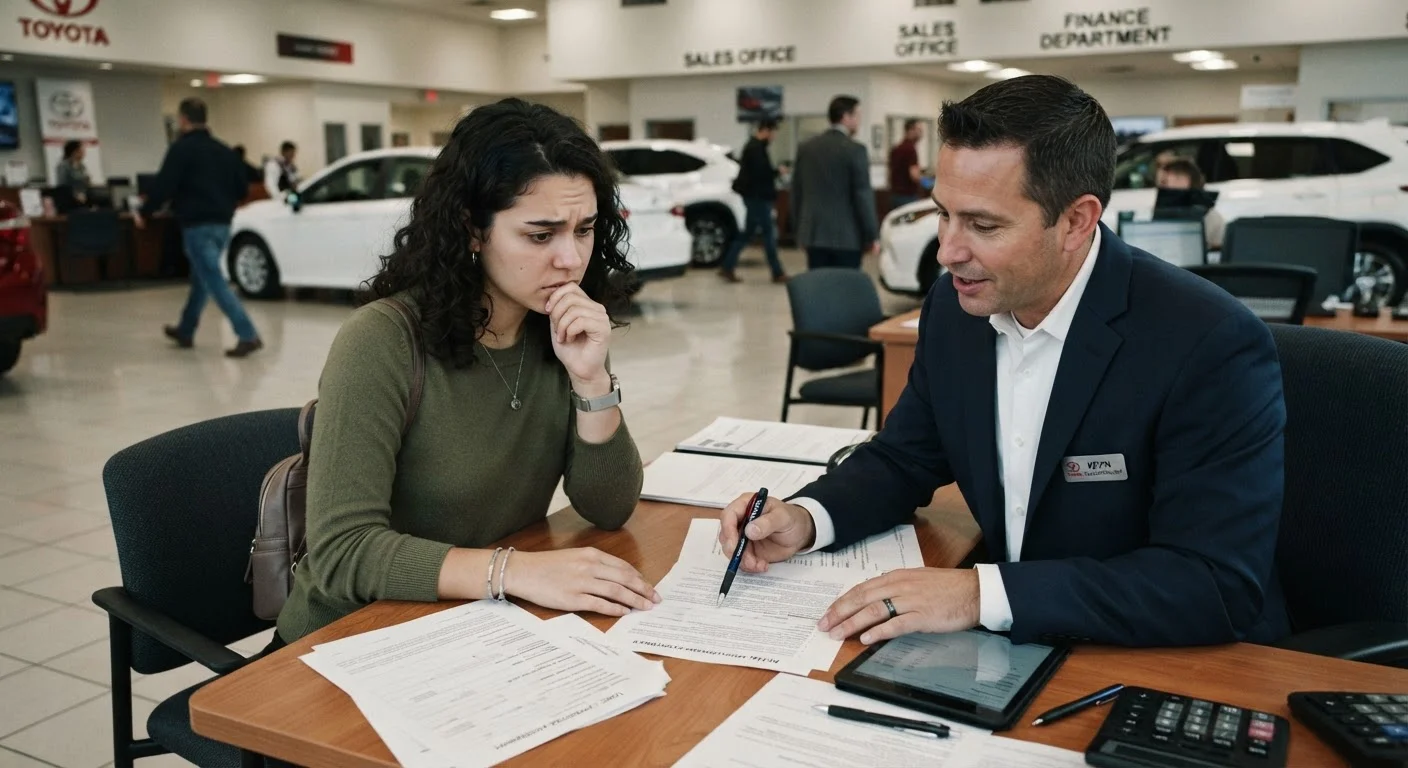
Car dealerships are carefully designed environments. The pace moves quickly, the terminology is unfamiliar, and the social pressure to decide on the spot is real. First-time buyers are particularly vulnerable because they often don't know which numbers actually matter - or how those numbers connect to each other.
Understanding where things typically go wrong is the most effective preparation. The mistakes below aren't signs of carelessness - they're the predictable result of walking into a complex financial negotiation without a clear framework. Recognizing them in advance puts you on much steadier footing.
For a fuller picture of what happens after you shake hands, see the car buying process explained, which walks through every stage from test drive to title transfer.
Negotiating based on monthly payment instead of total vehicle price.
Why it happens: Monthly payment figures feel concrete and manageable, making it easy to lose sight of the overall cost. Dealers can extend loan terms or adjust interest rates to hit a target payment while increasing the total amount paid.
Skipping a pre-purchase inspection on a used vehicle.
Why it happens: Buyers often feel that a vehicle history report or a test drive is sufficient due diligence, or they worry an inspection request might offend the seller or slow the process.
Agreeing to dealership add-ons in the finance and insurance (F&I) office without scrutiny.
Why it happens: After a long negotiation, buyers are mentally fatigued and inclined to accept what the finance manager presents as standard or recommended. Add-ons are often bundled into the loan without clear itemization.
Arriving at the dealership without pre-approved financing.
Why it happens: Many buyers assume the dealer will handle financing or that their credit is too uncertain to approach a bank in advance. Others simply don't know that pre-approval is an option.
Failing to research the vehicle's market value before stepping onto the lot.
Why it happens: First-time buyers often trust that the sticker price is a reasonable starting point, not realizing that pricing can vary significantly based on trim level, mileage, location, and current market conditions.
Trading in a vehicle at the dealership without knowing its independent market value.
Why it happens: Buyers assume the dealer's trade-in offer is fair, or they conflate the trade-in value with the new vehicle price and lose track of both figures simultaneously.
The Financial Mistakes That Compound Over Time
Several of the most damaging dealership errors aren't visible on the day of purchase - they quietly inflate the total cost of ownership over months and years. Negotiating the purchase price separately from financing terms is critical: when a dealer bundles them together, it becomes easy to obscure how much you're actually paying for the vehicle itself.
Monthly Payment Framing Can Be Misleading
A lower monthly payment achieved by extending a loan term from 48 to 72 or 84 months can significantly increase the total interest paid over the life of the loan. It can also result in being 'underwater' - owing more on the vehicle than it is worth - for an extended period. Always calculate the full cost of the loan, not just the monthly figure, before agreeing to financing terms.
It's also worth arriving with a firm sense of your total budget - not just monthly cash flow. For a realistic look at what car ownership actually costs beyond the sticker price, car ownership costs most drivers don't budget for covers registration fees, depreciation, insurance rate changes, and ongoing maintenance in detail.
Buyers who finance through a dealership without first securing a competing offer from a bank or credit union are also surrendering useful leverage. Pre-approval gives you a benchmark rate and signals to the dealer that you've done your homework. Common advice about dealer financing deserves scrutiny too - common car buying myths examines widely repeated claims that don't always hold up.
Inspections, Research, and the Used Car Market
Used car buyers face an additional layer of risk that new car buyers don't: the unknown history of the vehicle. Relying on a listing description or even a vehicle history report alone is insufficient. Mechanical problems, collision repairs, and deferred maintenance rarely announce themselves in photos.
Our pre-purchase inspection checklist outlines exactly what a qualified mechanic should examine before you commit. A few hundred dollars spent on an independent inspection can prevent thousands in repair costs down the road. If a seller refuses to allow an independent inspection, treat that as a serious warning sign.
~$3,000
Average cost of hidden defects on used vehicles
Industry estimates from automotive consumer organizations suggest undisclosed mechanical and safety issues discovered post-purchase can cost buyers several thousand dollars in unplanned repairs.
30-40%
Markup on common dealership add-ons
Consumer advocates and automotive finance researchers have noted that F&I products such as extended warranties and paint protection are frequently marked up substantially above their underlying cost.
Buyers comparing used options should also consider whether a certified pre-owned (CPO) vehicle makes sense for their situation. Certified pre-owned vs. standard used breaks down what CPO programs actually include and whether the added cost reflects genuine value.
Once you've purchased, staying ahead of vehicle health matters just as much as the buying decision itself. Signs your car needs attention covers the subtle warnings many drivers overlook until a minor issue becomes a major repair.