

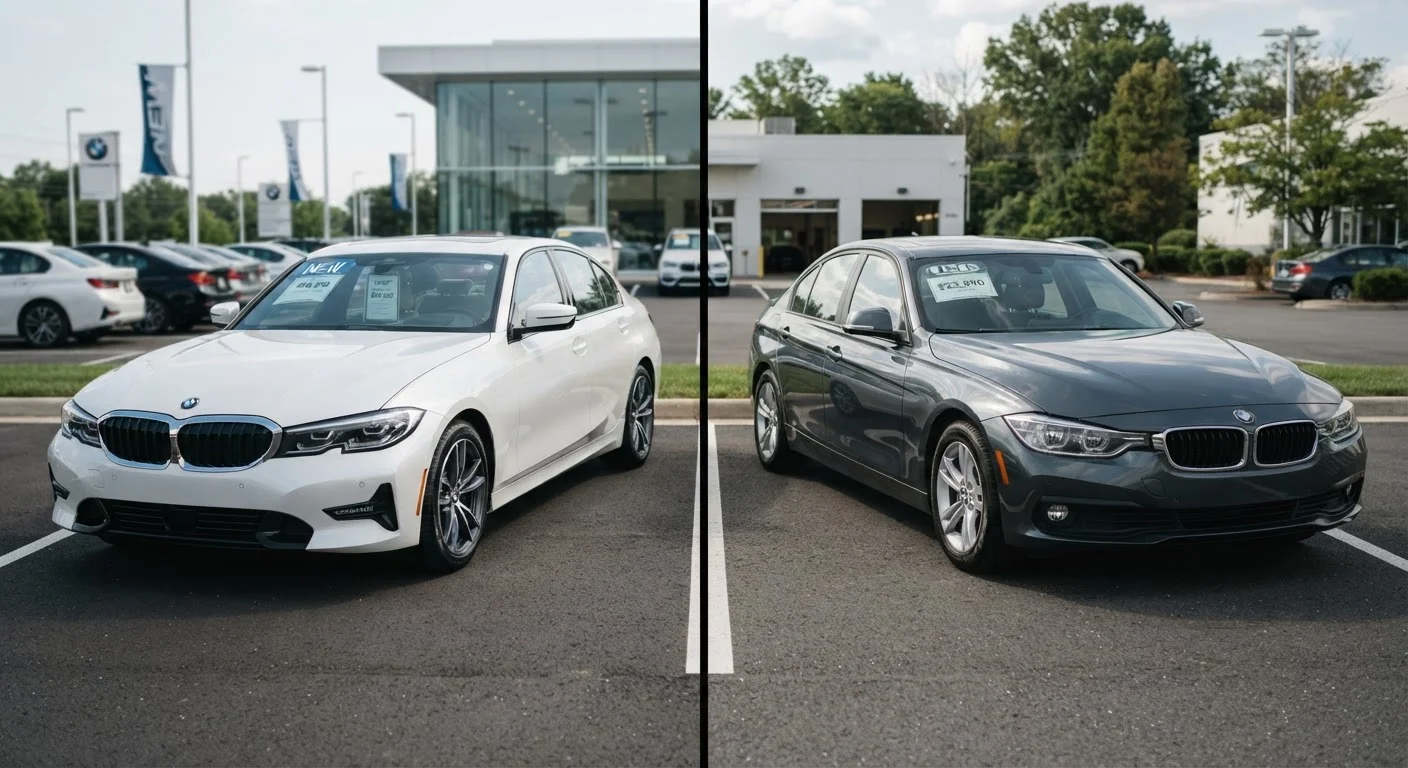
Key Takeaways
Option A
New Car
The full-warranty, zero-history option.
Best for: Buyers who prioritize peace of mind, the latest safety features, and predictable maintenance costs over the first few years.
Option B
Used Car
The depreciation-absorbed, lower-entry alternative.
Best for: Buyers focused on lower purchase price and willing to do more due diligence on condition and history.
If you want predictable costs and the latest safety technology
New Car
A new car comes with a full manufacturer warranty, no unknown maintenance history, and current-generation driver-assistance systems-reducing financial surprises in the short term.
If minimizing your purchase price is the top priority
Used Car
A used car that is two to four years old has already absorbed the steepest depreciation, letting you get more vehicle for the same budget.
If you drive high annual mileage and keep cars long-term
New Car
Starting fresh with a full warranty and known service history makes more financial sense when you plan to keep the vehicle eight or more years.
If you need reliable transportation on a tight budget
Used Car
Lower monthly payments and reduced registration fees free up cash for insurance and maintenance without sacrificing basic transportation reliability.
If you want used-car pricing with more certainty about condition
Used Car
A certified pre-owned vehicle goes through a manufacturer inspection and carries an extended warranty - review our CPO vs. standard used breakdown to weigh whether the premium is justified.
Why the Sticker Price Is Just the Starting Point
When comparing new and used vehicles, most buyers focus on the number on the window sticker. That figure matters, but it accounts for only a fraction of what you'll actually spend over the life of the vehicle. Depreciation, financing terms, insurance, registration fees, and maintenance all shift the true cost of ownership significantly - and they shift differently depending on whether the car is new or used.
New cars typically carry manufacturer's suggested retail prices that reflect current market demand, the cost of the latest features, and dealer margin. Used cars, by contrast, have already absorbed the largest drop in market value that most vehicles experience - often in the first two to three years. That absorbed depreciation is what makes a lightly used vehicle appealing to budget-conscious buyers.
For a fuller picture of what you'll actually pay after the purchase, see our guide on car ownership costs most drivers don't budget for.
| Criterion | New Car | Used Car |
|---|---|---|
| Purchase Price | Higher - reflects current market value | Lower - depreciation already absorbed |
| Depreciation Rate | Steepest in first 2-3 years | Slower curve from point of purchase |
| Financing Rates | Generally lower interest rates | Typically higher interest rates |
| Insurance Costs | Higher premiums and required coverage | Often lower premiums |
| Warranty Coverage | Full manufacturer warranty included | Variable; may be expired or limited |
| Registration Fees | Higher in year one (value-based) | Lower; decreases with vehicle age |
| Condition Certainty | Known - zero prior use | Requires inspection and history check |
| Feature Availability | Latest safety and tech features | Dependent on model year purchased |
Depreciation: The Hidden Cost That Favors Used
Depreciation is the single largest expense most drivers never see as a line item. New vehicles can lose a substantial share of their value within the first few years, though the exact rate varies by make, model, and market conditions. When you buy used, the original owner has already absorbed that initial value drop - meaning your vehicle's depreciation curve is shallower from the point of purchase onward.
This is not a reason to avoid new cars entirely, but it is a reason to consider how long you plan to keep the vehicle. If you hold a new car for eight to ten years, the per-year depreciation cost becomes more manageable. If you plan to trade in after three to four years, you're selling at the point of maximum loss.
~20%
Typical first-year new car depreciation
Industry estimates from automotive valuation sources suggest new vehicles can lose roughly 15-25% of their value within the first year of ownership, though rates vary by model and market.
2-4 yrs
Sweet spot for used-car value
Consumer automotive research consistently identifies two-to-four-year-old vehicles as offering the most favorable balance of depreciation absorbed versus remaining useful life.
1-2%
Typical rate gap: new vs. used auto loans
According to Federal Reserve consumer credit data, auto loan rates on used vehicles have historically run higher than new-vehicle rates from the same lenders.
If you're considering alternatives to outright purchase, leasing sidesteps some depreciation concerns in a different way. Our leasing vs. buying comparison walks through how those trade-offs play out.
Financing, Insurance, and Registration Differences
Beyond depreciation, three recurring costs diverge noticeably between new and used vehicles. First, financing: lenders generally offer lower interest rates on new-car loans than on used-car loans, because new vehicles are seen as lower-risk collateral. However, the higher loan principal on a new car can offset that rate advantage - always compare the total interest paid, not just the rate.
Second, insurance: new vehicles typically cost more to insure. Lenders often require comprehensive and collision coverage when financing a new car, and replacement costs are higher. A used car may qualify for slightly lower premiums, though this depends heavily on the vehicle's value, your driving record, and your coverage choices.
Third, registration and taxes: in most U.S. states, registration fees are calculated on the vehicle's value. A new car will carry higher first-year registration costs than a comparable used model. These fees generally decrease as the vehicle ages.
State Registration Fees Vary Significantly
Registration fee structures differ by state - some calculate fees based on vehicle value, others on weight, age, or a flat rate. If registration cost is a meaningful factor in your decision, check your state's DMV schedule before finalizing a purchase. Over a five-year period, the cumulative difference between new and used registration costs can be hundreds of dollars in value-based states.
Reliability, Warranties, and the Risk of the Unknown
One of the most cited arguments for buying new is warranty coverage. A new vehicle comes with a manufacturer's warranty - typically a bumper-to-bumper component warranty and a longer powertrain warranty - providing a defined period during which most mechanical failures are covered at no cost to you. That certainty has real value, especially if you're not mechanically inclined or don't have an emergency repair fund.
Used vehicles present a different risk profile. Without a thorough pre-purchase inspection, you may inherit problems the seller - or even the previous owner - didn't know about. Before committing to any used vehicle, a pre-purchase inspection checklist can surface mechanical issues that a listing photo never will. Pairing that with a vehicle history report adds context - though our guide on what vehicle history reports contain and can't tell you explains where those reports have real gaps.
For used-car buyers who want added protection, certified pre-owned programs offer manufacturer-backed inspections and extended coverage. That middle ground is worth understanding before you decide between a standard used vehicle and a CPO option.