

Key Takeaways
Travel Itinerary
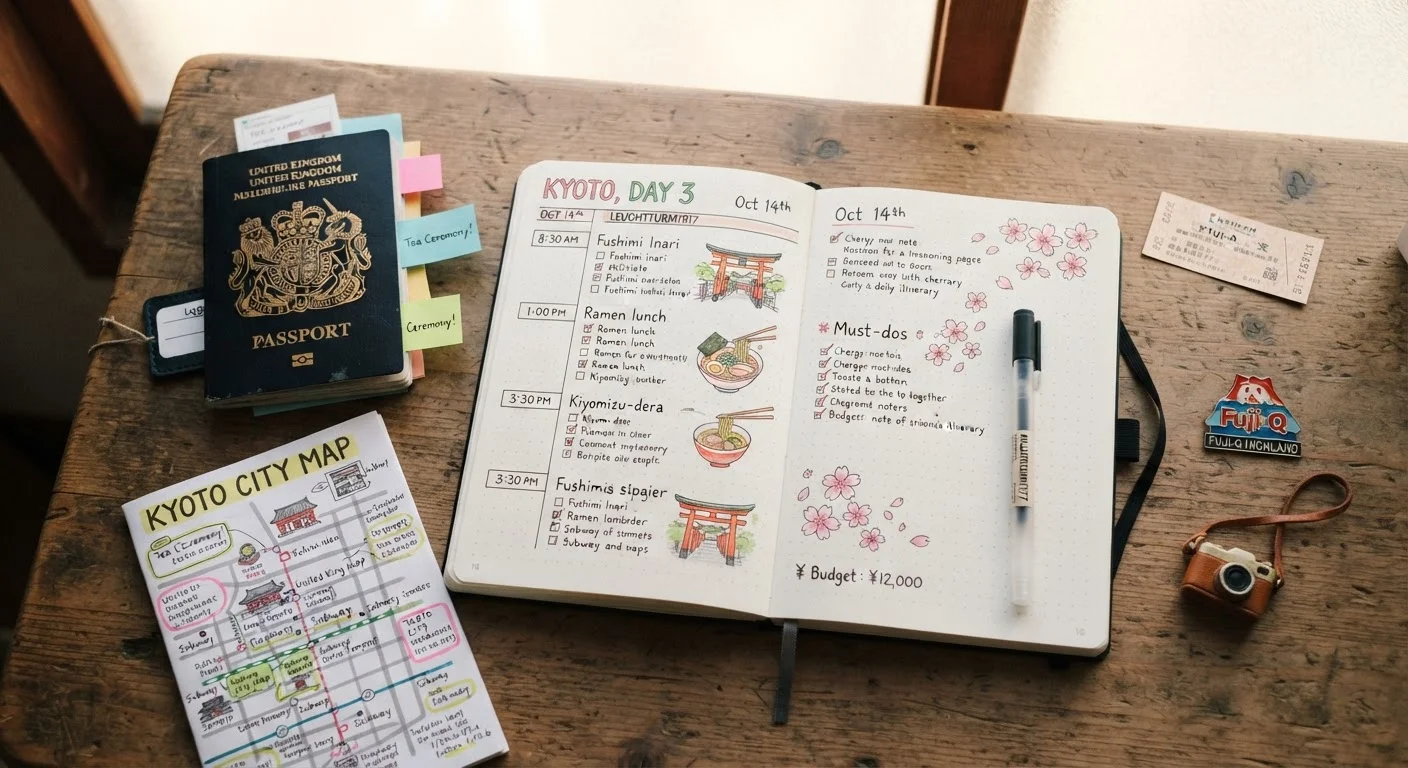
A travel itinerary is a structured day-by-day plan that organises where you'll go, what you'll do, how you'll get there, and when. A well-built one balances scheduled activities with breathing room so travel feels manageable rather than exhausting. It's less a rigid script and more a reliable framework that keeps everyone oriented.
In travel industry terms, an itinerary also refers to the official document issued by airlines or tour operators listing all booked legs of a journey, including confirmation numbers and service details.
Why Most Itineraries Fall Apart
The average first-time traveler builds an itinerary the same way: open a tab for every recommended attraction, slot one into each morning and afternoon, then congratulate themselves on efficiency. The result is usually a trip that feels like a chore by day three.
The problem isn't ambition - it's structure. A rushed itinerary treats time as a container to fill rather than a resource to spend wisely. It skips the question of which experiences actually matter to you, assumes nothing will go wrong, and treats travel between locations as a zero-cost activity. None of those assumptions hold up on the road.
Before you book anything, it's worth grounding your planning in what you actually want out of the trip. Our pre-trip planning checklist can help you think through goals, documents, and logistics before a single reservation is made.
Start With a Priorities List, Not an Attractions List
Before you touch a scheduling tool, write down three things you absolutely want to experience - not a comprehensive list of everything available. Build your itinerary outward from those three anchors. Everything else is optional. This single shift makes the difference between a plan that excites you and one that overwhelms you.
The Core Elements of a Well-Built Itinerary
Think of a travel itinerary as having four distinct layers, each doing a different job:
- Anchor commitments: flights, accommodation, and any pre-booked experiences that have fixed times and can't easily move. These form the skeleton.
- Priority activities: the two or three things per destination that are genuinely non-negotiable for you - a specific museum, a regional dish at a specific neighborhood, a hike that requires a timed permit.
- Secondary activities: things you'd enjoy if time and energy allow, but won't ruin the trip if skipped. Keep a running list rather than hard-scheduling these.
- Buffer blocks: unscheduled time deliberately held open. These absorb delays, spontaneous finds, and simple rest. They are not failure - they are the plan working correctly.
The ratio that tends to work well for most travelers: roughly 60% of each day planned, 40% open. That doesn't mean idle - it means free to follow what's actually happening.
60%
Planned daily time that tends to work best
Travel planning professionals and experienced trip designers commonly recommend leaving roughly 40% of each day unscheduled to accommodate pace, rest, and spontaneous discovery.
2-3
Meaningful activities per day, recommended
Travel editors and destination experts generally advise limiting major planned activities to two or three per day to maintain energy and genuine engagement with each experience.
30-60 min
Buffer time recommended between timed commitments
Standard guidance from travel planners is to allow at least 30 to 60 minutes between any two hard-scheduled commitments, and more for cross-city or cross-border transitions.
Pacing: The Skill Nobody Talks About
Pacing is what separates a trip you remember fondly from one you survived. It has two dimensions: daily pacing (how much you do each day) and trip-level pacing (how intensity shifts across the whole journey).
On a daily level, back-to-back activities without breaks degrade your ability to enjoy each one. Fatigue is cumulative, and decision fatigue - the mental drain of constant navigation and choice-making - hits hard by mid-trip. Plan one genuinely relaxed interlude each day: a long lunch, a slow walk without a destination, time at the hotel.
At the trip level, a classic mistake is cramming the most demanding days at the end of a trip, just before a red-eye home. If your itinerary includes long-haul flying, consider what jet lag is actually doing to your body - it's more than tiredness, and it shapes how much you can realistically absorb in those first days.
A smarter arc: frontload discovery and big-ticket items in the middle of the trip, taper toward the end, and give yourself a genuine recovery day before returning home.
Geography Logic: Plan by Zone, Not by Interest
One of the most practical - and most overlooked - itinerary techniques is geographic clustering. Rather than visiting attractions in the order they sound exciting, group them by physical location. Moving across a city or region twice in one day to see similar things eats hours you could spend actually being somewhere.
Map your priority activities before scheduling them. Assign each a neighborhood or zone. Then build each day around a zone, letting the map guide the order rather than a list. This single adjustment often reveals that what felt like a five-day itinerary can be done more deeply in four - with real time to spare.
This approach also pairs well with shoulder season travel. If you're going to a destination during its quieter months, geographic clustering helps you cover more ground before popular sites open or after they close for the day. See our overview of shoulder season travel and timing for more on how seasonality shapes what's accessible.
Itinerary Style Varies by Trip Type
A city break, a road trip, and a multi-country tour each call for different levels of structure. City breaks reward tight geographic clustering; road trips need more daily flexibility for driving conditions and weather; multi-destination trips require firm anchor bookings but loose daily plans. Match the structure of your itinerary to the nature of the trip, not to a generic template. For a deeper look at how pace affects the whole travel experience, see our comparison of slow travel versus fast itineraries.
The First and Last Days: Handle With Care
Arrival and departure days are consistently the most mismanaged parts of any itinerary. Travelers either treat them as full days (and pay for it in stress) or ignore them entirely (and scramble on the ground).
Arrival day best practice: plan to arrive, check in, eat somewhere walkable, and do one low-stakes orientation activity - a neighborhood stroll, a local market. Nothing timed. Nothing that requires peak energy.
Departure day: set a firm mental cutoff - usually midday - after which you're in logistics mode only. What happens between waking up and that cutoff can include a final meal or a short walk, but the margin must exist. Security lines and airport delays have a way of expanding to fill whatever time you didn't protect.
For a complete end-to-end framework that integrates itinerary building with all the other pieces of trip preparation, our first international trip roadmap walks through every major step from choosing a destination to landing home safely.