

Key Takeaways
Mortgage
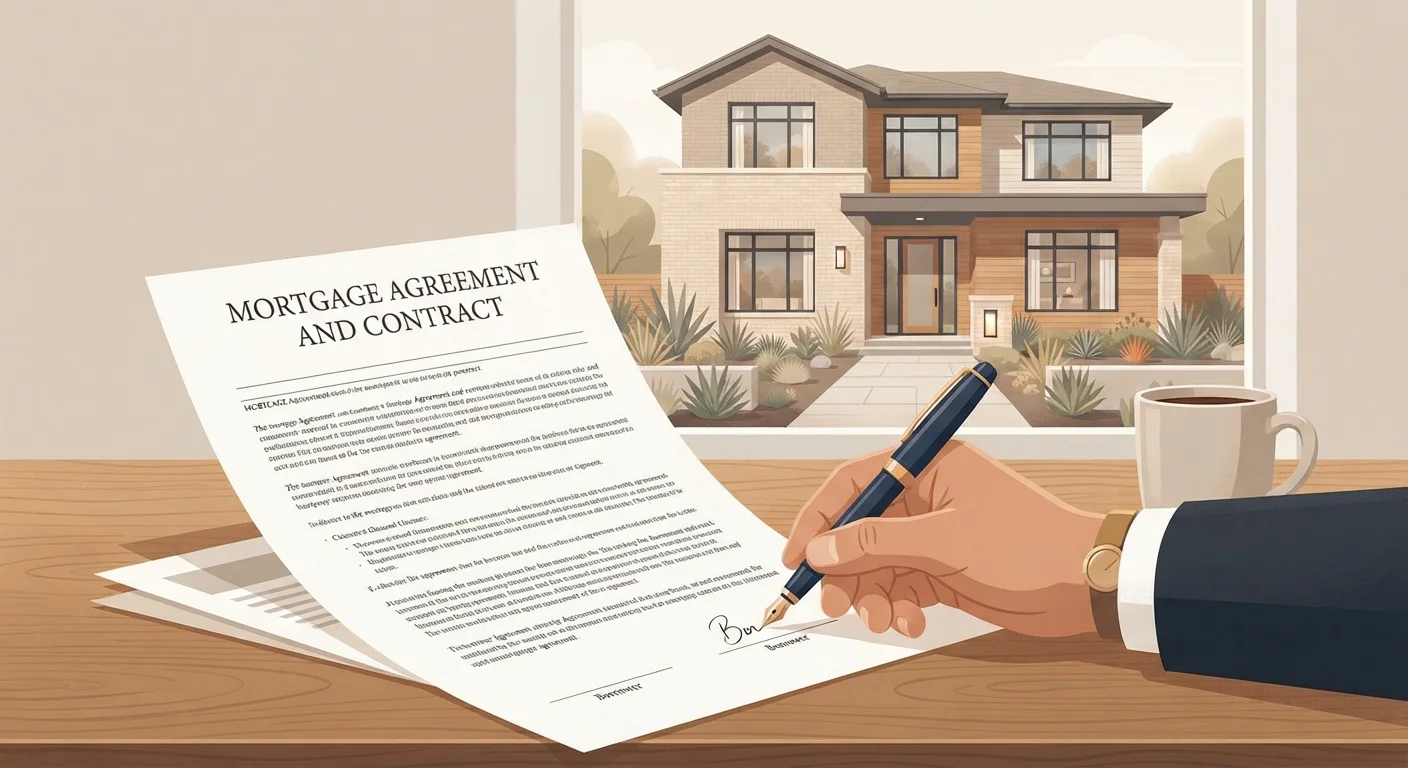
A mortgage is a loan used to purchase real estate, where the property itself serves as collateral. The borrower agrees to repay the loan - plus interest - over a set period, typically 15 or 30 years. If the borrower stops making payments, the lender has the legal right to take possession of the property through a process called foreclosure.
Legally, a mortgage is a lien on the property - meaning the lender holds a security interest in the home until the loan is fully repaid and the lien is released.
The Basic Structure of a Mortgage
When most people buy a home, they don't pay the full purchase price upfront. Instead, they borrow the bulk of it from a lender - a bank, credit union, or mortgage company - and agree to repay that amount over time. That agreement is a mortgage.
The loan amount you borrow is called the principal. In exchange for lending you that money, the lender charges interest - a percentage of the outstanding balance calculated annually but paid monthly. Your monthly mortgage payment is a blend of both: part goes toward reducing the principal, and part covers the interest that has accrued.
The home itself acts as collateral. This is what makes a mortgage different from an unsecured loan. If you stop making payments, the lender has a legal claim to the property. To understand how this compares to other forms of secured lending, see our explainer on auto loan basics, which follows a similar structure for vehicle financing.
How Amortization Works
Amortization is the process of paying off a loan through equal, scheduled payments over a fixed period. For a standard 30-year mortgage, you make 360 monthly payments. Each one is the same dollar amount - but how that payment is split between principal and interest shifts dramatically over time.
In the early years, most of each payment covers interest. As the years pass, more of each payment goes toward reducing the actual loan balance. This is not a trick - it's math. Interest is calculated on the remaining balance, so as the balance shrinks, so does the interest portion of each payment.
30 years
Most common U.S. mortgage term
The 30-year fixed-rate mortgage has historically been the dominant loan structure for American homebuyers, according to the Consumer Financial Protection Bureau.
~2-5%
Typical closing cost range
Closing costs generally fall between 2% and 5% of the loan amount, covering lender fees, title insurance, appraisal, and prepaid escrow items.
20%
Down payment threshold to avoid PMI
Conventional lenders typically require private mortgage insurance when a borrower puts down less than 20% of the purchase price.
This structure has a practical implication: if you sell or refinance in the first several years of a mortgage, you'll have paid down much less principal than many people expect. Understanding this upfront helps you plan more realistically.
The Key Terms You'll Encounter
Mortgage documents can feel overwhelming, but most of the critical concepts come down to a handful of terms:
- Loan term: The length of time you have to repay. Common options are 15 and 30 years. Shorter terms mean higher monthly payments but less total interest paid.
- Interest rate: The annual cost of borrowing, expressed as a percentage. This is distinct from the APR, which includes fees and gives a fuller picture of the loan's cost.
- Down payment: The portion of the purchase price you pay upfront. A larger down payment reduces your loan amount and may help you avoid private mortgage insurance (PMI).
- Escrow: Many lenders require an escrow account that holds funds for property taxes and homeowner's insurance, collected as part of your monthly payment and paid on your behalf.
- Closing costs: Fees due at the time you finalize the loan, typically ranging from 2% to 5% of the loan amount.
Compare the APR, Not Just the Rate
When evaluating mortgage offers, the Annual Percentage Rate (APR) is a more complete measure than the interest rate alone. The APR folds in lender fees and other costs, making it easier to compare loans on equal footing. A lower interest rate with high fees can end up costing more than a slightly higher rate with minimal fees.
For a deeper look at how rate structures affect your payment over time, see our guide to fixed-rate vs. adjustable-rate mortgages.
What You're Actually Agreeing To
Signing a mortgage means entering a long-term legal obligation. You're agreeing to make consistent payments - usually monthly - for years or decades. Missing payments has real consequences: late fees, credit score damage, and potentially foreclosure.
The loan also ties your finances to the housing market. If home values fall below what you owe, you may find yourself in a situation called being underwater or upside-down on the mortgage - owing more than the home is worth. To understand how broader market forces affect home values and equity, our complete guide to the housing market provides useful context.
Mortgages are also a form of significant personal debt. If you're already managing other loans or obligations, it's worth understanding how taking on a mortgage fits into your overall financial picture. Our explainer on debt consolidation covers how lenders view existing debt and what strategies exist for managing it.
This article is for general informational and educational purposes only and does not constitute financial or legal advice. Consult a qualified financial adviser or mortgage professional regarding your individual circumstances.