

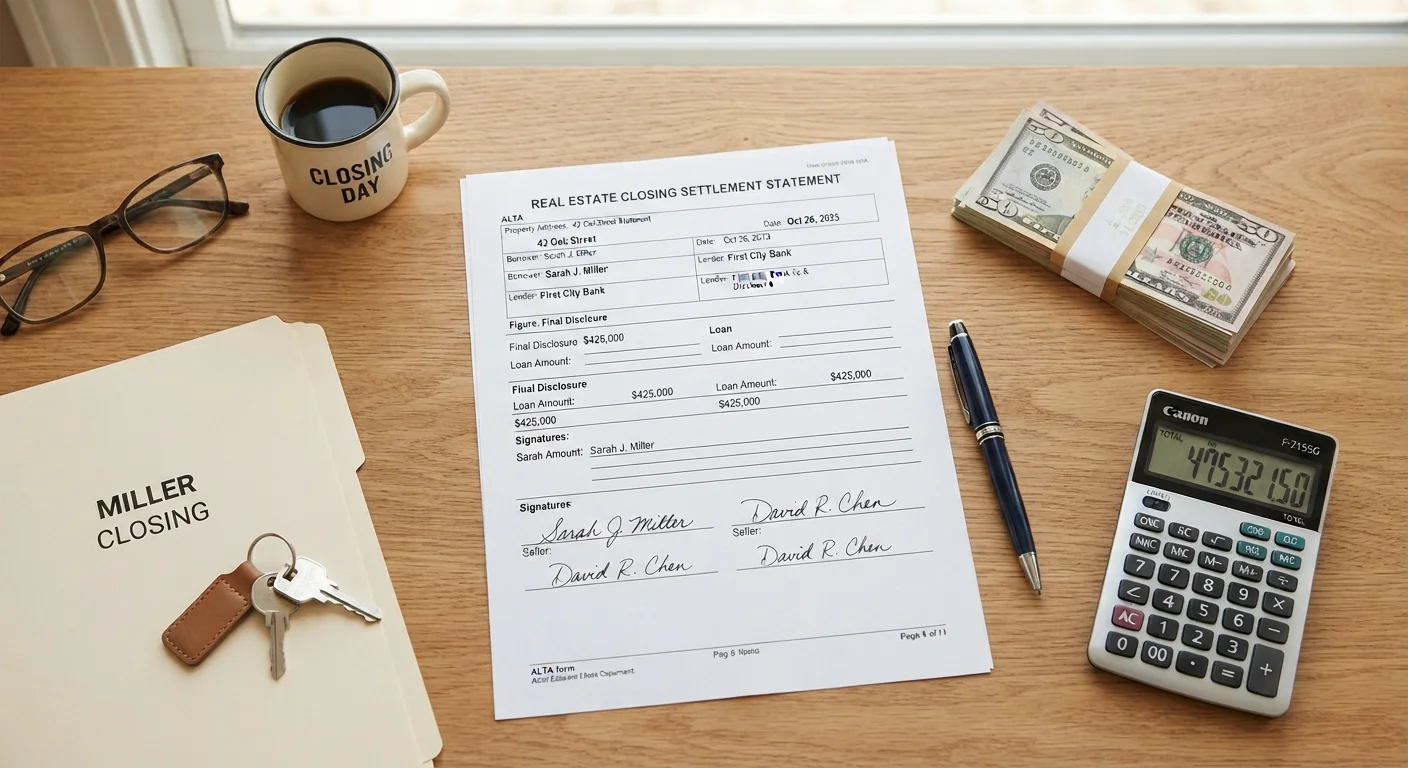
What Are Closing Costs and Why Do They Exist?
Closing costs are the fees and expenses due at the settlement of a home purchase - they're separate from your down payment and cover the services required to complete the transaction. Lenders, government agencies, attorneys, title companies, and other third parties all play a role in finalizing a real estate deal, and closing costs are how those services get paid.
For most buyers, closing costs fall between 2% and 5% of the home's purchase price. On a $300,000 purchase, that's $6,000 to $15,000 in addition to your down payment. For a full walkthrough of where closing costs fit in the overall timeline, see The Homebuying Process, Start to Finish.
A Line-by-Line Look at Common Closing Fees
Your Closing Disclosure will list every charge individually. Here are the most common categories:
- Loan origination fee: Charged by your lender to process the mortgage. Often 0.5%-1% of the loan amount, though it varies.
- Appraisal fee: Pays for a licensed appraiser to confirm the home's market value. Typically $300-$600.
- Credit report fee: Covers the lender's cost to pull your credit history, usually $25-$50.
- Title search and title insurance: A title search reviews public records to verify the seller legally owns the property. Title insurance protects against future claims. Costs vary widely by state.
- Escrow and settlement fees: Paid to the escrow company or closing attorney for managing the transaction.
- Recording fees: Government charges to record the deed and mortgage documents - set by local municipalities.
- Transfer taxes: Some states and counties tax the transfer of property ownership. Rates differ significantly by location.
- Prepaid items: These aren't fees so much as costs paid in advance - including your first year of homeowners insurance, prepaid mortgage interest from closing date to month-end, and initial escrow deposits for taxes and insurance.
Who Pays What - and What's Negotiable
In a typical transaction, buyers pay most lender-related and loan-processing fees, while sellers often cover the real estate agent commissions and may pay certain transfer taxes depending on local custom. That said, nearly every transaction is negotiable to some degree.
Some fees - like government recording charges and transfer taxes - are fixed by law and cannot be negotiated. Others, including lender origination fees and settlement service fees, may have room to negotiate. Under federal rules, you generally have the right to shop for your own title insurance and settlement services, which can produce meaningful savings.
When your lender provides the Loan Estimate (required within three business days of application), review it carefully. When you receive the Closing Disclosure at least three business days before settlement, compare it line by line against the Loan Estimate to catch any unauthorized fee increases.
This article is for general informational purposes only and does not constitute legal, financial, or tax advice. Closing cost rules, transfer taxes, and fee structures vary by state and locality. Consult a licensed real estate attorney or HUD-approved housing counselor for guidance specific to your situation.