

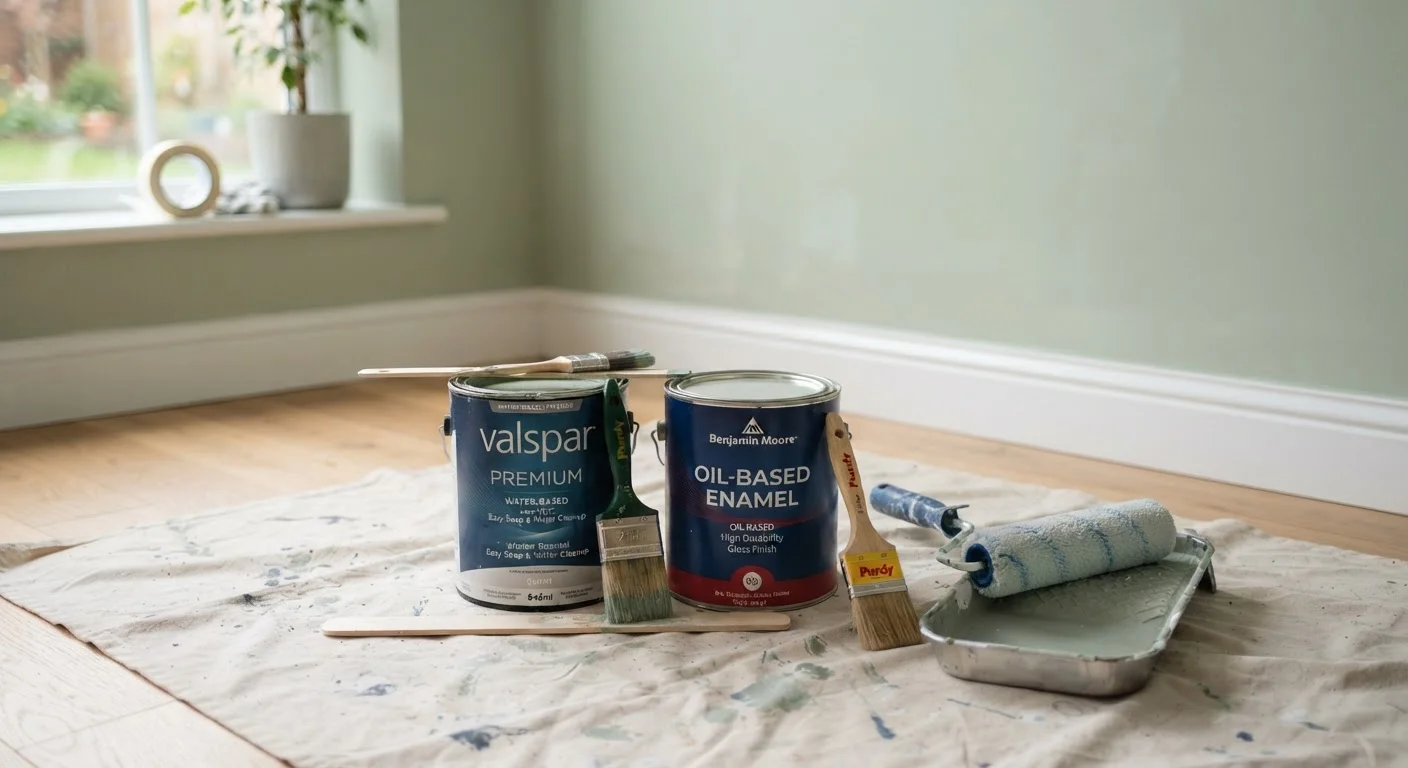
Key Takeaways
Option A
Latex Paint (Water-Based)
The practical, low-fume choice for most interior walls.
Best for: Best for bedrooms, living rooms, ceilings, and any space where fast drying and easy cleanup matter most.
Option B
Oil-Based Paint
The hard-wearing option for high-contact or high-moisture surfaces.
Best for: Best for trim, doors, cabinets, and surfaces that endure frequent scrubbing or moisture exposure.
If you're painting most interior walls and ceilings
Latex Paint (Water-Based)
Latex dries quickly, produces fewer fumes, and is easy to clean up - ideal for large wall surfaces in living spaces where convenience and air quality matter.
If you're painting interior trim, doors, or cabinets
Oil-Based Paint
Oil-based paint levels out to a smoother finish and cures harder, holding up better to the scuffs and frequent cleaning these surfaces typically receive.
If you want oil-paint durability with latex convenience
Latex Paint (Water-Based)
Look for water-based alkyd or waterborne enamel formulas, which offer a hard, washable finish while still allowing soap-and-water cleanup and lower VOC emissions.
If household members have respiratory sensitivities
Latex Paint (Water-Based)
Latex - especially low- or zero-VOC formulas - produces far fewer airborne chemicals during application and dry time, creating a safer indoor environment.
If you're painting over an existing oil-based surface
Oil-Based Paint
Oil-based paint adheres reliably to old oil-based surfaces. Applying latex directly over oil without proper priming can cause peeling and adhesion failures.
How Each Paint Type Works
Understanding what makes these two paints different starts with their binders - the ingredient that carries the pigment and forms the film on your wall once the paint dries.
Latex paint uses water as its carrier and synthetic polymers (typically acrylic or vinyl-acrylic) as its binder. The water evaporates as the paint dries, leaving behind a flexible, breathable film. Most modern interior latex paints are acrylic-based, which offers better adhesion and durability than older vinyl formulas.
Oil-based paint uses a petroleum-derived solvent as its carrier and natural or alkyd oils as its binder. Rather than simply evaporating, the paint oxidizes - it chemically reacts with oxygen in the air to harden. This process takes much longer but produces a denser, harder film.
That fundamental difference in chemistry drives nearly every practical trade-off between the two options.
| Criterion | Latex Paint | Oil-Based Paint |
|---|---|---|
| Dry time (recoat) | 2-4 hours | 24+ hours |
| Cleanup | Soap and water | Mineral spirits or paint thinner |
| VOC levels | Low to very low | Significantly higher |
| Finish hardness | Moderate; flexible | Hard; dense when cured |
| Yellowing over time | Does not yellow | Can yellow, especially in low light |
| Best surface use | Walls, ceilings, most rooms | Trim, doors, cabinets |
| Adhesion over old oil paint | Requires priming | Bonds reliably |
Durability, Finish Quality, and Where Each Excels
For most interior walls - bedrooms, hallways, and living rooms - latex paint performs very well. Modern acrylic latex is washable, holds color over time without yellowing, and flexes slightly with the natural movement of walls, reducing the chance of cracking.
Oil-based paint, however, self-levels exceptionally well as it dries. That means brush marks tend to flow out on their own, leaving a glassy, smooth finish that's particularly desirable on trim, doors, and woodwork. The cured surface is also harder, standing up to repeated cleaning without abrading.
One known limitation of oil-based paint indoors: it tends to yellow over time, especially in low-light areas. Whites and light neutrals are most affected. Latex does not have this problem, which is one reason it has become the standard for interior walls.
~60%
Lower VOC emissions vs. oil-based
Low-VOC latex formulas can emit significantly fewer volatile organic compounds compared to conventional oil-based paints, according to general industry guidance from the EPA.
24+ hrs
Typical oil-based recoat wait time
Most oil-based interior paints require at least 24 hours between coats under normal indoor temperature and humidity conditions.
A common middle-ground solution is water-based alkyd (also called waterborne enamel). These hybrids use a water carrier but an alkyd binder, giving you a hard, leveled finish that cleans up with water. They are widely available and have largely replaced traditional oil-based paint for interior trim in many professional painting applications.
Dry Time, Cleanup, and Practical Considerations
Dry time is one of the most significant day-to-day differences between these two paints. Latex is typically dry to the touch within one to two hours and ready for a second coat in two to four hours. Oil-based paint may feel dry to the touch after six to eight hours, but full recoat time is often 24 hours or more, and it can take weeks to fully cure to maximum hardness.
Cleanup follows the same divide. Latex brushes and rollers rinse clean with warm water and soap. Oil-based tools require mineral spirits or paint thinner - which must then be disposed of properly, as they are considered hazardous household waste in most jurisdictions. Check your local municipality's guidelines before disposal.
Check Local VOC Regulations Before You Buy
Several states, including California, have adopted stricter limits on the VOC content of interior paints sold within their borders. These rules have effectively reduced the availability of traditional high-VOC oil-based paints in those markets. Even in states without such restrictions, low-VOC latex options are widely available and generally recommended for occupied spaces. Verify current regulations in your area before purchasing.
From an air quality standpoint, latex paint - particularly low-VOC and zero-VOC formulas - produces far fewer volatile organic compounds (VOCs) during application. These airborne chemicals are what cause paint fumes. Oil-based paints release considerably higher VOC levels, which is why ventilation is especially critical and why many state regulations now limit or restrict their use in certain applications.
If you're hiring a contractor, ask which type they plan to use and why. A professional should be able to explain the choice based on your specific surfaces and conditions, not just habit or material availability.