

Key Takeaways
Why Most Exercise Schedules Fall Apart
The most common reason workout plans fail isn't lack of willpower - it's poor design. Schedules built around idealized versions of our lives rather than actual ones collapse the moment a meeting runs late or sleep suffers. Building a plan that sticks means starting from where you are, not where you wish you were.
Research in behavioral science consistently shows that reducing friction - making a behavior easier to start - is more effective at sustaining habits than relying on motivation alone. For exercise, this means choosing times you'll realistically show up, not times that look good on paper. It also means letting go of the myth that workouts need to be long or punishing to count. Our article on common fitness misconceptions explores several of these beliefs in more depth.
Whether you're completely new to structured exercise or returning after a long break, the principles for building a durable schedule are largely the same: be honest about your time, your current fitness level, and what you actually enjoy.
What you will need
How to Build Your Weekly Schedule Step by Step
Follow these steps to create a balanced, realistic weekly workout structure. This framework works with or without gym access - every step includes no-equipment options.
Audit your actual available time
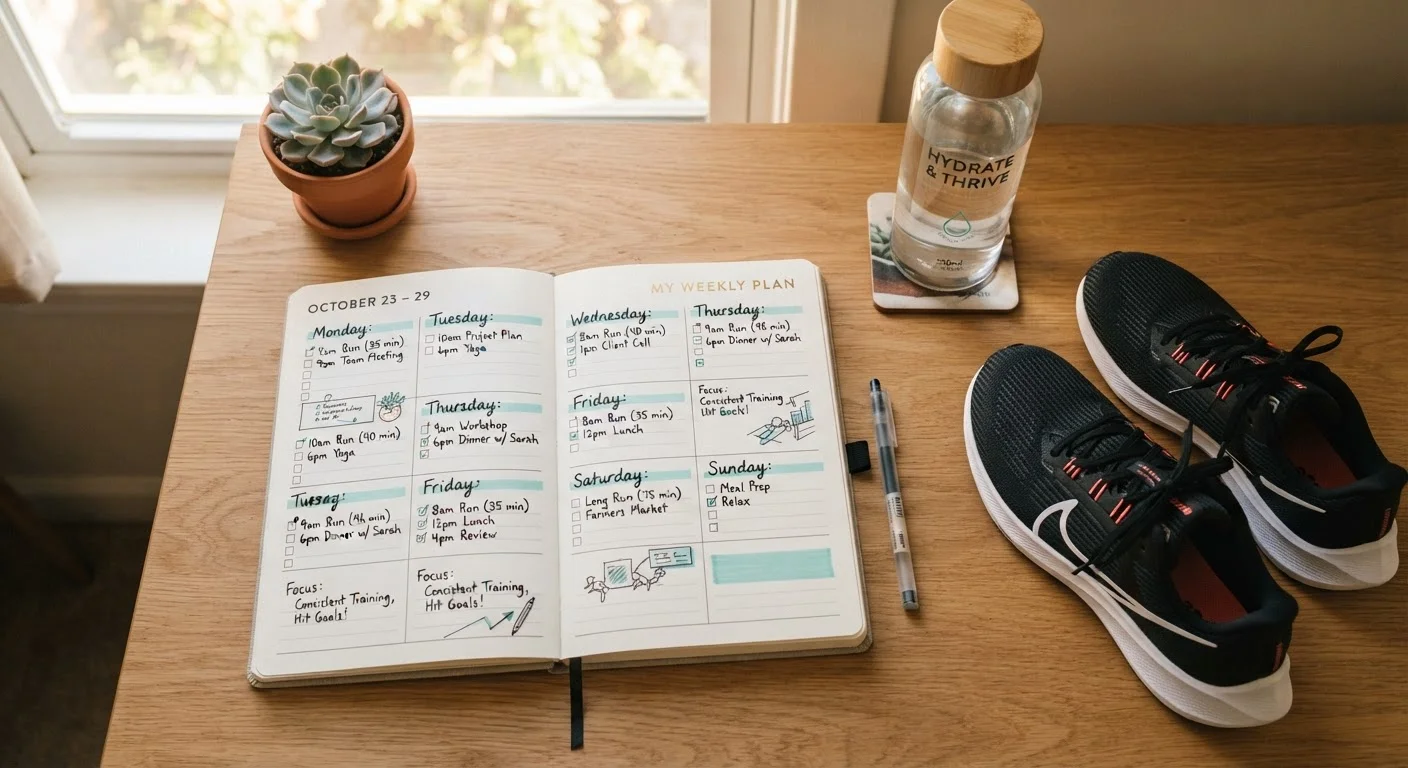
Before choosing exercises, map out a realistic picture of your week. Identify three to five time windows - even 20 to 30 minutes each - that you reliably control. Early mornings, lunch breaks, and post-work evenings are the most common anchors. Write these slots into your calendar as recurring appointments. Treat them as non-negotiable unless a genuine conflict arises.
Choose your training balance
A well-rounded weekly plan typically includes three types of activity: cardiovascular exercise (e.g., brisk walking, jogging, cycling), strength or resistance training (bodyweight or weighted), and flexibility or recovery work (stretching, yoga, or dedicated rest). For beginners, a simple starting structure might look like: two days of cardio, one or two days of strength, and at least one full rest day. Adjust the balance based on your goals - general health, weight management, athletic performance - while prioritizing what you'll actually do.
Plan your rest and recovery days deliberately
Rest days are not wasted days - they are when your muscles repair and adapt. Most adults benefit from at least one to two full rest days per week, particularly in the early weeks of a new routine. Active recovery, such as a gentle walk or light stretching, is an acceptable alternative to complete inactivity if you prefer to keep moving. Avoid the temptation to skip rest days when you're feeling motivated; accumulated fatigue tends to appear later rather than immediately.
Start at a manageable intensity and build gradually
One of the most reliable predictors of a schedule falling apart is starting too hard. In your first two weeks, aim for an effort level that feels like a 5 or 6 out of 10 - challenging enough to notice but not exhausting. From week three onward, apply progressive overload by adding small increments: one more set, a slightly longer walk, or a marginally heavier resistance level. Small, consistent increases compound significantly over months.
Review and adjust after the first two weeks
After two weeks, revisit your schedule with honest questions: Which sessions did you consistently complete? Which did you skip and why? Were any workouts too long, too short, or poorly timed? Use this information to refine the plan rather than abandoning it. Adjusting a schedule that isn't quite working is normal - it does not mean you've failed. The goal is iteration toward something that genuinely fits your life.
Pair Exercise with an Existing Habit
One of the most effective ways to make workouts automatic is to attach them to something you already do consistently - such as exercising immediately after your morning coffee or directly after work before going home. This technique, known as habit stacking, leverages established behavioral cues to reduce the mental effort required to start. Over time, the workout becomes part of the routine rather than a separate decision.
Maintaining Momentum Over Time
Once your schedule is running, the challenge shifts from starting to sustaining. Two of the most common obstacles are boredom and plateaus - your body adapts to repeated stimuli, and workouts that once felt challenging start to feel easy. Understanding why this happens can help you respond strategically rather than abandoning the plan. Our guide on why workouts stop feeling hard covers the adaptation process and practical ways to refresh your routine.
On lower-energy days, remember that movement doesn't have to be structured to count. Walking is one of the most well-supported forms of physical activity and can serve as an effective active recovery option between harder sessions. Pairing a consistent exercise habit with a structured weekly meal plan can also reinforce both habits simultaneously.
This article is for general informational purposes only and does not constitute medical or fitness advice. Consult a qualified healthcare professional before beginning any new exercise program, particularly if you have an existing health condition, injury, or concern.