
Sinking Funds: The Savings Strategy That Stops Surprise Expenses From Derailing Your Budget

Key Takeaways
Sinking Fund
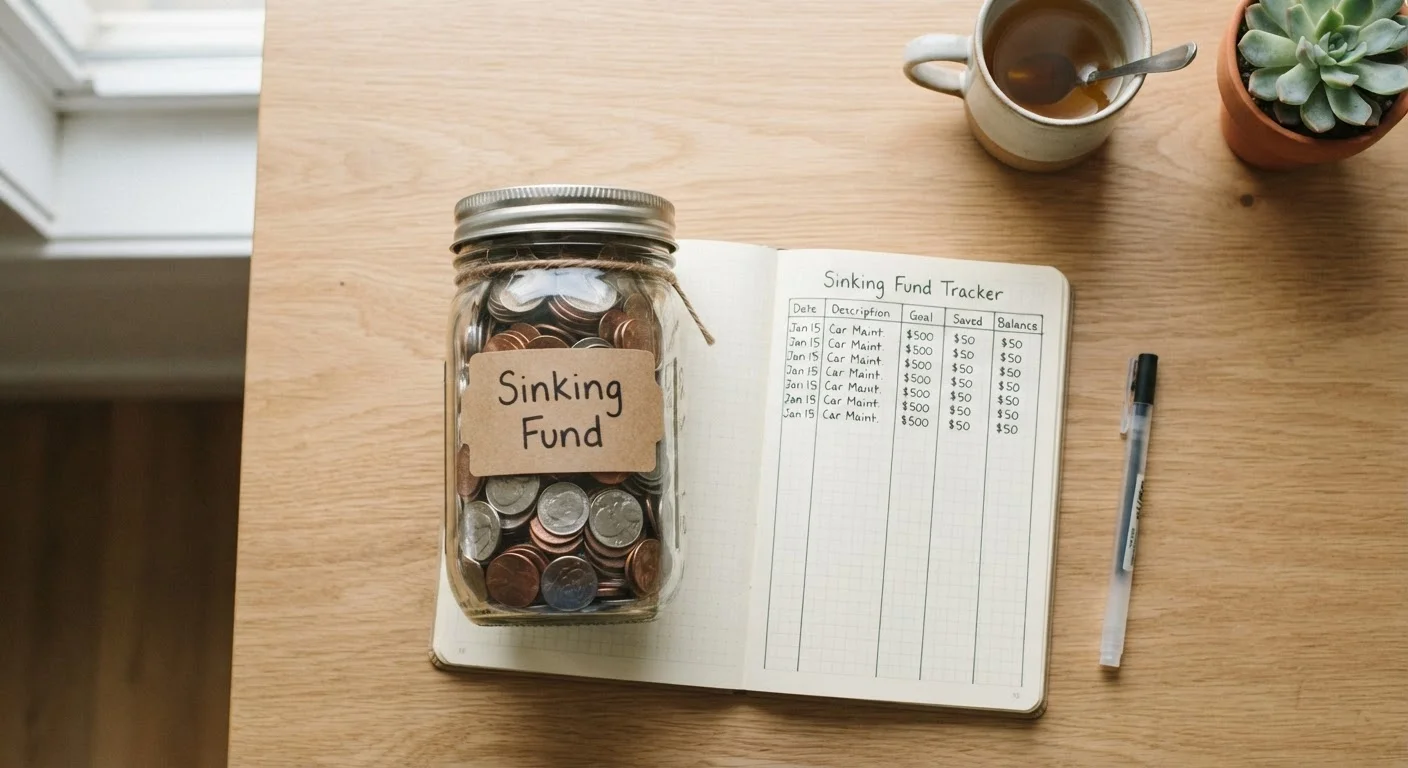
A sinking fund is a dedicated savings account - or earmarked portion of your savings - where you set aside a fixed amount each month to cover a specific, anticipated future expense. Unlike an emergency fund, which covers unexpected crises, a sinking fund is designed for costs you already know are coming: car registration, holiday gifts, an annual insurance premium, or a home repair. The goal is to spread the cost over time so it never hits your budget all at once.
The term originated in government and corporate finance, where bond issuers set aside regular payments to retire debt. In personal finance it has been adapted to mean any designated savings pool for a predetermined future expenditure.
Why Predictable Expenses Still Catch People Off Guard
Most people know their car registration comes due every year. They know the holidays arrive in December. They know their roof and HVAC system won't last forever. Yet when those bills arrive, they often feel like surprises - because no money was set aside in advance.
This is the trap that sinking funds solve. When a $900 car repair drains a checking account that wasn't prepared for it, the most common outcome is credit card debt, a stalled savings plan, or both. A sinking fund breaks that cycle by converting a future lump-sum expense into small, manageable monthly contributions.
For anyone working toward financial stability - especially those balancing savings goals alongside debt - this kind of proactive planning can be the difference between a temporary inconvenience and a serious budget disruption. See our framework for saving while in debt for guidance on managing both at once.
56%
Americans unable to cover a $1,000 emergency from savings
According to a Bankrate survey, more than half of U.S. adults could not pay a $1,000 unexpected expense from savings alone, underscoring why advance planning for predictable costs matters.
37%
Adults who would borrow to cover an unexpected expense
The same Bankrate research found more than a third of Americans would use a credit card, personal loan, or borrowed money to handle a large unplanned bill.
How Sinking Funds Actually Work
The mechanics are straightforward. Start by identifying a specific upcoming expense and estimating its total cost. Then count the months between now and when you'll need the money. Divide the cost by the number of months, and that's your monthly contribution.
For example: you want to take a $1,200 vacation in 12 months. Set aside $100 per month in a labeled savings account. When the trip arrives, the money is already there - no scrambling, no debt.
Most people maintain several sinking funds at once, each with a clear label and a monthly target. Common categories include:
- Vehicle maintenance and registration
- Home repairs (see our guide on home maintenance reserve funds)
- Annual insurance premiums
- Holiday and gift spending
- Medical or dental co-pays
- Travel and vacations
Where you keep the money matters less than keeping it separate from your everyday spending. Many people use a high-yield savings account to earn modest interest while the balance builds. The key is that the funds are designated - not available for impulse purchases.
Sinking Funds vs. Emergency Funds: An Important Distinction
These two tools are often confused, but they serve entirely different purposes. A sinking fund is for costs you know are coming. An emergency fund is your financial buffer against costs you can't predict - a layoff, an unexpected medical event, or a sudden major repair that goes beyond what your sinking fund covers.
Both are necessary. Sinking funds do not replace an emergency fund; they work alongside it. In fact, having robust sinking funds for predictable expenses means your emergency fund is less likely to be raided for non-emergencies - protecting it for when it's truly needed. Learn more about how much emergency savings you may actually need.
“The goal of a sinking fund is to make the irregular regular - to convert financial surprises into planned expenses that your budget already accounts for.”
— Consumer Financial Protection Bureau, U.S. government consumer finance agency
Building Sinking Funds Into a Budget That Lasts
A sinking fund only works if the contribution happens consistently. The most reliable method is treating each fund's monthly amount as a fixed budget line item - the same way you treat rent or a utility bill. Automate the transfer on payday if possible, so the decision requires no ongoing willpower.
Start with one or two funds for your most pressing upcoming expenses rather than trying to fund every category at once. As those reach their targets, redirect the contributions toward the next priority. This staged approach prevents overwhelm and builds the habit gradually.
Sinking funds also become more powerful when they're embedded in a broader budgeting routine. Reviewing your upcoming annual expenses at the start of each year - car registration dates, subscription renewals, school year costs - helps you plan contributions before the clock starts running. For more on building habits that sustain a budget over time, see habits that make budgets work long-term.
This article is for general informational and educational purposes only and does not constitute personalized financial advice. Consult a qualified financial professional for guidance tailored to your individual circumstances.